
Plastic Worlds Collide: When Pokémon Gets the Lego Treatment
Ever wondered what happens when the world’s most beloved digital creatures meet the king of physical construction? The collision is finally here. After tantalizing hints last October, the Lego Group and The Pokémon Company International have unleashed their first collaborative creations onto an eager world. Pre-orders are officially live for three distinct Lego Pokémon sets, shipping out around February 27th. This landmark partnership aims to bridge generations, blending timeless building bricks with the enduring charm of iconic pocket monsters. But does this fusion of pixels and plastic translate into genuinely captivating sculptures, or is the charm lost in translational geometry? The debut kits – featuring fan favorites Pikachu, Eevee, and a legendary trio – promise intricate builds, significant price tags, and a dose of visual debate, marking a pivotal moment in both franchises’ histories.
The Debut Lineup: Meet Your New Brick-Built Companions
The initial wave focuses squarely on Pokémon guaranteed to ignite nostalgia and collector fervor:
-
Lego Pikachu (Piece Count: 2,050 | Price: $200): The undeniable mascot takes center stage… alongside his signature accessory. This substantial kit offers impressive versatility.
- Build Options: Constructors can depict Pikachu energetically leaping out of a faithfully recreated Poké Ball (base included) ready for battle, or in a more serene pose resting with the closed Poké Ball nestled between his paws. This dual-display functionality adds significant value.
- The Challenge: Capturing Pikachu’s iconic chubby cheeks and rounded forms using rectangular blocks is a design hurdle. Lego incorporates specialized rounded and curved elements to hint at his signature rotundness, but achieving that anime-perfect softness remains elusive in an inherently geometric medium.
- Scale: At over 11 inches tall when leaping from the ball, it commands presence.
-
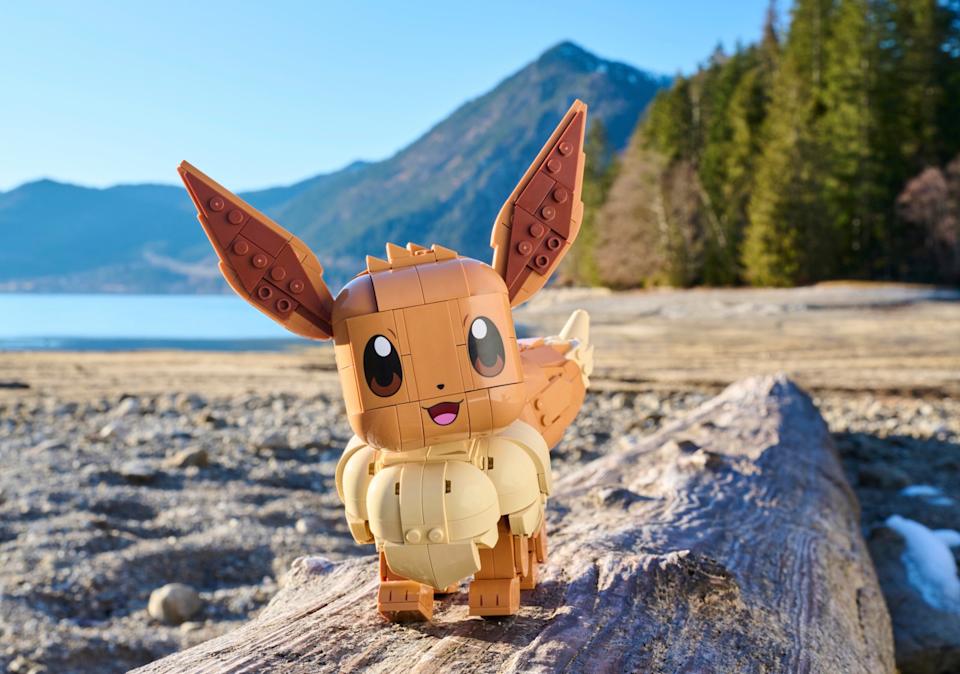
Lego Eevee (Piece Count: 587 | Price: $60): Positioned as a more accessible entry point. This pocket-sized Evolution Pokémon offers a simpler build focused on charm.
- Design Focus: Attentive detail goes into Eevee’s distinctive fur collar and large ears. Generally perceived as translating better to plastic bricks than Pikachu due to its slightly less extreme roundness and textured fur patterns offering natural segmentation points.
- Scale: Stands around 5 inches tall.
-
Lego Mega Rayquaza, Kyogre, and Groudon (Piece Count: 6,838 | Price: $650): This colossal titan of the wave caters to seasoned Lego experts and major Pokémon enthusiasts.
- Scale & Complexity: Massive size and intricate build suitable for hardcore fans. Represents Hoenn region’s legendary weather trio in their potent Primal Reversion (Groudon Primal and Kyogre Primal) and Mega Evolution forms. Dimensions: approx. 17″ tall (Mega Rayquaza).
- Build Options: Offers incredible display flexibility. The trio can be showcased united in a dramatic battle formation, complete with swirling vortex elements. Each legendary can also be displayed individually on its own dedicated stand representing its elemental domain (Sky Pillar for Rayquaza, mountainous terrain for Groudon Primal, swirling ocean waves for Kyogre Primal).
- Price Point: As Lego’s flagship offering for this launch, the cost reflects both the immense piece count and licensing premium.
Lego Pokémon First Wave Comparison Summary
| Pokémon Set | Piece Count | Height (Approx.) | Build Complexity | Price (USD) | Key Features |
|---|---|---|---|---|---|
| Pikachu | 2,050 pieces | 11 inches (leaping) | ⭐⭐⭐⭐ | $200 | Dual poses (in action/at rest), Includes Poké Ball |
| Eevee | 587 pieces | 5 inches | ⭐⭐ | $60 | Detailed fur collar and ears, More affordable |
| Mega Rayquaza, Kyogre Primal & Groudon Primal | 6,838 pieces | Rayquaza: 17 inches | ⭐⭐⭐⭐⭐ | $650 | Trio showcase or individual display; Legendary Pokémon |
The Brickonomics of Pokémon: Beyond the excitement


