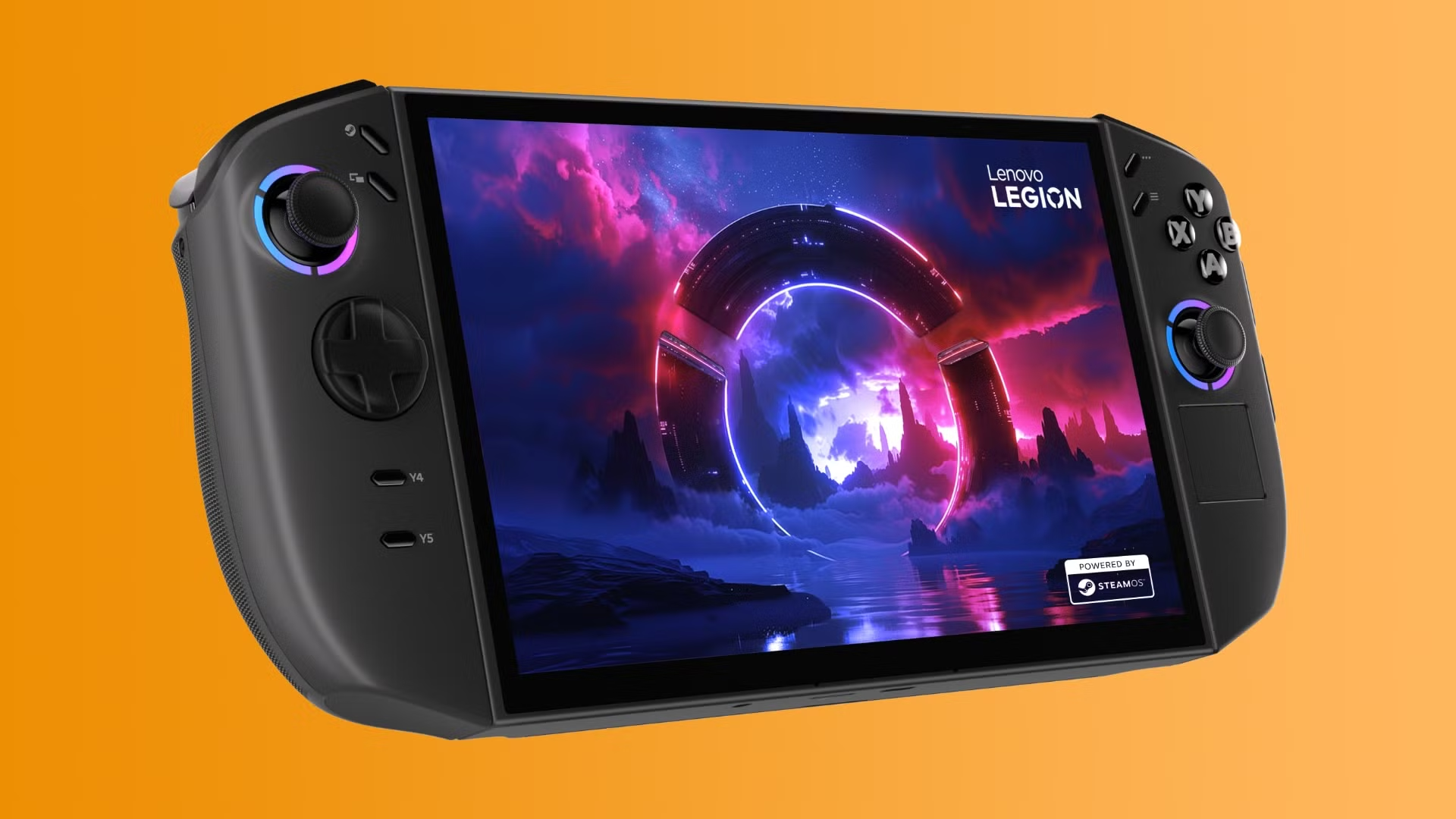

The Great Handheld Divide: Lenovo Bets Big on SteamOS with New Legion Go
Remember wrestling with Windows menus on a small touchscreen? Or juggling drivers when you just want to dive into your game library on the go? It’s frustrations like these that fueled Valve’s SteamOS revolution with the Steam Deck, creating a dedicated console-like environment for portable PC gaming. Now, at CES 2026, Lenovo is making a decisive move, unveiling a powerful new contender explicitly designed for Valve’s platform: The Legion Go, Powered by SteamOS (8.8”, 2). This announcement intensifies the battle for dominance in the burgeoning handheld gaming PC market, currently fractured between SteamOS optimizations and the raw flexibility of Windows 11. Lenovo is signaling that despite experimenting with Windows, they see SteamOS as the superior experience for dedicated gaming handhelds, packing hardware designed to leverage its strengths.
Hardware Powerhouse: Inside the SteamOS Legion Go
Forget compromises. Lenovo is unleashing top-tier specs tailored to harness SteamOS’s potential. The new SteamOS Legion Go appears remarkably similar visually to its discontinued Windows-based predecessor revealed just months earlier, but under the hood lies significant power and a crucial software shift.
- Next-Gen AMD Muscle: At its core, Lenovo promises performance “up to” an AMD Ryzen Z2 Extreme chipset. Industry benchmarks from predecessors like the Z1 Extreme (documented widely on tech review sites like AnandTech) confirm AMD’s prowess in balancing power and efficiency crucial for handhelds. While Lenovo hasn’t clarified base specifications, a standard Ryzen Z2 chip is the logical entry point. These processors represent AMD’s continued commitment to delivering desktop-class gaming performance in portable form factors.
- Visual Splendor: The centerpiece is arguably its stunning 8.8-inch OLED display. Boasting a heightened resolution of 1920×1200 (16:10 aspect ratio) and a blistering 144Hz refresh rate, it surpasses even Valve’s acclaimed Steam Deck OLED (7.4 inches, up to 90Hz). OLED technology offers perfect blacks, vibrant colors, and fast response times – ideal for immersive gaming. The larger screen real estate provides a more expansive view without substantially increasing the device’s footprint drastically compared to its predecessor.
- Robust Connectivity & Power: Staying connected is seamless with Wi-Fi 6E and Bluetooth 5.3. Two 2W speakers promise ample audio output. Powering it all is a substantial 74WHr battery, supporting rapid refuels via a USB Type-C port with 65W charging – essential for minimizing downtime during intense sessions.
- Ample Storage & Expandability: Lenovo offers configurations scaling up to a massive 32GB of RAM and 2TB NVMe PCIe SSD storage – pushing the boundaries expected for a handheld. A microSD card slot provides up to an additional 2TB of storage flexibility. Details on the base model’s RAM and SSD capacities remain unclear, leaving room for potential entry-level affordability questions.
SteamOS Legion Go vs. Steam Deck OLED Key Specs
| Feature | Legion Go Powered by SteamOS (8.8”, 2) | Steam Deck OLED |
| :—————— | :————————————– | :———————————— |
| OS | SteamOS | SteamOS |
| Processor | Up to AMD Ryzen Z2 Extreme | AMD Zen 2 (Custom APU) |
| Screen Size | 8.8-inch | 7.4-inch |
| Screen Type | OLED | OLED |
| Resolution | 2560 x 1600 | 1280 x 800 (HD), Optional 1920×1200 |
| Refresh Rate | 144Hz | Up to 90Hz |
| Aspect Ratio | 16:10 | 16:10 |
| RAM (Max) | Up to 32 GB | Up to 16 GB |
| Storage (Max) | Up to 2 TB NVMe SSD + microSD | Up to 1 TB NVMe SSD + microSD |
| Battery | 74 WHr | 50 WHr |
| WiFi | WiFi 6E | WiFi 6E |
| Release Price | Starting $1,200 | Starting $549 |
Why SteamOS? Lenovo’s Calculated Pivot
Lenovo’s shift to SteamOS for its premium Legion Go refresh isn’t accidental. Their official statement loudly praises the platform’s suitability:
“SteamOS offers a console-like experience designed for gamepad controls optimized to get into games quickly and effortlessly, with features like quick suspend/resume for easy entry and exit. SteamOS is built for plug-and-play gaming, with full access to a user’s Steam Library, seamless cloud saves, centralized notifications, Steam Chat, and built-in Game Recording. The full Steam Store is readily available for full access to the newest titles.”
This highlights SteamOS’s core strengths:
- Console Simplicity: Direct boot into a curated, controller-friendly interface eliminates Windows’ desktop-first friction. Turn on, select game, play. Learn more about SteamOS architecture LinuxBasedOS – Wikipedia.
- Optimized Performance: Valve continuously fine-tunes SteamOS for handheld hardware, often yielding better battery efficiency and smoother performance than Windows counterparts managing unnecessary background processes.
- Seamless Steam Integration: Instant access to your entire Steam library, cloud saves, friends list, chat, and store – the ecosystem is tightly woven.
- Low Overhead: As a Linux-based OS (primarily Arch Linux), SteamOS avoids many resource drains inherent in Windows, dedicating more power purely to gaming.
Despite its advantages, SteamOS faces a significant hurdle: anti-cheat compatibility. Games deploying aggressive kernel-level anti-cheat systems (like Easy Anti-Cheat or BattlEye) often fail to function on Linux/SteamOS. Major titles impacted include:
- Fortnite
- Destiny 2
- Call of Duty: Modern Warfare III (and expected sequels)
- Battlefield 6
- Several MMORPGs like Genshin Impact (though workarounds often exist)
This means players reliant on these specific titles might still feel compelled towards Windows handhelds despite its drawbacks.
The Windows Dilemma and Lenovo’s Strategy
The fate of the Windows-based Legion Go 2 is telling. Released in September 2025, Lenovo reported its pre-orders “substantially exceeded expectations.” Yet, by December, it was inexplicably listed as “no longer available.” Lenovo clarified neither its return nor permanent discontinuation. Now, within months, they announce this superior-specced SteamOS variant.
What does this indicate? Possibly two things:
- Windows Experience Pain Points: Despite strong initial demand, user feedback or internal testing likely confirmed the persistent issues plaguing Windows on handhelds: inefficient power management leading to poor battery life, touch-unfriendly UI elements requiring workarounds, driver management hassles, and a non-gaming-optimized startup flow.
- Doubling Down on Optimized Experience: Recognizing that SteamOS generally offers the smoother, more console-like experience most handheld buyers crave, Lenovo is strategically refocusing its flagship Legion Go line on Valve’s platform. The SteamOS Legion Go S provided an initial toe-dip; this new higher-end model is a full commitment.
The Price of Premium & Market Positioning
Performance and experience come at a cost. The Legion Go, Powered by SteamOS (8.8”, 2) carries a starting price tag of $1,200, launching in June 2026. This represents a significant $100 increase over the starting price of the discontinued Windows Legion Go 2. While top-tier components like the OLED screen, high refresh rate, potential Z2 Extreme chip, and maxed-out RAM/SSD justify this premium, it firmly places the Legion Go in the high-end segment.
The Steam Deck OLED, starting at $549, remains the value champion. The Legion Go seems positioned less as a direct competitor and more as a powerhouse alternative for enthusiasts prioritizing a larger screen, potentially higher peak performance, and ultimate storage capacity within the SteamOS ecosystem. Its success will hinge on whether gamers perceive those upgrades as worth the substantial price jump compared to Valve’s offering and competitors like the anticipated Asus ROG Ally successor.
Where the Handheld Winds Are Blowing
Lenovo’s bold SteamOS pivot underscores a pivotal moment. While Windows handhelds promise universal compatibility, the practical user experience hurdles seem significant enough to push major manufacturers towards optimized platforms. The new Legion Go exemplifies this trend, leveraging SteamOS not just as a fallback, but as the preferred environment for delivering premium handheld gaming.
While you’ll need to sacrifice access to particular anti-cheat restricted titles, the trade-off promises superior battery management, instant-on console simplicity, and seamless integration with the vast Steam ecosystem


