
Celestial Spectacles Await: January 2026’s Cosmic Treasures Unveiled
Imagine stepping outside on a crisp winter night and gazing up to witness the king of planets blazing brighter than it will all year, a celestial pairing that defies vast distances, and a shimmering swarm of ancient stars – all within a single month. This isn’t science fiction; it’s the reality promised for January 2026 according to NASA’s celestial roadmap. For astronomers, both amateur and seasoned, the dawn of 2026 offers extraordinary night sky viewing 2026 opportunities that highlight the dynamic beauty of our solar system and galaxy, reminding us why looking up remains one of humanity’s most profound pastimes. This confluence of events makes January an unmissable moment for sky enthusiasts.
Jupiter Ascendant: The Opposition Spectacle
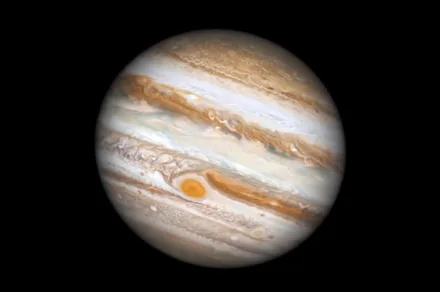
January 10th, 2026, marks a celestial highlight: Jupiter Opposition 2026. On this night, Earth gracefully slides directly between the Sun and the gas giant, a precise alignment known as opposition. This positioning offers the optimal viewing experience possible from Earth.
- Why Brighter and Bigger?: At opposition, Jupiter lies closest to Earth in its elliptical orbit for the year. The proximity means more sunlight reflects off its cloud tops back to our eyes, maximizing its brightness (NASA often notes Jupiter can shine around magnitude -2.8 to -2.9 at such times, rivaling Sirius and surpassed only by Venus and the Moon). Simultaneously, its apparent size in the sky reaches its maximum observable diameter.
- Finding the Giant: Locating Jupiter is delightfully straightforward. As twilight deepens on January 10th, look eastward. Jupiter will dominate that part of the sky, residing within the constellation Gemini (the Twins). Only the dazzling Moon and the bright planet Venus will outshine it, making it one of the most prominent celestial objects near Gemini.
- Beyond the Glow: While stunning to the naked eye as an unmistakably bright “star,” binoculars reveal Jupiter’s four largest Galilean moons (Io, Europa, Ganymede, Callisto) as tiny pinpricks of light nearby. Even a modest telescope will unveil Jupiter’s belted atmosphere – dark equatorial bands contrasting with paler zones and potentially fleeting glimpses of the Great Red Spot if it’s facing Earth.
Table: Jupiter Opposition 2026 – Key Facts
| Feature | Detail | Significance |
| :—————— | :—————————————— | :———————————————— |
| Date | January 10, 2026 | Peak observation night |
| Event | Opposition | Earth between Sun & Jupiter; Closest approach |
| Constellation | Gemini | Eastward viewing direction post-sunset |
| Apparent Size | Maximized | Largest disc observable from Earth that year |
| Apparent Brightness | Near peak (~ mag -2.8 to -2.9) | Among brightest night sky objects (outshone only by Moon/Venus) |
| Optimal Viewing | Telescopes reveal moons & cloud bands | Binoculars show Galilean moons; Telescopes show atmospheric detail |
Lunar Embrace: Saturn Meets the Moon
Just weeks after Jupiter’s grand display, another elegant planetary alignment graces the evening sky on January 23rd: a Saturn Moon conjunction. This event exemplifies the captivating visual phenomena generated by our perspective from Earth.
- Understanding Conjunctions: As NASA succinctly explains, “A conjunction happens when objects in the night sky look close together even though they’re actually far apart.” Essentially, Earth’s orbital motion causes background planets and foreground moons to occasionally appear near each other along our line of sight.
- Spotting the Pair: The Moon, constantly waxing and waning in its phases, is the easiest beacon. On the evening of January 23rd, locate the Moon (expected to be around a waxing crescent or first quarter phase – NASA would confirm close to the date). Then, focus your gaze slightly below our celestial neighbor. Saturn will appear as a distinct, steady, yellowish-white point of light “glinting faintly.” While dimmer than Jupiter, Saturn’s distinctive color aids identification.
- The Magic of Proximity: The pairing offers a stunning visual comparison – Earth’s large natural satellite adjacent to the ringed wonder of our solar system. Binoculars enhance the view, potentially showing Saturn’s elongated shape if the rings are tilted favorably. Telescopes, of course, unlock the breathtaking detail of Saturn’s iconic ring system, though resolving the rings typically requires moderate magnification. This planetary conjunction showcases the Solar System’s structure through relative motions (Source: NASA Solar System Exploration).
Galactic Hive: Unveiling the Beehive Cluster
Beyond the wanderers of our solar system, January 2026 invites observers to peer deeper into the galaxy with the opportunity to observe Messier 44, famously known as the Beehive Cluster (or Praesepe).
- Historical Significance: This open star cluster holds a special place in astronomical history. While known since antiquity as a fuzzy patch in Cancer (the Crab), Galileo Galilei, in 1609, became the first to resolve its nebulous glow into individual stars using his telescope. This pivotal observation provided early evidence against the notion of “fixed celestial spheres” and hinted at the vastness of space beyond our solar neighborhood.
- What is an Open Cluster?: Messier 44 exemplifies an open (or galactic) cluster – a gravitationally bound group of stars born from the same giant molecular cloud. With an estimated age of around 600 million years, it’s slightly younger than the universe’s current age, typically containing a few hundred to a few thousand stars (Source: Britannica – Open Star Clusters). Unlike globular clusters, open clusters are loosely bound and will eventually disperse due to galactic tidal forces. M44 contains at least 1,000 confirmed stars, though estimates vary depending on telescopic limits.
- Finding the Beehive: Throughout January, especially around mid-month as recommended by NASA, look eastward after sunset and before midnight. M44 resides in the constellation Cancer. Mid-month positioning offers a strategic advantage – elevated sufficiently above the horizon haze but not so high as to require uncomfortable neck craning. Locate Gemini high in the east, then scan southward along the ecliptic towards the distinctive stars of Leo; Cancer and M44 lie nestled between them.
- Naked Eye vs. Enhanced View: Under pristine dark skies with minimal light pollution (ideally on a Moonless night), skilled observers can detect M44 as a faint, fuzzy cloud to the naked eye. However, its true glory unfolds with optical aid:
- Binoculars (e.g., 7×50 or 10×50) reveal dozens, even potentially a hundred or more stars sparkling within a small field of view, justifying its “Beehive” nickname – a swarm of celestial bees.
- A low-power telescope offers an even richer view, resolving hundreds of stars densely packed within about 1.5 degrees of sky.
Why These Crowning Moments Matter?
These January 2026 celestial targets offer more than just visual delight:
- Opposition: Provides the ultimate Earth-based conditions for observing outer planets (Jupiter, Saturn). It directly showcases orbital mechanics – positions defined by planetary revolutions.
- Conjunctions: Deepen appreciation for perspective and the illusion created by aligning bodies at differing distances. They offer intuitive calibration for sky scale and dynamics.
- Open Clusters: Represent stellar nurseries’ surviving offspring. Observing M44 connects us to broader galactic processes – star formation, migration, and dispersal. Its historical role adds layers of scientific legacy.
Preparing Your Cosmic Voyage
Maximizing your experience requires preparation:
- Check Conditions: Use reliable astronomy forecasts like ClearDarkSky or apps for cloud cover and transparency predictions. Avoid nights with significant moonlight (especially for M44 – plan around the New Moon period).
- Location, Location, Location: Flee urban light pollution! Seek dark sky sites certified by organizations like the International Dark-Sky Association for faint objects like M44. Even suburban backyards can suffice for Jupiter and Saturn/Moon conjunctions.
- Patience & Adaptation: Allow your eyes 20-30 minutes to adapt to full darkness. Use red flashlight filters to preserve night vision. Start viewing immediately after sunset and persist!
January 2026 bursts onto the cosmic calendar with a stellar lineup: Jupiter dominating the night, Saturn sharing an intimate moment with the Moon, and the ancient Beehive Cluster whispering galactic secrets. These events transcend fleeting entertainment; they anchor us to the profound rhythms and structures of our Solar System and the wider cosmos right outside our door. Whether tracing Jupiter’s gleaming path with unaided eyes or resolving the Beehive’s thousand suns through binoculars, engaging with these celestial wonders offers a timeless connection to the universe’s grandeur. Will you be setting your alarm for Jupiter on January 10th, scanning the dusk for Saturn’s gentle glow on the 23rd, or hunting down Galileo’s hive? What celestial events are you most anticipating in 2026? Share your stargazing plans below!


