
Why Are December Updates Crucial for Your 2026 Linux Experience?
While everyone eagerly anticipates the headline-grabbing software releases slated for early 2026, savvy Linux users know the foundation is often solidified months before. The quiet rollout of updates in December 2025 showcased significant refinements across popular Linux apps – tools that power creative workflows, multimedia consumption, virtualization, and system management. Ignoring these ‘under-the-radar’ enhancements means missing critical performance boosts, essential new features, and vital security fixes that cumulatively shape a more robust and efficient computing environment. These updates represent the continuous evolution inherent in open-source software, often resolving pain points reported by the community weeks or even days prior. Here’s why these final updates of 2025 deserve your attention.
Optimizing Digital Creativity and Multimedia Workflows
Creative professionals and enthusiasts saw substantial gains across essential tools.
Darktable 5.4.0: Professional Editing Refined
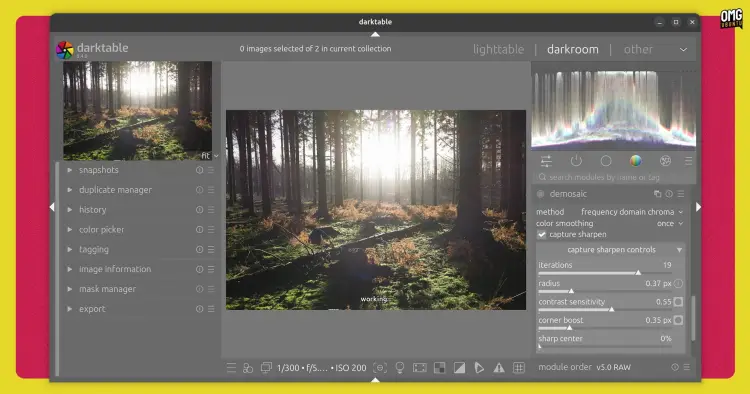
Darktable reaffirmed its status as a top-tier open-source RAW photo editor (replace with “open-source photo editing software”) with a feature-packed update:
- Advanced Tone Mapping: Incorporates Blender’s AgX, offering explicit white/black point controls, tone curve pivot adjustments, and dedicated shadow/highlight contrast sliders for greater editing precision.
- Workspace Support: A long-requested feature allowing distinct databases/configurations (e.g., separating professional projects from personal photos or experimental edits).
- Built-in Capture Sharpening: Integrated into the demosaic process to counteract detail loss from lens blur.
- Performance & Compatibility: Significant speed-ups, particularly when using NAS/spinning HDDs; proper ICC profile support under Wayland.
- New Camera Support: Added compatibility for flagship models like Canon EOS R1/R5 Mark II, Nikon Z fc, Sony ZV-1M2, Fujifilm X-E5, and Leica Q3 Monochrome, plus updated profiles.
Source: Official Darktable Website/Release Notes
Clapper 0.10.0: Evolution of Media Playback
Clapper advanced its plugin-centric architecture:
- Enhanced Plugin System: MPRIS controls, Server functionality, and Discoverer features migrated to plugins, configurable via Preferences. Lua enables custom plugin creation.
- Improved User Experience: Frame-stepping (
Ekey), GStreamer pipeline previews, intuitive speed icons (visual refresh), drag-and-drop between lists. - Architectural Flexibility: Positions itself both as a usable desktop media player and a library (
libclapper) for embedding playback capabilities into other Linux applications.
MPV 0.41.0: Performance Leap for Video Fans
This powerhouse command-line video player took a major step forward:
- New Rendering Engine: Defaults to
libplacebo‘sgpu-nextbackend, promising faster decoding/playback and superior High Dynamic Range (HDR) handling. - Wayland Improvements: Full support for
color-management-v1&wp-color-representation-v1protocols for accurate colors, tablet input handling, and clipboard ops. - Interface Tweaks: Added buffer status indicator, frame-stepping support.
- Hardware Decoding Prioritization: Favors Vulkan decoding where supported for efficiency.
Scribus: Stability Refinements Leap Forward
The desktop publishing ecosystem saw updates across two branches:
| Scribus Version | Focus | Key Improvements |
| :————– | :—- | :——————————– |
| 1.6.5 (Stable) | Bug fixes & Security | Dark/light mode fixes, color picker fixes, PDF export font rendering. Security patch blocking remote SVG loading. |
| 1.7.1 (Development) | Feature Expansion | Builds on Qt Advanced Docking SVGs, palettes, whitespace mode, optical margins. Adds Preferences search, document log interface, security fixes. |
(Source: Scribus Website Changelogs)
Boosting System Management and Productivity Powerhouses
Beyond creative tools, utilities crucial for Linux infrastructure and office productivity received vital updates.
QEMU 10.2.0: Leveling Up Virtualization
The bedrock emulator/virtualization tool saw massive community effort:
- Performance Advancements: Introduces live migration mode for updating running VMs with minimal overhead. Adoption of
io_uringoptimizes the main processing loop significantly. - Extended Architecture Support: Major gains for ARM emulation, PowerPC adds PowerNV11/PPE42 CPU support, FreeBSD hosts gain 9pfs filesystem sharing.
- Niche Hardware Emulation: Added the capability to emulate the HP 715/64 workstation for HPPA architecture enthusiasts.
Crucial Reminder: Check deprecation notices (Official QEMU Documentation) before upgrading mission-critical VMs.
Raspberry Pi Imager 2.0.3: Faster, Smarter Imaging
The essential tool for flashing OS images onto SD cards became faster and more versatile:
- Significant Write Speed Boost: Optimized I/O handling reduces image writing time considerably.
- Advanced Diagnostics: Implements bottleneck detection, real-time progress updates, and a detailed timing breakdown accessible via
Ctrl+Shift+P. - Enhanced Usability: Added password field visibility toggle, restored multiple SSH key support, improved screen reader compatibility, new macOS/Linux icons.
- Custom Repo Support: Pull OS images from third-party sources directly within the app.
ONLYOFFICE 9.2.1: Security & Stability Sanity
Following its major AI/macro-powered 9.2 release, ONLYOFFICE prioritized crucial fixes:
- Critical Bug Squashing: Resolved Korean text wrapping (Document Editor), spreadsheet data overlap on copy/paste operations, PDF Editor glitches (opening, scrolling, Find panel actions, page deletion).
- Essential Security Patching: Addressed dangerous exploits:
- XSS injection via font fields
- Text area vulnerability in comment forms
- Potential information leaks via memory manipulation during XLS conversions
- Highly Anticipated: Official Linux ARM64 build support arrived.
The Unsung Engine Room of Linux: Building Towards Tomorrow
These December 2025 Linux updates weren’t merely minor tick-box exercises; they were substantive refinements directly addressing user feedback and technological shifts. Darktable empowers photographers to tackle RAW files from bleeding-edge cameras while simplifying workflow separation. QEMU’s performance optimizations enable denser, more efficient virtual machine utilization. ONLYOFFICE hardened its security posture significantly while expanding hardware accessibility. MPV embraced modern rendering paradigms for demanding video formats. Each fix and feature incrementally makes Linux desktops more powerful, stable, secure, and enjoyable.
These releases epitomize the resilience and responsiveness of the open-source development model. They demonstrate how community-driven projects, even as they mature, continue to evolve rapidly based on real-world needs. Each performance gain, UI tweak, or security patch represents countless hours from dedicated contributors ensuring Linux remains a compelling platform – not just through major announcements, but through these consistent, foundational updates. As you explore the exciting Linux releases of 2026, remember the groundwork was laid weeks prior. Which December update has already started improving your workflow? Share your experiences below!


