
Robots at Cellular Scale: Microscopic Machines Defying Engineering Limits
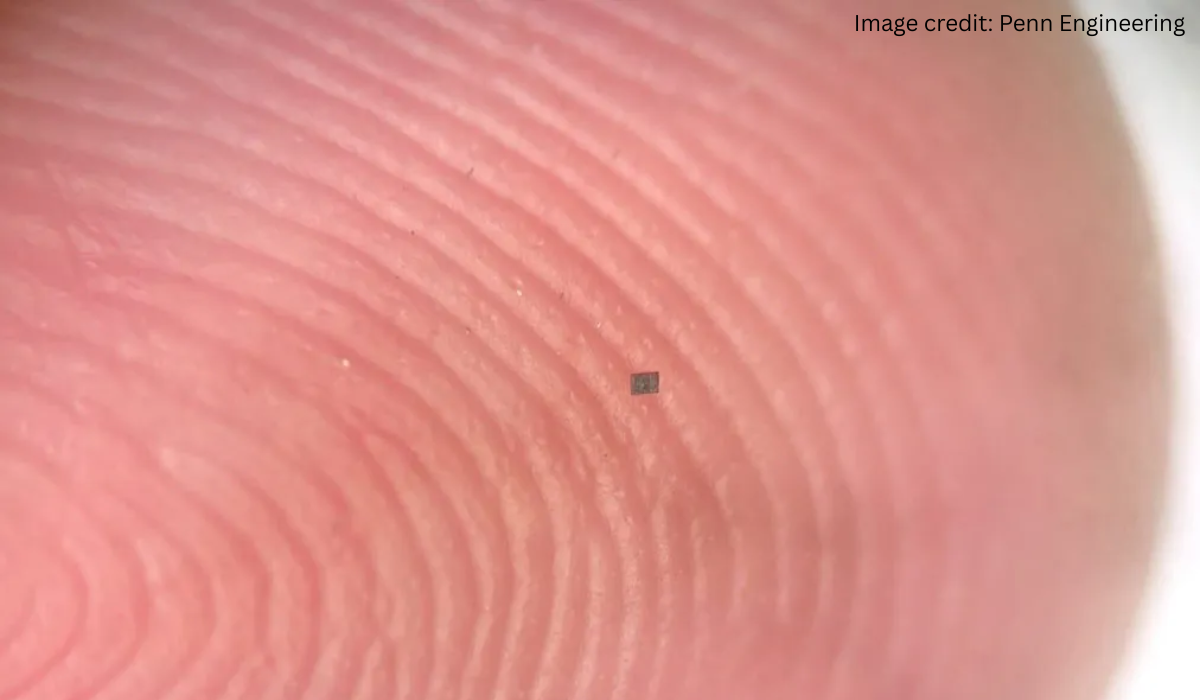
Imagine robotic devices so small that hundreds could dance across the width of a single human hair – and each operates entirely on its own. This isn’t science fiction. A pioneering collaboration between engineers at the University of Pennsylvania and the University of Michigan has shattered miniaturization barriers, creating the world’s smallest autonomous robots smaller than a grain of salt. Measuring a mere 200×300×50 micrometers (about one-tenth the width of a millimeter), these microscopic pioneers represent a quantum leap in microrobotics, operating directly at the scale of biological cells. This breakthrough isn’t just about shrinking machinery; it unlocks unprecedented potential for exploring realms once hopelessly beyond our grasp – the intricate world inside living tissue and across microscopic landscapes. It forces us to ask: What becomes possible when machines navigate life’s fundamental building blocks?
Engineering the Microscopic: How These Autonomous Robots Function
Creating true autonomy at a scale previously dominated by microorganisms required ingenious engineering solutions that defy conventional robotics design.
-
Mass-Produced Micro-Machines: A cornerstone of this breakthrough is scalability. Leveraging established semiconductor fabrication processes akin to computer chip manufacturing, these robots cost approximately one cent per unit to produce. This mass-production capability is essential for the envisioned swarm applications. Silicon substrates form the foundation, onto which layered components are precisely patterned.
-
Integrated Power and Motion: Perhaps the most surprising innovation is using light as both power and propulsion. Tiny integrated photovoltaic cells do double duty:
- Harvesting energy directly from external light sources like lasers or specialized lab LEDs.
- Functioning as actuators – electrical currents generated in the photovoltaics cause tiny leg-like structures attached to them to bend rhythmically (@ PNAS DOI: 10.1073/pnas.1916822117 details the actuator mechanism). This elegant solution eliminates bulky batteries and complex motor assemblies. Movement occurs through controlled bending of multiple piezoelectric ‘legs’ driven by the generated currents.
-
Onboard Brain and Sensors: Despite their size, these microbots incorporate basic computational logic fabricated directly onto their silicon bodies. This silicon brain allows them to respond to sensory input – primarily programmed responses to environmental stimuli like changes in light patterns – without constant external direction. Simple integrated circuits enable tasks like initiating movement when triggered by a specific signal or altering course.
-
Durable Design: Engineered for longevity in controlled environments, these autonomous robots are constructed from robust materials like silicon carbide and platinum. Researchers propose they could potentially operate autonomously for months under ideal laboratory conditions, a significant feat for untethered microscale devices.
Evolution of Microrobot Size Compared to Known Objects:
| Object/Robot | Approximate Size | Scale Context |
|---|---|---|
| Grain of Rice | ~8,000 μm (8 mm) | Common Size Reference |
| Previous Microbots | ~1,000 μm to 10,000 μm (1-10 mm) | Larger, often tethered |
| New Autonomous Microbots | 200 x 300 x 50 μm | Microscopic Cell Scale |
| Human Hair Width | ~70 μm | Over 60 bots fit across |
| Skin Cell | ~30 μm | Comparable Scale |
Navigating the Same Realm as Life Itself: Significance of Cellular Scale Operation
The profound impact of this research lies in the robots’ operational environment – the microscopic world typically inhabited by cells, bacteria, and intricate microstructures. Their size, roughly equivalent to many microorganisms, unlocks unique investigative potential previously impossible.
-
Intimate Interaction with Single Cells: Traditional microscopes observe cells; these robots could interact with them directly within 3D environments like tissues or specialized cell cultures. Imagine deploying swarms to:
- Track the real-time migration patterns of individual neurons.
- Monitor specific biochemical signals emanating from immune cells during an inflammatory response.
- Observe cell division with unparalleled proximity and precision (Science Robotics DOI: 10.1126/scirobotics.aaz3866 discusses observational potential). This offers vastly more dynamic data than static imaging.
-
Exploring Inaccessible Micro-Environments: Beyond biology, these robots present tools for exploring complex microscale structures in materials science, microfluidics, and nanotechnology. They could navigate intricate microfluidic channels designed to mimic blood vessels, characterize the fine structures within newly synthesized porous materials, or assist in assembling delicate micro-electro-mechanical systems (MEMS) components.
Beyond the Lab Bench: Envisioning Potential Horizons
The realization of functioning autonomous robots at the cellular scale sparks speculation about transformative long-term applications, primarily driven by their autonomy, survivability, and accessibility:
- Advanced Disease Research and Drug Discovery: Microbots navigating lab-grown, organ-like tissues (organoids) could continuously monitor physiological responses to drugs or toxins at the cellular and sub-cellular level over days or weeks. This provides dynamic biomarker tracking impossible with destructive sampling methods.
- Microscale Diagnostics: Future generations could potentially be programmed to detect specific disease markers within biological samples circulating in diagnostic microfluidic chips (“lab-on-a-chip” devices), offering faster, highly localized results.
- Regenerative Medicine Insights: Studying how cells orchestrate tissue repair is complex. Swarms of microbots could offer unique perspectives on communication and behavior dynamics within regenerating tissues inside tailored bioreactors.
- Micro-Fabrication: Coordinated groups of microbots could play a role in assembling complex microscopic structures or materials, acting like programmable “molecular hands” guided by external programming with minimal external manipulation.
- Environmental Sensing: Microbots dispersed in liquids could continuously monitor microscopic parameters like pollutant concentrations or chemical gradients at unprecedented spatial resolutions.
Crucially, co-lead researcher Marc Miskin emphasized these robots interact with the microscale world precisely because they share its physical dimensions. This coexistence enables novel investigations autonomous robots at cellular scale inherently facilitate.
A Milestone, Not a Product: Grounding Expectations in Reality
While the potentials are staggering, it’s vital to recognize the current stage of this technology. The research, as compellingly detailed in Proceedings of the National Academy of Sciences (PNAS) and Science Robotics, explicitly marks this achievement as a technical milestone.
- Experimental Proof-of-Concept: These microbots operate under highly controlled lab conditions. Their locomotion and sensing are rudimentary. They require specific, directed light sources and predefined environments for power and operation.
- No Near-Term Commercial Use: Labs showcase capabilities; engineers focus on solving fundamental scientific hurdles. Expect no integration into consumer tech or medical procedures outside experimental contexts anytime soon.
- Navigation Challenges: Precise control and directed navigation outside pre-defined light-path signals remain significant challenges for meaningful deployment.
- Biocompatibility Limitations: While potentially operable in biological environments resembling tissues, current materials aren’t designed for safe, long-term implantation inside living organisms – a complex hurdle requiring extensive biocompatibility engineering and regulatory approval.
This breakthrough fundamentally demonstrates it’s possible to integrate power harvesting, computation, motion, and sensing into a footprint smaller than a grain of salt. It powerfully validates decades of progress in miniaturization and autonomous control principles pushed to their extremes. It’s a beacon illuminating the engineering path towards future microbots that might one day actively participate in intricate microscopic tasks.
Microscopic Pioneers Pointing the Way Forward
The creation of these potent micro-initiatives—self-sufficient robots dwelling comfortably beside biological cells—signals a paradigm shift. We’ve transcended mere observation; the potential now exists to interact with the microscopic world dynamically and autonomously, using machines built at life’s own scale. The integration of essential robotic functions—power, motion, sensing, computation—into a speck smaller than salt pushes engineering ingenuity to new heights. While deploying armies of autonomous robots inside living bodies exists firmly in the realm of scientific aspiration today, the foundational milestone achieved here proves it’s within the realm of engineering possibility. The path ahead involves refining control, developing sophisticated biocompatible platforms, and navigating complex ethical considerations. For now, these tiny titans of technology offer scientists a revolutionary lens, promising unparalleled insights into cellular biology and material science. The microscopic frontier is opening; the journey of these invisible autonomous agents has just begun. What microscopic secrets might they unlock next? Share your thoughts on this transformative leap!


