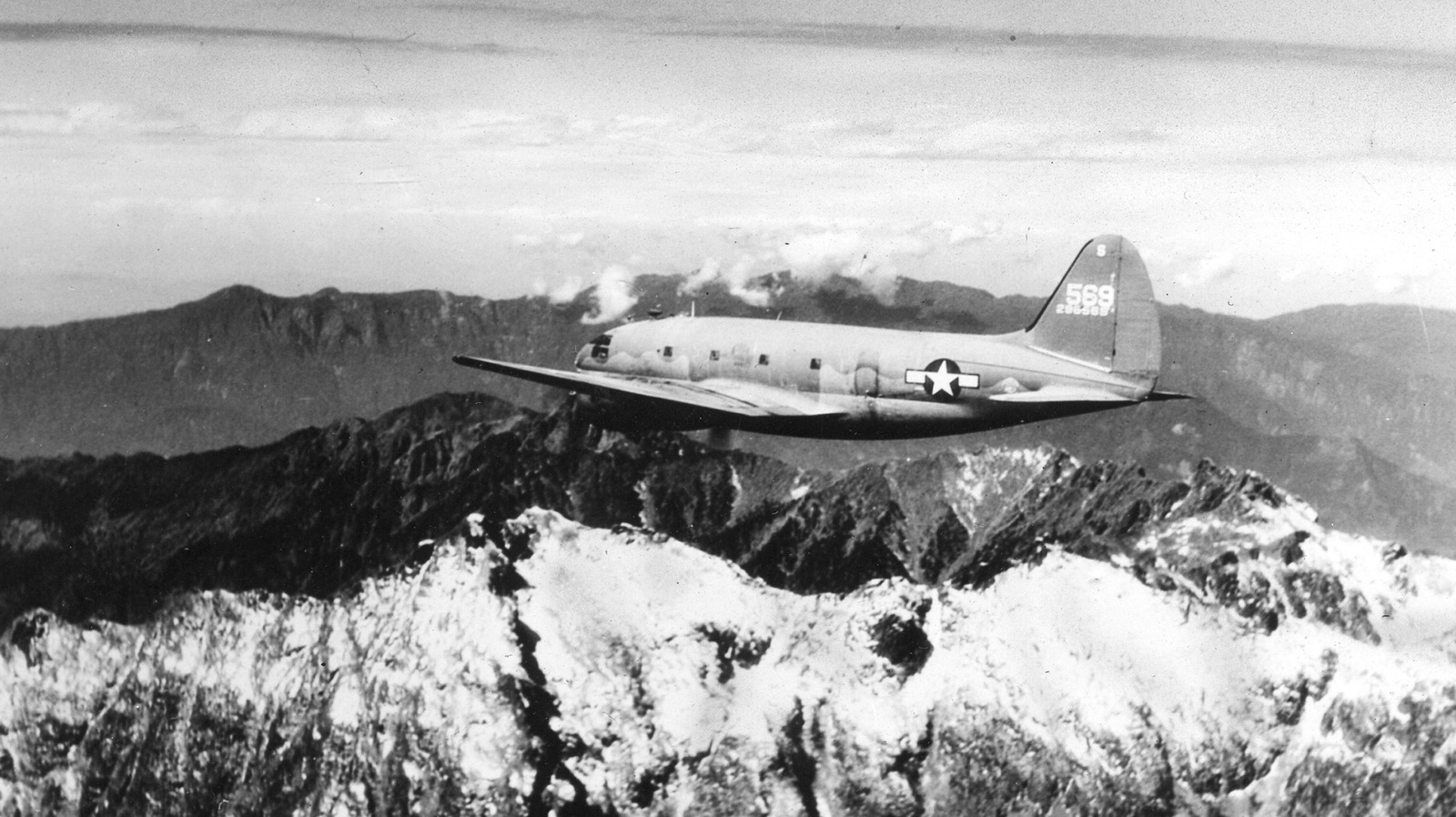

Did you know that some of the most dangerous and crucial missions of World War II weren’t bombing runs, but supply flights? Often overshadowed by the daring exploits of fighter pilots and bomber crews, the critical role of cargo aircraft in sustaining Allied forces cannot be overstated. One of the most extraordinary examples of this was “Flying the Hump,” a perilous airlift operation over the Himalayas. This article delves into the incredible story of Flying the Hump, the dangerous lifeline that kept China in the fight against Japan.
Flying the Hump: A Vital Lifeline in World War II
The China-Burma-India (CBI) Theater of World War II presented unique logistical challenges for the Allied forces. With the Japanese army controlling vital ground routes, supplying the war effort required a monumental feat of aviation. “Flying the Hump” became the code name for this incredibly risky, yet crucial, operation. It involved transporting supplies by air from India over the Himalayas to Allied troops in China.
The Strategic Importance of the China-Burma-India Theater
Why was keeping China supplied so important? Several key reasons underpinned this strategy:
- Holding Down Japanese Forces: A strong Chinese resistance tied up a significant portion of the Japanese army, preventing them from being deployed elsewhere in the Pacific.
- Potential Launching Point: China was envisioned as a potential staging ground for future offensives against Japan.
- Supporting Chiang Kai-shek’s Government: The U.S. supported the Nationalist government of Chiang Kai-shek, hoping to bolster its legitimacy and prevent a communist takeover after the war.
The Closure of the Burma Road
Prior to 1942, the Burma Road served as the primary supply route into China. This arduous overland route snaked through mountainous terrain, connecting British Burma (now Myanmar) with southwestern China. However, in the spring of 1942, Japanese forces captured Burma, effectively severing this vital artery. The Allied forces were left with a pressing need to find an alternative supply line. The solution was “Flying the Hump”.
The Challenges of “Flying the Hump”
“Flying the Hump” was anything but a routine cargo operation. It presented aviators with a terrifying combination of natural and man-made obstacles.
Navigating the Himalayan Terrain
The Himalayas, the world’s highest mountain range, posed a formidable challenge to even the most experienced pilots. The route involved flying from altitudes as low as 100 feet above sea level in the Indian valleys to as high as 18,000 feet over the mountain passes. The pilots flew over treacherous terrain, with little room for error. Modern-day airports in the Himalayas are still considered the most dangerous in the world.
The Unpredictable Weather Conditions
The Himalayan weather was notoriously unpredictable and treacherous. Pilots encountered:
- High Winds: Powerful winds, often exceeding 100 mph, buffeted the aircraft, making navigation extremely difficult.
- Blizzards: Sudden blizzards could reduce visibility to near zero, disorienting pilots and increasing the risk of crashes.
- Extreme Turbulence: The turbulent air currents over the mountains made for a bone-jarring and exhausting flying experience.
- Monsoon Season: The monsoon season brought torrential rains and thick clouds, further complicating the already dangerous flight conditions.
Imagine a three-hour flight turning into a ten-hour nightmare, battling severe weather and towering mountains.
Technological Limitations of the Era
The aircraft of the 1940s were not equipped with the advanced navigation and weather radar systems we rely on today. Pilots relied on:
- Primitive Navigation Gadgets: The pilots had to navigate using basic maps, compasses, and dead reckoning, increasing the likelihood of getting lost.
- Less Powerful Aircraft: The aircraft used in the early stages of the operation were underpowered for the heavy loads they were carrying, making it difficult to climb to safe altitudes.
The Threat of Japanese Fighters
Beyond the natural hazards, pilots also faced the constant threat of Japanese fighter planes. While the primary mission was to transport supplies, the cargo planes were vulnerable targets. These lumbering transports had to be constantly vigilant, taking evasive action to avoid enemy attacks.
Aircraft of the Hump
Several types of aircraft played key roles in Flying the Hump.
- Douglas DC-3/C-47 Skytrain: The DC-3 and its military variant, the C-47, were the workhorses of the early airlift operations. These reliable aircraft were well-suited to the task, but they had limited cargo capacity.
- Curtiss C-46 Commando: In 1943, the more powerful Curtiss C-46 Commando began to arrive. Nicknamed “Ol’ Dumbo” due to its ungainly appearance, the C-46 could carry significantly heavier loads than the C-47, greatly increasing the efficiency of the airlift.
| Aircraft | Cargo Capacity (approximate) | Notes |
|---|---|---|
| Douglas C-47 Skytrain | 6,000 lbs | Workhorse of early operations, reliable but limited capacity. |
| Curtiss C-46 Commando | 10,000 lbs | Arrived in 1943, significantly increased cargo capacity, became a legend in the Hump operation, but had some maintenance and reliability issues. |
While the C-46 was a significant improvement in terms of cargo capacity, it also had its drawbacks. It was known for being mechanically temperamental and required frequent maintenance. Wikipedia offers a deeper dive into the specifications and challenges of the C-46.
The Human Cost of “Flying the Hump”
The “Flying the Hump” operation was a resounding success, delivering over 685,000 tons of military supplies to China between 1943 and 1945. Over 450,000 flights were made across the perilous route. However, this success came at a tremendous human cost.
- Over 500 Crashes: The treacherous conditions and constant strain on the aircraft resulted in over 500 crashes.
- More Than 1,300 Crew Members Died: Over 1,300 aircrew members lost their lives in the “Flying the Hump” operation. This high casualty rate is a testament to the extreme dangers of the mission.
The bravery and sacrifice of these airmen often go unacknowledged. They flew day in and day out, facing incredible odds to keep the Allied forces in China supplied. Their dedication and courage deserve our deepest respect and remembrance.
Legacy and Remembrance
The pilots who flew “the Hump” may not be as widely recognized as fighter aces or bomber pilots, but their contribution to the Allied war effort was indispensable. They are every bit as deserving of a place among World War II’s great aviators. Their legacy of courage, skill, and determination continues to inspire aviators today. Memorials and historical accounts serve as a reminder of their sacrifice and the vital role they played in the war.
In conclusion, “Flying the Hump” was an extraordinary feat of logistics and aviation, conducted under some of the most challenging conditions imaginable. The courage and skill of the pilots who flew these dangerous missions were crucial to keeping China in the fight against Japan. Their sacrifices should not be forgotten.
What do you think about the bravery of these pilots? Share your thoughts in the comments below!
Sources & Further Reading:
Original article at www.slashgear.com


