
Brighter Horizons: India’s Bold Semiconductor Dream Hits Critical Crossroads
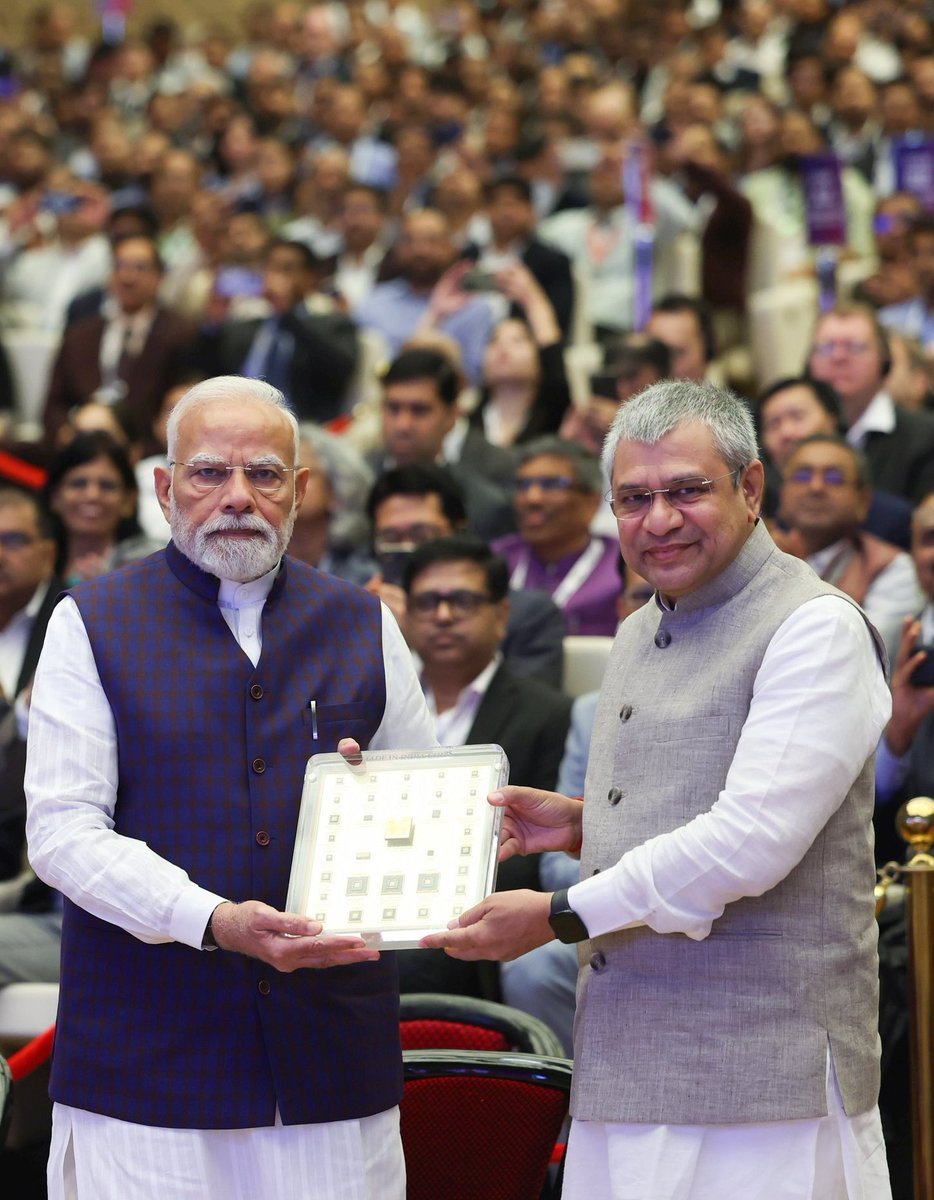
The resounding declaration echoed across Semicon India 2025: “When the chips are down, you can bet on India!” As Prime Minister Narendra Modi proudly received India’s first indigenously designed 32-bit microprocessor, the Vikram, the statement was both a celebration and a high-stakes gamble. This milestone marks a crucial step in India’s ambitious $18-billion venture to transform from a passive semiconductor importer into a major global manufacturing hub. The target? Commercial chip production starting before the end of 2025. But behind the celebratory rhetoric and significant investments lie immense technical gaps, fierce global competition, and unproven execution capabilities. Can India transition from symbolic achievements like the Vikram to becoming a commercially viable player in one of the world’s most complex and capital-intensive industries?
Financing the Foundations: Billions on the Line
India’s push into semiconductor manufacturing represents one of its largest industrial commitments in decades. The numbers are undeniably substantial:
- Government Backing: Through the Production Linked Incentive (PLI) scheme, ₹76,000 crore (approx. $9.1 billion) has been earmarked specifically for semiconductors. Of this, a significant ₹65,000 crore has already been committed to approved projects.
- Total Project Pipeline: The combined investment across 10 identified semiconductor ventures reaches a staggering $18 billion.
- Market Growth Trajectory: Driven by domestic electronics demand and export ambitions, India’s semiconductor market is projected to surge from $38 billion in 2023 to $45-50 billion in 2024-25. The government’s audacious target is $100-110 billion by 2030.
However, this financial scale is a double-edged sword. Historic attempts by nations like Malaysia and Thailand underscore how difficult it is to build a globally competitive chip fabrication industry from scratch. Success requires not just initial capital, but decades of sustained, high-risk investment with no guarantee of return.
| Financial Commitment Area | Amount (USD / INR) | Purpose |
|---|---|---|
| PLI Scheme Allocation | $9.1 Billion / ₹76,000 Cr | Government Subsidies to Attract Manufacturing |
| Committed PLI Funds | ~$8.1 Billion / ~₹65,000 Cr | Funds Already Allocated to Approved Projects |
| Total Project Value | $18 Billion | Across 10 Semiconductor Projects |
First Steps: Operational Milestones and Early Capabilities
Tangible progress is being made. The CG Power facility in Sanand, Gujarat, launched in August 2024, stands as India’s first operational semiconductor assembly, testing, marking, and packaging (ATMP) unit. Its journey is just beginning:
- Currently handling 500,000 units per day.
- Plans to scale dramatically to 14.5 million units daily.
- Expected to produce the first commercial “Made in India” packaged chips soon.
The Vikram processor, developed by ISRO’s Semiconductor Lab, signifies a notable achievement in domestic design and older-node fabrication. Yet, its specifications highlight the enormous technological leap India must make:
- Fabricated using 180-nanometer (nm) CMOS technology.
- Technically mature and reliable for niche applications like aerospace.
- But critically, it’s based on a process that was leading-edge around 2000, placing it roughly 25 years behind current industry leaders.
For perspective (SEMI Global Wafer Fab Forecast):
- Cutting-edge smartphones today use chips fabricated at 3nm.
- Mid-range consumer electronics typically employ 7-14nm processes.
Building Capabilities: Design Strength, Manufacturing Gap, and Talent Pipeline
India’s foundation isn’t entirely lacking. There are significant strengths to leverage:
- Design Prowess: Estimates suggest India contributes 20% of the global semiconductor design talent pool. The Design Linked Incentive (DLI) scheme actively supports this with 23 approved chip design projects. Facilities in Noida and Bengaluru possess 3nm design capabilities, placing India among the elite in chip design sophistication.
- International Partnerships: Major collaborations provide crucial technology transfer:
- Micron Technology ($2.7B / ₹22,516 Cr) : Building an ATMP facility in Gujarat.
- Tata Electronics ($11B / ₹91,000 Cr): Partnering with Taiwan’s Powerchip Semiconductor Manufacturing Corp (PSMC) for a fab, leveraging its experience.
- Talent Development: The government claims over 60,000 students have been trained in semiconductor-related skills.
However, deep chasms remain:
- Manufacturing ≠ Design: Excellence in chip design does not equate to mastery of complex, high-yield semiconductor manufacturing. Fab operation requires deep expertise in process engineering, yield optimization, materials science, and intricate supply chain management – skills India is developing.
- Tech Dependency: Partnerships bring vital knowledge, but also underline reliance on foreign expertise and equipment (from companies like ASML and Applied Materials) for the foreseeable future.
- Talent Scale & Specialization: Industry insiders warn that 60,000 trained individuals are just the tip of the iceberg; building a globally competitive semiconductor production ecosystem will require exponentially more highly specialized engineers and technicians.
The Global Chessboard: Opportunity and Intensifying Competition
India’s push is strategically timed amidst a global scramble to diversify geographically concentrated semiconductor supply chains:
- Taiwan’s Dominance: Produces over 60% of global semiconductors and 90% of the most advanced chips, creating significant geopolitical and economic risk. (Council on Foreign Relations).
- Global Subsidy Race: Active government intervention is now the norm:
- US CHIPS and Science Act: Over $50 billion to revitalize domestic US chip production. (U.S. Department of Commerce)
- European Chips Act: €43 billion to boost EU semiconductor capacity. (European Commission)
- Japan: Committed 10 trillion yen ($68 billion), including semiconductor cooperation with India.
- India’s Opening: This diversification drive presents a massive opportunity for India to attract investment and become a key alternative manufacturing location. Japan’s expressed interest exemplifies this.
However, the challenges are formidable:
- Stiff Competition: India is entering an arena where established giants (TSMC, Samsung, Intel in the US/Europe push) have decades of experience, optimized supply chains, massive economies of scale, and deeply entrenched talent pools.
- Technology Transfer Limits: Global partnerships are essential but often come with restrictions on accessing the most advanced proprietary technologies.
- Subsidy War: Countries are aggressively outbidding each other, forcing India to compete not just on capability but on financial incentives.
Navigating the Gauntlet: Overcoming Formidable Barriers
The semiconductor industry is notorious for its barriers to entry, posing significant hurdles for India:
- Colossal Capital Intensity: Building a single leading-edge fab costs $10-20 billion, requiring continuous investment as technology rapidly evolves. India’s current projects, focused on ATMP and older nodes (like the initial 180/65nm plans), are less capital-intensive starting points but also less competitive on the leading edge.
- Technological Mountain: Mastering advanced fabrication (moving towards 3nm and beyond) involves incredibly complex physics and chemistry. Hundreds of precise steps are required to produce a single chip. Yield rates (the percentage of usable chips per wafer) are critical for profitability and take immense expertise to optimize. Catching up from the 180nm node is a Herculean task.
- Supply Chain Vulnerability: Manufacturing depends on a vast, intricate network supplying ultra-pure chemicals, specialized gases, silicon wafers (epitaxial growth is critical), and photomasks. Establishing reliable indigenous suppliers is a multi-year, multi-billion dollar endeavor itself. Disruptions at any point can cripple production.
- The Execution Chasm: As industry leader Sanjeev Srivastava (Delta Electronics India) noted, the sector “has started” but remains embryonic. Transforming policy announcements, test chips, and groundbreakings into viable commercial chip manufacturing with competitive costs, consistent high yields, and global quality standards is the core challenge. Market realities (cost per chip, defect density, reliability specs) ultimately decide success or failure.
- Talent Transformation: Bridging the gap between theoretical training, software/design skill sets, and the practical, specialized engineering required for high-volume fab operations is a major undertaking. Only actual operational experience builds this expertise.
The Road to 2025 and Beyond: Make or Break
India’s semiconductor ambitions are undeniably ambitious and mark a significant shift in its industrial strategy. Early milestones like the CG Power ATMP facility and the Vikram processor demonstrate movement from ideas to concrete steps. Strong design capabilities, government financial muscle (PLI/DLI schemes), and a large domestic market provide unique advantages.
However, the journey has barely begun. The technological gap remains vast, the global competition is intense and subsidized, and the path from early packaging/test facilities and older-node fabrication to internationally competitive, cutting-edge semiconductor production is long, risky, and uncharted for India. Relying heavily on foreign equipment and technology partners also introduces potential vulnerabilities, especially regarding geopolitical tensions or export controls.
The next 12-18 months are critical commercial testing ground. Can India deliver?
- Will the Sanand ATMP facility scale successfully to 14.5 million units/day with competitive yields and quality?
- Will the Micron and Tata-PSMC projects begin pilot production smoothly?
- Can India attract the necessary depth of specialized talent?
Prime Minister Modi’s confident bet hinges on translating ambition and investment into world-class manufacturing execution. Success could reshape global supply chains and elevate India’s technological sovereignty. Failure would be a costly lesson in one of the world’s most demanding industries. The world is watching keenly. Can India truly place its chips on the table and win?
Is transforming into a semiconductor powerhouse feasible without mastering cutting-edge nodes first? Let us know your thoughts on India’s high-risk, high-reward strategy below! Explore the latest global tech advancements at enterprise events like TechEx.


