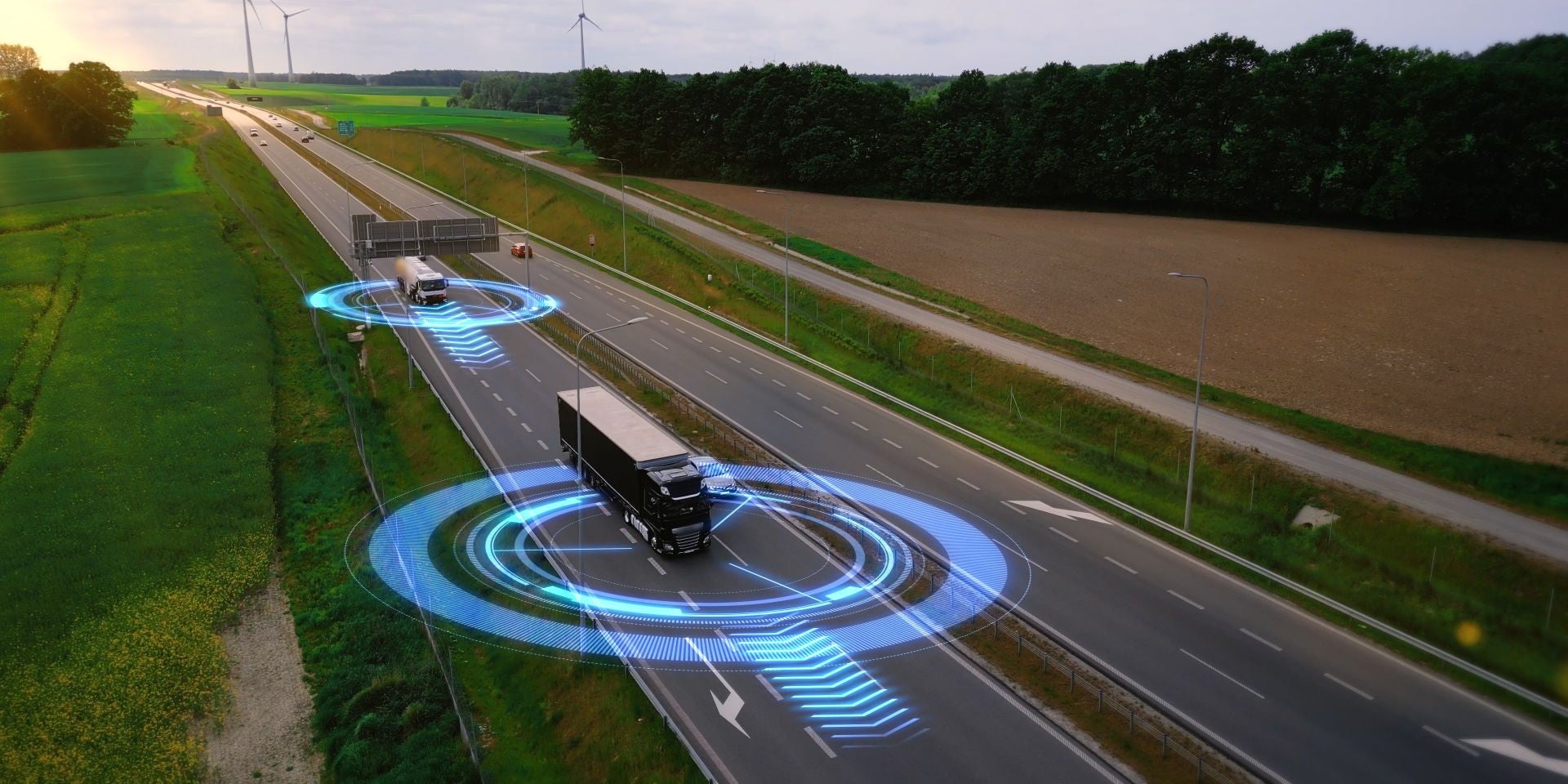

The AI Revolution in Logistics: What’s Actually Happening in 2025?
Introduction
Remember headlines promising fleets of self-driving trucks by 2025? The reality is far more nuanced. While Hollywood-style autonomy dominates conversations, our exclusive research exposes a surprising gap: only 7% of logistics businesses actually use autonomous vehicles (AVs) like drones or self-driving trucks. Yet, AI’s quieter applications—fleet telematics, predictive maintenance, and route optimization—are transforming supply chains at scale. Why are companies prioritizing data-driven efficiencies over flashy robotics? This disconnect reveals critical insights about AI in logistics, where practical ROI trumps futuristic hype. As supply chain volatility intensifies, understanding these tactical AI deployments becomes essential for resilience, cost control, and competitive advantage. Let’s dive beyond the hype.
The Autonomous Illusion: Why AVs Aren’t Dominating Logistics
Bold Predictions vs. Operational Reality
Autonomous vehicles were touted as the logistics game-changer. Yet, our data shows only 7% of businesses deploy AVs for trucks, ships, or drones. Regulatory hurdles (like the EU’s strict AV liability directives[^1]) and astronomical R&D costs ($20B+ invested globally with minimal ROI[^2]) stall adoption. Safety concerns also linger—85% of shippers cite “unpredictable real-world variables” (e.g., weather, pedestrians) as adoption barriers[^3].
Table: AI Adoption in Logistics (2025)
| Technology | Adoption Rate | Key Driver |
|—————————–|——————-|——————————|
| Fleet Management & Telematics | 31% | Real-time cost optimization |
| AI Route Optimization | 29% | Fuel/time savings |
| Predictive Maintenance | 25% | Downtime reduction |
| Autonomous Vehicles | 7% | Early-stage trials |
Fleet Management & Telematics: The Unseen Backbone (31% Adoption)
Logistics leaders leverage AI-driven telematics for granular visibility. Sensors track everything:
- Fuel Efficiency: Machine learning analyzes driving patterns, reducing consumption by 15% (e.g., UPS’s ORION system[^4]).
- Real-Time Tracking: GPS + IoT devices monitor location, temperature, and cargo stress, cutting theft/loss incidents by 30%[^5].
- Driver Safety: AI algorithms flag risky behaviors (hard braking, speeding), lowering accident rates by 22%[^6].
Example: Maersk’s remote container management slashed refrigeration unit failures by predicting voltage fluctuations.
AI Route Optimization: Beyond Google Maps (29% Adoption)
Static routes are obsolete. Dynamically adapting to traffic, weather, and demand spikes, AI algorithms:
- Cut Fuel Costs: Reducing idle time saves $35K annually per truck[^7].
- Improve ETAs: Real-time rerouting boosts on-time deliveries from 88% to 96%.
- Balance Workloads: Tools like Blue Yonder predict warehouse congestion, adjusting fleets preemptively.
Why it dominates: For a mid-sized carrier, ROI hits 6:1 within a year[^8]—far quicker than AV trials.
Predictive Maintenance: Stopping Breakdowns Before They Happen (25% Adoption)
Reactive repairs cost 3X more than predictive interventions. AI platforms (e.g., Siemens’ Railigent) ingest sensor data to:
- Identify engine anomalies weeks before failure.
- Prioritize parts replacement, extending asset life by 20%[^9].
- Integrate weather and route data to forecast wear-and-tear.
Case Study: DHL’s predictive hubs reduced downtime by 40% using vibration and thermal sensors[^10].
Why These Technologies Are Winning (And AVs Aren’t)
Four Pillars of Pragmatic Adoption
- ROI Speed: Fleet telematics yields 12–18 month payback vs. AVs’ 5+ years[^11].
- Scalability: Cloud-based AI tools deploy in weeks; AVs need infrastructure overhauls.
- Regulatory Fit: Telematics complies with existing frameworks (e.g., ELD mandates).
- Data Readiness: 80% of companies already collect telemetry—AI simply unlocks its value.
Least Adopted vs. Most Impactful
|| Autonomous Vehicles | Predictive Maintenance |
|—|—|—|
| Implementation Cost | $500K+ per vehicle | $50K–$200K per fleet |
| Barriers | Safety laws, public distrust | Staff training, data silos |
| ROI Timeline | 5–10 years | 1–3 years |
Overcoming Adoption Hurdles: Data, Skills, and Culture
Even leading tech faces challenges:
- Data Fragmentation: 60% of logistics firms struggle to unify data across legacy systems[^12]. Solutions include middleware platforms like IBM Sterling.
- Talent Gaps: Demand for AI-savvy logisticians outpaces supply. Companies like FedEx now run in-house upskilling programs.
- Change Resistance: Pilots with phased rollouts (e.g., testing route optimization in one region first) build trust.
The Future: Beyond 2025
Autonomous vehicles will mature, especially in closed environments (e.g., warehouses, ports). However, AI’s next frontier is predictive supply chain orchestration:
- Algorithms simulating disruptions (geopolitical, climate)
- AI brokers automating spot pricing/compliance
- Blockchain + AI for end-to-end carbon tracking
Conclusion
The narrative that AI in logistics equals self-driving trucks oversimplifies a seismic shift. In 2025, real-world adoption centers on telematics, route savvy, and predictive insights—technologies delivering measurable efficiencies today. Autonomous vehicles remain aspirational, hindered by cost and complexity. For stakeholders, the lesson is clear: prioritize scalable, high-ROI AI that integrates seamlessly into existing workflows. As supply chains face unprecedented volatility, data-driven agility isn’t optional—it’s survival.
What do you think? Will AVs eventually dominate, or will pragmatic AI tools remain the backbone? Share your insights below!
Sources
[^1]: EU Automated Vehicles Directive
[^2]: McKinsey: Autonomous Trucking Economics
[^3]: Deloitte: 2025 Logistics Trends
[^4]: UPS: ORION System
[^5]: Forbes: IoT in Supply Chains
[^6]: NHTSA: AI Driver Safety Report
[^7]: American Transportation Research Institute: Operational Costs Analysis
[^8]: Gartner: Supply Chain ROI Metrics
[^9]: Siemens: Railigent Case Study
[^10]: DHL: Predictive Maintenance White Paper
[^11]: Boston Consulting Group: Logistics Tech ROI
[^12]: Capgemini: Logistics Data Challenges
Sources & Further Reading:
Original article at tech.co


