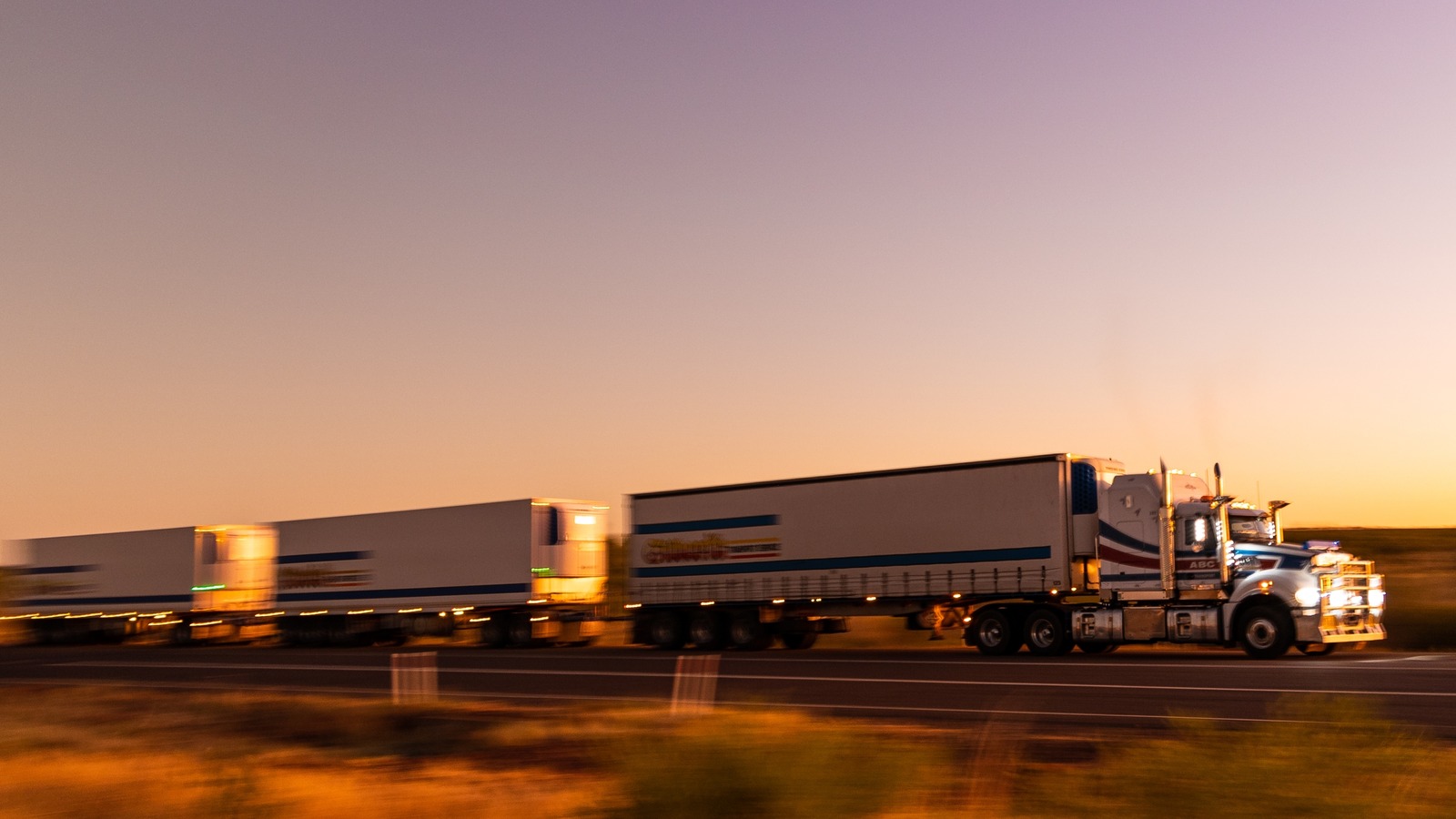

The Kings of the Outback: Exploring the Mighty Australian Road Train
Imagine a truck so long it stretches nearly two football fields. That’s the reality of Australian road trains, gigantic trucking rigs that dominate the vast and sparsely populated Australian Outback. But why are these behemoths so crucial to Australia, and what makes them so unique? This article will delve into the world of road trains, exploring their purpose, classifications, and the powerful machines that keep them rolling across the continent.
Why Road Trains Rule the Australian Outback
The primary role of any truck is to transport goods, but most countries rely on a mix of air, rail, and sea transport in addition to trucking. Australia’s Outback, however, presents a unique challenge. Spanning over 2 million square miles (over 80% of the country’s landmass), the Outback is a remote hinterland, mostly desert, with limited infrastructure. While it’s enormous – almost four times the size of Alaska – it houses only about 5% of Australia’s population. This is where the road train becomes indispensable.
Road trains are the lifeblood of the Outback, serving remote communities and supporting key industries like mining and sheep farming. Without a robust rail network reaching these distant areas, and with air freight being a more costly option, road trains provide a practical and efficient solution for transporting essential goods and raw materials. They bring everything from groceries and fuel to mining equipment and livestock to areas where other forms of transportation simply aren’t feasible.
- Key Industries Supported: Mining, Agriculture (primarily sheep farming), Tourism
- Challenges Road Trains Address: Vast distances, Sparse population, Limited infrastructure, High transportation costs of alternative methods.
Understanding Road Train Classifications and Weight Limits
Unlike standard semi-trucks in the U.S., which are typically limited to 80,000 pounds (including truck, trailer, and cargo), Australian road trains are in a different league altogether. A fully loaded road train can weigh as much as 200 tonnes, which is equivalent to 440,924 pounds. This incredible weight capacity underscores the importance of these vehicles in moving large quantities of goods efficiently.
While road trains are typically limited to a maximum of four trailers on public roads, even longer configurations are sometimes used on private roads, especially in the mining industry. The world record for the longest road train, according to Guinness World Records, consisted of a staggering 113 trailers, stretching an astonishing 4,836 feet and 11 inches. Although it only traveled a short distance (less than 500 feet), it’s a testament to the sheer potential scale of these vehicles.
Here’s a breakdown of common road train configurations:
- B-Double: A prime mover (tractor) towing two semi-trailers. This is one of the more common configurations.
- B-Triple: A prime mover towing three semi-trailers.
- A-Triple: A prime mover towing three full-size trailers. This configuration utilizes “A” trailers which are longer than semi-trailers.
- AB-Triple: A prime mover towing a combination of trailers, such as two full-size trailers and one semi-trailer. This configuration offers flexibility in load distribution and transport.
The specific regulations governing road train configurations and weight limits vary depending on the state or territory within Australia. This is essential to ensure safety and roadworthiness and to protect infrastructure.
The Mack Titan: A Road Train Hero Built for the Outback
Pulling these massive loads requires powerful and reliable machinery. Enter the Mack Titan, a road train hero specifically designed and built in Australia to handle the challenging conditions of the Outback. While Mack Trucks is an American institution, currently owned by Volvo, its Australian operation produces vehicles tailored to the unique demands of the Australian market.
The Mack Titan is powered by a formidable 17-liter Mack MP11 engine, delivering up to 780 horsepower and an impressive 2,800 lb-ft of torque. This power is crucial for hauling up to four trailers weighing as much as 440,000 pounds across vast distances and often challenging terrain.
Beyond raw power, the Mack Titan also prioritizes driver comfort, recognizing the long hours and demanding conditions faced by road train operators. Shifts can often be as long as 17 hours, making driver well-being a critical factor.
Here are some key features of the Mack Titan focusing on driver comfort and efficiency:
- Automatic Transmission: Reduces driver fatigue and improves fuel efficiency.
- Braking Assistance Systems: Enhances safety and control, especially when navigating challenging terrain.
- Hill Start Assist: Prevents rollback on steep inclines, ensuring smooth and safe starts.
- Air Suspension Driver’s Seat: Provides a comfortable and supportive seating experience, reducing driver fatigue.
- Infotainment System: Keeps drivers connected and entertained during long hauls.
- Full-Color Co-Pilot Display: Provides essential vehicle information and diagnostics.
- Walk-Through Sleeper Cabin: Offers a comfortable and functional living space for drivers during rest periods, essentially serving as a mobile home.
These features not only improve driver comfort but also enhance safety and productivity, making the Mack Titan a reliable and comfortable work environment for the men and women who operate these essential vehicles.
The Future of Road Trains and Outback Transportation
As technology advances, the future of road trains and Outback transportation is likely to evolve. We can expect to see greater adoption of autonomous driving technologies, potentially leading to increased efficiency and reduced driver fatigue. Electric or hybrid powertrains could also play a role in the future, helping to reduce emissions and operating costs. Moreover, improved infrastructure, such as upgraded roads and more efficient logistics systems, will further enhance the effectiveness of road trains in serving the Outback.
What advancements could contribute to the future of road trains?
- Autonomous Driving: Reduces labor costs and improves safety.
- Electric/Hybrid Powertrains: Reduces emissions and fuel costs.
- Improved Infrastructure: Enhances efficiency and reduces travel times.
- Advanced Logistics Systems: Optimizes routes and load management.
Conclusion
Australian road trains are more than just big trucks; they are a vital part of the Australian economy and a lifeline for remote communities in the Outback. Their unique design, massive weight capacity, and the dedication of the drivers who operate them make them a truly remarkable feat of engineering and logistics. From transporting essential goods to supporting key industries, these behemoths play a crucial role in connecting the vast and sparsely populated regions of Australia. They are a testament to human ingenuity and the ability to overcome challenging environments. What do you think about the sheer scale and importance of road trains in Australia? Share your thoughts in the comments below!
Sources & Further Reading:
Original article at www.slashgear.com


