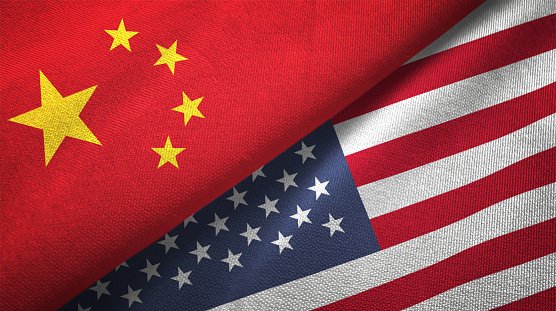

Beyond Bans: The Unprecedented 15% Chip Tax Shaking US-China Tech and Law
Introduction
How much would America’s tech giants pay to stay in China’s $60+ billion AI chip game? Reports of a controversial 15% revenue-sharing deal between Nvidia, AMD, and the US government suggest the answer is staggering. Leaks indicate that to secure licenses for exporting AI processors (specifically Nvidia’s H20 and AMD’s MI308), the chipmakers agreed to pay Washington 15 cents on every dollar of revenue generated from these sales in China. This potential revenue-sharing deal, if confirmed, shatters decades of binary US export policy – licenses granted or denied, no middle ground. Beyond its immediate impact on tech giants, this arrangement raises explosive constitutional questions about export taxes and signals a radical shift in how Washington wields technology as a geopolitical tool. Its importance extends to corporate strategy, international law, and the accelerating fragmentation of the global tech supply chain.
Dissecting the Reported Artificial Intelligence Chip Revenue-Sharing Deal
The Reported Deal: Breaking Down Nvidia and AMD’s China Chip Arrangement
According to sources cited by major outlets including the Financial Times, the core agreement involves:
- 15% Fee Structure: Both Nvidia would pay 15% of revenue from its H20 AI accelerator sales in China, and AMD would pay an identical share based on revenue from its MI308 chips within the Chinese market.
- Targeted Chips: These are specialized AI chips designed after the Biden administration’s tightened 2023 export controls. Nvidia’s H20, a reduced-capability variant, was explicitly created to comply with US power and bandwidth restrictions while remaining viable for Chinese AI applications.
- Lobbying Timeline: Reports indicate this arrangement culminated weeks ago after aggressive lobbying. Significantly, the US Commerce Department began issuing H20 export licenses just days after Nvidia CEO Jensen Huang met with President Trump in late April/early May, highlighting potential high-level intervention.
- Policy Whiplash: This follows a turbulent period. The Trump administration reportedly halted H20 shipments in April, only to signal an approval reversal weeks later under this new revenue-sharing framework.
Constitutional Firestorm: Is the 15% Fee an Illegal Export Tax?
This is the deal’s most explosive implication. Prominent legal experts vehemently argue the reported fee violates the US Constitution:
- Article I, Section 9, Clause 5: The core prohibition: “No Tax or Duty shall be laid on Articles exported from any State.”
- Expert Opinion: Peter Harrell (Biden White House economic official): “…the US Constitution flatly forbids export taxes.” Christopher Padilla (ex-Bush export control official): Labels the deal “unprecedented and dangerous.”
- The Core Legal Argument: Traditional license fees cover administrative costs. A mandatory 15% levy on revenue, akin to a gross receipts tax, directly targets the act of exporting goods. Legal precedent heavily disfavors such exactions on exports. (Source: U.S. Const. Art. I, §9, cl. 5)
- Potential Legal Avenues: If implemented, lawsuits by Nvidia/AMD (unlikely, given their stake), competitors, or Congressional challenges seem inevitable.
Corporate Calculus: Why Nvidia and AMD Might Accept the Deal
-
China’s Irresistible Market: Despite restrictions, China remains a massive AI chip consumer, driving billions in potential revenue. Being shut out entirely is catastrophic. Accepting a 15% haircut allows maintaining vital market share and customer relationships.
-
Nvidia’s Strategy: Passionately stated: “We follow the rules… [we] hope export control rules will let America compete in China and worldwide.” Their global AI dominance offers significant margin headroom to absorb the fee while protecting market access.
-
AMD’s Position: Silence so far, but the MI308 is crucial for gaining AI market traction against Nvidia. Losing China access hampers its competitive momentum significantly.
-
Financial Projection:
Company Estimated Potential China Chip Revenue Potential 15% Fee to US Gov Key Rationale Nvidia (H20 Focus) Likely multi-billions, given massive pent-up demand Easily hundreds of millions annually Avoids catastrophic loss of a primary growth market; absorbs fee within high margins. AMD (MI308 Sales) Significant potential (billions) for strategic market entry Hundreds of millions to over $1B? Essential for challenging Nvidia’s AI dominance globally; fee is premium for market access. -
Long-Term Play: They gamble that access, even costly, is better than exclusion while hoping for longer-term policy shifts or domestic Chinese market evolutions.
Broader Trade Implications: Reshaping Technology Export Controls
This deal doesn’t exist in a vacuum:
- Escalating Tech War: The US-China semiconductor battle has intensified since 2022, with controls tightening over advanced chips deemed critical for military AI and supercomputing.
- A New Paradigm?: This moves beyond simple licensing or ban approval. It creates a conditioned access model: access granted only with a substantial financial contribution to the US government. This fundamentally transforms technology export controls into a potential revenue stream and bargaining chip.
- Precedent Risk: Could this model apply to other sensitive tech? Quantum computing, advanced software, and telecom equipment exports to strategic competitors might be next. (Source: Congressional Research Service report on US-China Tech Competition)
- Global Fragmentation: US firms pay extra for market entry; competitors (e.g., European, Korean, or potentially domestic Chinese firms) don’t. This accelerates the creation of separate, non-interoperable technology ecosystems.
What Comes Next? Legal Battles and Geopolitical Fallout
The path forward is fraught with uncertainty:
- Official Confirmation: Deal repor`ts remain unverified. Concrete details like the legal mechanism, exact fee deployment (a fund for US chip development?), and contractual obligations are unknown.
- Constitutional Showdown: Official implementation guarantees legal challenges, questioning the fundamental limits of executive power on export tax matters.
- Policy Whiplash Impact: Trump’s reversal on the H20 ban, with or without the fee, has already eroded trust in policy stability, noted by officials across parties. Continual disruption harms US credibility.
- China’s Response: Beijing views this as coercion. The deal massively incentivizes China’s already aggressive $150 billion+ investments in domestic semiconductor self-sufficiency to bypass such fees and controls entirely. (Source: Bloomberg – China’s Chip Investment)
- Corporate Ripple Effects: Every US tech firm in a strategic sector is now evaluating if the “15% China tax” model applies to them. Global supply chain decisions are under renewed scrutiny.
Conclusion: A Potential Watershed Moment for Tech, Trade, and the Constitution
The reported Nvidia/AMD revenue-sharing agreement, while unconfirmed, represents more than just a chip deal. It’s a potential tectonic shift. If true, it abandons a core tenet of US export control philosophy, replacing simple bans with a highly controversial profit-sharing scheme for market access. This move risks violating the Constitution’s explicit ban on export taxes, guaranteeing fierce legal disputes that could reach the Supreme Court. Globally, it risks accelerating technological fragmentation and powerfully spurring China’s drive for chip independence. For the tech industry, it sets a disconcerting precedent: paying hefty premiums to trade in strategically contested markets may become the new normal for firms operating at the bleeding edge. While Nvidia cautiously toes the line and AMD remains silent, the broader stakes – constitutional integrity, international trust, and the very structure of global tech competition – hang in the balance.
What do you think? Is this revenue-sharing arrangement a pragmatic solution for managing sensitive tech trade, or a dangerous constitutional overreach that harms American competitiveness? Share your insights below!
Sources & Further Reading:
Original article at techwireasia.com


