
3D Printing: A Student’s Secret Weapon for Success?
Imagine having the power to create almost anything you need, right in your dorm room. For students, that power is now a reality thanks to the accessibility of 3D printers. Beyond being a fun hobby, 3D printing offers practical solutions for everyday student life, from improving ergonomics and organization to creating custom tools for academic projects. In this article, we’ll delve into how a 3D printer can be a game-changer for students, saving them money, enhancing their productivity, and unlocking a world of creative possibilities. Whether you’re struggling with cable clutter or need a custom component for a research project, 3D printing offers solutions you might not have considered.
Unleashing the Potential of 3D Printing for Students
A 3D printer is more than just a gadget; it’s a versatile tool that can revolutionize a student’s academic and personal life. Its ability to create custom solutions, often at a fraction of the cost of purchasing them, makes it an invaluable asset. From practical organizers to ergonomic aids and even components for complex projects, a 3D printer empowers students to tackle challenges with creativity and resourcefulness.
Why a 3D Printer is a Smart Investment for Students
Investing in a 3D printer might seem like a luxury, but when you consider the long-term benefits, it becomes a surprisingly economical choice. Here’s a breakdown:
- Cost Savings: Instead of buying accessories and organizers, you can print them yourself, often for just pennies worth of filament. This is especially beneficial for students on a tight budget.
- Customization: Need a specific size container or a laptop stand tailored to your exact height? 3D printing allows for unparalleled customization, ensuring that every item perfectly meets your needs.
- Problem Solving: Broken something? Instead of replacing it, you can often 3D print a replacement part, saving time and money.
- Collaboration: As mentioned earlier, sharing a 3D printer with friends creates a collaborative learning environment and spreads the cost.
Essential 3D Printed Items for Student Life
Let’s explore some specific examples of how 3D printing can enhance a student’s daily life. These items are readily available on platforms like Thingiverse and MakerWorld, often for free.
Ergonomic Solutions: Laptop Risers for Comfort and Health
Spending hours typing on a laptop can lead to wrist pain and carpal tunnel syndrome. Traditional laptop stands can be bulky and expensive. However, a simple 3D-printed laptop riser can provide a subtle but significant ergonomic upgrade. These risers, which attach to the back of the laptop, elevate the screen to a more comfortable viewing angle, reducing strain on the wrists and neck.
- Benefit: Improved posture, reduced risk of musculoskeletal disorders.
- Alternative Solutions: Books, DIY cardboard stands, commercial laptop stands.
- Why 3D Printing is Better: Customizable height, lightweight, portable.
Organization and Efficiency: Cable Management Solutions
Few things are as frustrating as a tangled mess of cables. 3D-printed cable organizers offer a simple and effective solution to keep your backpack and desk tidy. Cable winders keep cords neatly coiled, while desk-mounted cable holders prevent charging cables from slipping off the edge.
- Benefit: Reduced clutter, easier access to cables, protection against cable damage.
- Types of Organizers: Cable winders, desk cable holders, headphone holders.
- Design Resources: Search “cable organizer 3D print” on Thingiverse or MyMiniFactory.
Storage Solutions: Containers and Organizers for Every Need
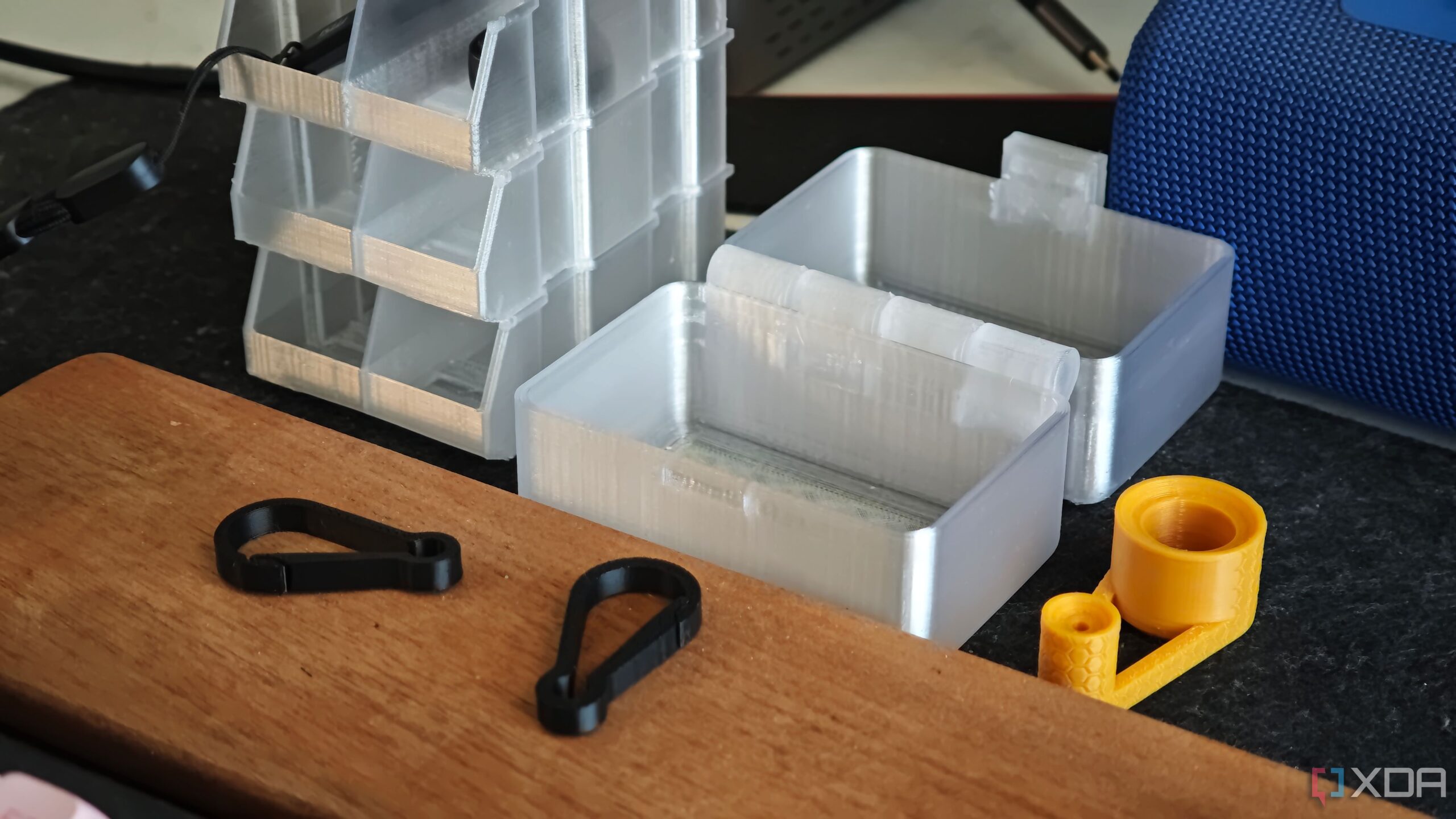
From stationery to USB drives, students accumulate a lot of small items. 3D-printed containers, organizers, and trays provide a customizable storage solution. Stackable designs maximize space efficiency, and models with multiple partitions allow for organized storage of various items.
- Examples: Boxes for stationery, organizers for adapters and USB drives, trays for desk accessories.
- Customization Options: Size, shape, number of compartments, labels.
- Where to Find Designs: Explore customizable container designs on PrusaPrinters.
Enhancing Digital Productivity: Tablet Stands for Comfortable Viewing
Many students prefer taking notes on tablets like iPads. A 3D-printed tablet stand can improve the viewing experience by holding the tablet at eye level. Adjustable stands can be used for multiple purposes, such as sketching or using the tablet as a secondary monitor.
- Benefit: Improved ergonomics, enhanced visibility, versatility for different tasks.
- Features to Consider: Adjustable angle, portrait or landscape orientation, foldable design for portability.
- Search Terms: “iPad stand 3D print,” “tablet holder STL”.
Book Holders for Hands-Free Reading and Studying
Holding large textbooks for extended periods can be tiring. A 3D-printed book holder keeps the pages open and frees your hands for note-taking or referencing other materials. Foldable designs make them easy to carry in a backpack.
- Benefit: Reduced strain on hands and arms, improved focus, enhanced multitasking.
- Variations: Foldable designs, adjustable angles, clamp mechanisms to hold pages.
- Materials: PLA, ABS, PETG (depending on desired flexibility and durability).
Beyond the Basics: The Power of Customization and Innovation
The true potential of 3D printing lies in its ability to create custom solutions tailored to specific needs. Students can design and print accessories for projects, prototypes for inventions, or even replacement parts for broken equipment. The possibilities are limited only by imagination.
Student Project Applications
- Robotics: Print custom chassis, gears, and enclosures for robots.
- Electronics: Create custom cases for Raspberry Pi projects or Arduino boards.
- Art and Design: Design and print sculptures, jewelry, or architectural models.
- Engineering: Prototype mechanical parts, build wind tunnel models, or create custom tools.
Learning and Collaboration
The 3D printing community is vast and supportive. Online forums and design repositories offer a wealth of resources for beginners and experienced users alike. Collaboration with fellow students can lead to innovative solutions and shared learning experiences.
Tips for Starting with 3D Printing as a Student
- Start Small: Begin with simple projects and gradually increase complexity.
- Research: Learn about different 3D printing technologies, materials, and software.
- Join a Community: Connect with other 3D printing enthusiasts online or at your university.
- Experiment: Don’t be afraid to try new things and learn from your mistakes.
Conclusion: Embrace the Future of Learning with 3D Printing
From ergonomic laptop risers to custom project components, 3D printing offers a wealth of benefits for students. It empowers them to save money, enhance productivity, and unlock their creative potential. As 3D printers become increasingly affordable and accessible, they are poised to become an essential tool for student success. So, what are your thoughts on 3D printing? What kind of applications might you find in your specific area of study? Comment below and share your ideas!
Sources & Further Reading:
Original article at www.xda-developers.com


