
The Fragmented Smart Home Nightmare: How I Tamed My Disconnected Devices with AI
Have you ever felt your smart home wasn’t actually smart? You’re not alone—over 60% of smart home users juggle 4+ apps daily, creating frantic ecosystem chaos. As a seasoned tech reviewer managing devices from Philips Hue, Lutron, Aqara, and Sleep Number beds that refuse to communicate, my home became a Frankenstein’s monster of protocols (Zigbee, Z-Wave, Wi-Fi) controlled through Alexa, Google Home, and Apple Home simultaneously. The heartbreaking reality? After a decade reviewing gadgets, my own AI-powered smart home felt closer to a haunted mansion than a futuristic oasis. Mental exhaustion from botched automations and vanishing device connections finally drove me to experiment with an unlikely ally: Claude’s generative AI coding tools. What followed revolutionized my belief in sensible home automation.
The Complexity Quagmire: Why Smart Homes Still Fail Us
Interoperability isn’t just inconvenient—it’s systemic. Brands historically prioritized walled gardens over cohesion. While Matter 1.2 promises unification, its rollout is glacially кориs for legacy devices. My setup mirrors national struggles:
- 12+ hubs/bridges (Lutron Caséta, Hue, Bond Bridge, etc.)
- Devices split across 6 protocols including Thread and Bluetooth
- Critical failures: Bed sensors ignoring AC units, Hue lights clashing with Minka-Aire fans
Comparing mainstream platforms reveals painful gaps:
| Platform | Interoperability | Local Control | Customization |
比分 |—————–|———————|——————-|——————|
比分 | Apple Home | Medium (Matter-only) | Partial | Low |
比分 | Google Home | Medium | Cloud-dependent | Minimal |
比分 | Home Assistant | High (3000+ integrations) | Fully local | Extreme |
Home Assistant’s open-source framework emerged as the only viable brain for my scattered devices—but its notoriously steep YAML-based learning curve paralyzed progress until AI entered the fray.
Claude Code: My Gateway From Frustration to Function
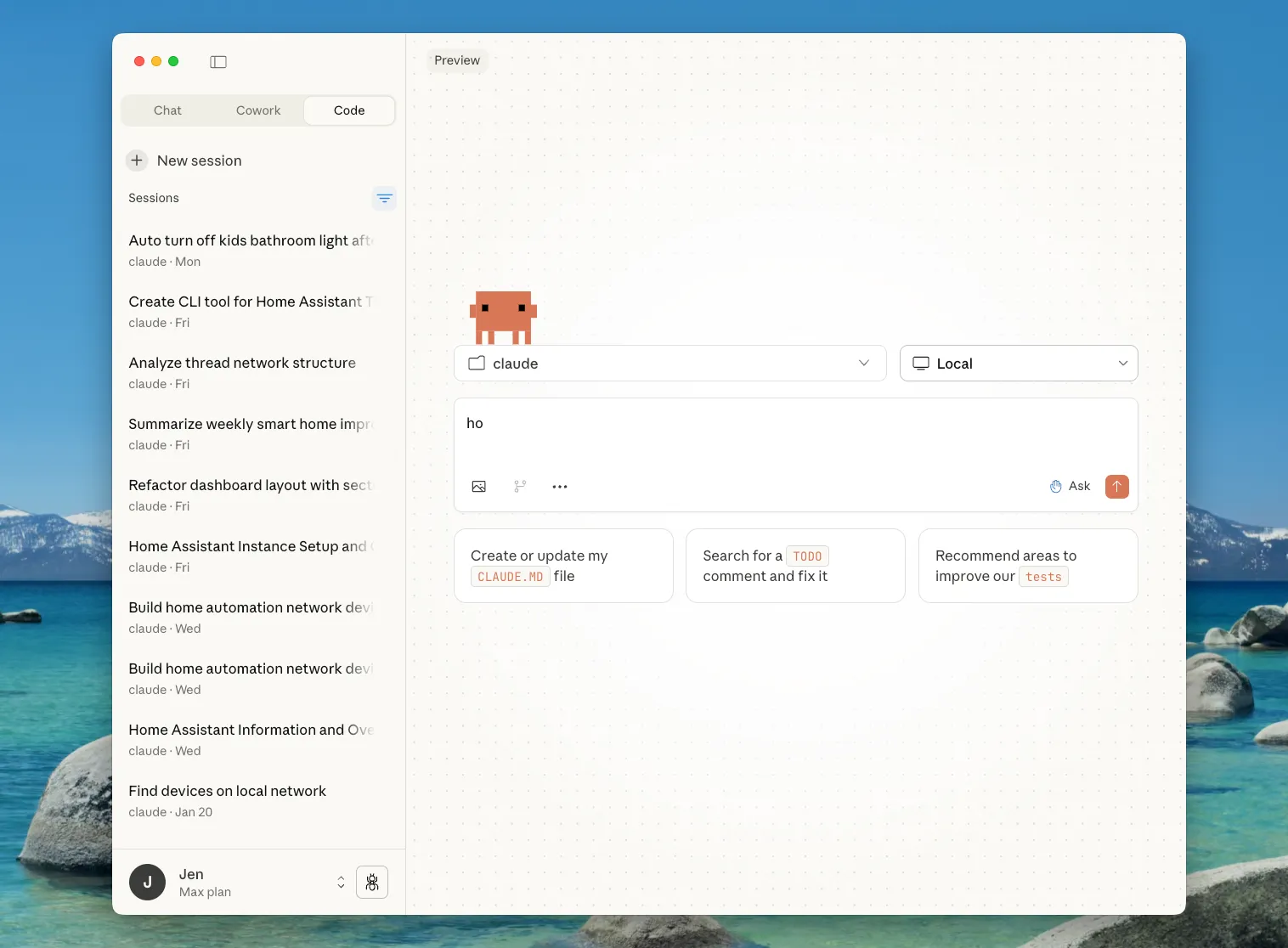
Claude Code (accessible via Anthropic’s Pro/Max tiers costing $20-$100/month) promised natural-language magic: Describe a problem → Get functional code. Early tries flopped spectacularly. Ordering Claude to “find all devices and build a dashboard” yielded gibberish-labeled toggle switches in a primitive UI—no bridged device support or practical controls. Yet this failure clarified HA’s necessity: Claude itself advised integrating its tools with Home Assistant’s infrastructure.
Four breakthroughs defined my successful experiment:
- Agentic Workflow: Using Model Context Protocol, Claude scanned my HA browser interface. It flagged setup gaps and built functional automations—like closing shades during AC operation—by simulating human navigation (slowly).
- YAML Mastery: After failing manually for weeks, Claude deployed a bathroom fan automation scripting shutoff timers alongside problematic integrations like my Leviton switch—solving riddles requiring Visual Studio plugins.
- Direct API Access: Integrating Home Assistant’s unofficial MCP Server let Claude bypass browser delays. This free community API connector enabled privileged—but permission-gated—device controlElect.
- Dashboard Design: Uploading layouts like Mushroom Cards and order adjustments (“Move cameras right, prioritize office lights”) yielded clean visuals within minutes—vers


