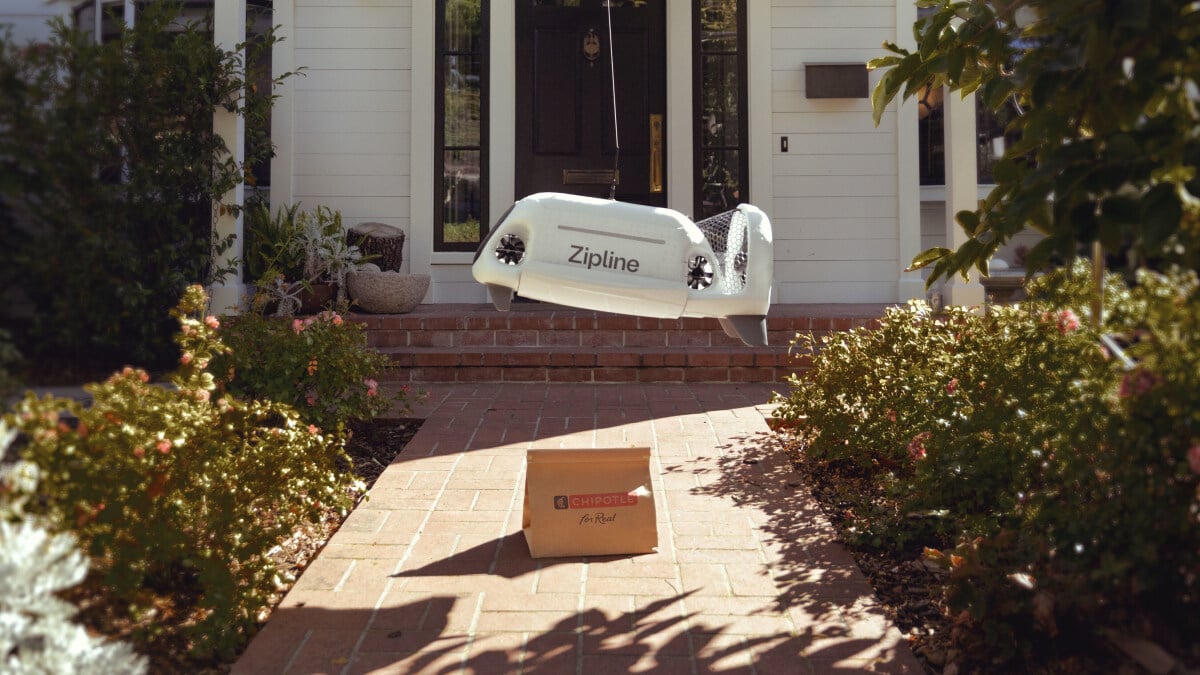

Will Your Next Burrito Fall From the Sky? Chipotle Tests Drone Delivery
Imagine this: you’re relaxing in your backyard, craving a perfectly crafted burrito bowl, and moments later, it descends from the heavens – delivered by a drone. Sounds like science fiction, right? Well, Chipotle is taking a leap into the future with the launch of “Zipotle,” its new drone delivery service. This isn’t just about novelty; it signals a potential shift in how we access fast-casual food, but is drone delivery the solution? This article explores the implications of Chipotle’s drone delivery initiative and whether it’s a game-changer or just a publicity stunt.
Zipotle: How Chipotle’s Drone Delivery Service Works
Chipotle’s drone delivery service, dubbed “Zipotle,” is a collaboration with Zipline, an autonomous drone delivery company. This partnership aims to bring the convenience of drone-based delivery to Chipotle customers, starting in a limited test market.
The Mechanics of Drone-Delivered Burritos
The process is relatively straightforward:
- Order Placement: Customers in the designated test area (currently Rowlett, Texas) place their Chipotle orders through the Zipline app.
- Order Preparation: A local Chipotle restaurant receives the order and prepares it as usual.
- Drone Deployment: The prepared order is then loaded onto a Zipline drone.
- Autonomous Flight: The drone autonomously navigates to the customer’s address using GPS.
- Precision Delivery: The drone hovers at approximately 300 feet and lowers the order via a tethered carrier, ensuring a safe and accurate delivery.
This streamlined process promises to offer faster and more convenient delivery, particularly for areas that are traditionally difficult to access, such as backyards or parks. It’s a quick and relatively simple way to get a burrito, if it works as intended.
Where is Zipotle Available? Testing Drone Delivery in Rowlett, Texas
Currently, Zipotle is only available in Rowlett, Texas, a suburb of Dallas. This limited rollout allows Chipotle to test the service, gather data, and refine the process before potentially expanding to other locations. Rowlett likely serves as a good testing ground due to its mix of residential areas, parks, and relative proximity to Chipotle restaurants. The choice to begin in Texas also reflects the generally permissive regulatory environment towards drone operations in the state. As the program develops and is evaluated, Chipotle will likely expand to areas with similar conditions.
The Environmental Angle: Is Drone Delivery Really Eco-Friendly?
Chipotle is positioning Zipotle as an environmentally friendly delivery option. However, the ecological impact of drone delivery is more nuanced than it appears.
Chipotle’s Green Claims
According to Chipotle, Zipline’s commitment to “building an efficient, environmentally friendly delivery experience is synonymous with our mission to Cultivate a Better World.” The premise is that drones, being electric and autonomous, produce fewer emissions than traditional gasoline-powered vehicles. This is especially true in areas where delivery distances are short.
The Environmental Impact of Drone Delivery: A Deeper Dive
While drones offer the potential for reduced emissions, several factors influence their overall environmental footprint:
- Manufacturing: The production of drones requires energy and resources, contributing to carbon emissions.
- Electricity Source: The environmental impact of charging drone batteries depends on the source of electricity. If the electricity comes from renewable sources, the impact is minimal. However, if it comes from fossil fuels, the emissions are higher.
- Battery Life and Replacement: Drone batteries have a limited lifespan and need to be replaced periodically, contributing to electronic waste.
- Route Optimization: Efficient route planning is crucial to minimize energy consumption and emissions.
- Package Consolidation: Compared to traditional delivery methods, drones typically carry a single order, which can be less efficient if multiple orders are going to the same general area.
A comprehensive lifecycle assessment is necessary to accurately determine the true environmental impact of drone delivery compared to traditional methods.
Potential Benefits and Drawbacks of Chipotle’s Drone Delivery
| Feature | Potential Benefits | Potential Drawbacks |
|---|---|---|
| Emissions | Lower emissions than gasoline vehicles (potentially) | Electricity source impacts overall emissions |
| Efficiency | Faster delivery in certain areas | Single package delivery might be less efficient overall |
| Accessibility | Reaches traditionally challenging locations | Limited weight capacity |
| Noise | Potentially less noisy than delivery trucks in some areas | Drone noise pollution can be a nuisance |
Beyond the Burrito: The Future of Drone Delivery and the “Zipotle” Vision
Chipotle’s foray into drone delivery is more than just a novelty; it hints at the broader potential of drones in the fast-food and delivery industries.
The Rise of Drone Delivery: Trends and Predictions
The drone delivery market is projected to grow significantly in the coming years. According to a report by Mordor Intelligence, the drone package delivery market is projected to register a CAGR of over 57% during the forecast period (2024-2029). This growth is driven by factors such as increasing demand for faster delivery, advancements in drone technology, and supportive regulatory frameworks. Companies like Amazon, Walmart, and Google are also investing heavily in drone delivery initiatives.
What are the Potential Challenges and Regulations for Widespread Drone Delivery?
While the future of drone delivery looks promising, several challenges and regulations need to be addressed:
- Safety Regulations: Ensuring the safety of drone operations, especially in populated areas, is paramount. Regulations need to address issues such as airspace management, drone operator licensing, and collision avoidance.
- Noise Pollution: Drone noise can be a nuisance for residents, especially in densely populated areas. Technology and regulations need to be implemented to minimize noise pollution.
- Privacy Concerns: Drones equipped with cameras raise privacy concerns. Regulations need to address the collection, storage, and use of drone-captured data.
- Weather Conditions: Drones are susceptible to adverse weather conditions such as strong winds, rain, and snow, which can disrupt operations.
- Infrastructure: Establishing the necessary infrastructure, such as drone landing pads and charging stations, is crucial for widespread adoption.
- Security: Preventing drone theft and ensuring the security of the delivery process are important considerations.
What are the Public Perceptions and Expectations?
Public acceptance is crucial for the success of drone delivery. Factors such as safety, noise, privacy, and cost will influence public perception. Addressing these concerns through transparent communication and responsible deployment is essential.
How Drone Delivery Could Transform the Food Industry
Drone delivery has the potential to transform the food industry by:
- Expanding Delivery Radius: Drones can reach customers who live beyond the traditional delivery range of restaurants.
- Reducing Delivery Times: Drones can offer faster delivery times, especially in congested areas.
- Improving Accessibility: Drones can deliver food to locations that are difficult to reach by traditional vehicles, such as parks, beaches, and construction sites.
- Offering Contactless Delivery: Drones provide a contactless delivery option, which can be particularly appealing during health crises.
However, the food industry must also address concerns around food safety. Ensuring the food remains at the correct temperature and is handled correctly during drone transit is key.
Conclusion: The Future of Burrito Delivery
Chipotle’s Zipotle initiative is an interesting experiment that could revolutionize the way we get our fast-casual fix. While the environmental benefits remain a topic of debate, the potential for faster, more accessible delivery is undeniable. As drone technology continues to evolve and regulations adapt, drone delivery is likely to become more commonplace. Whether that means a future filled with burrito-dropping drones remains to be seen.
What do you think? Would you order a drone-delivered burrito? Comment below!
Sources & Further Reading:
Original article at mashable.com


