

Wireless charging is pretty straightforward, right? You throw a phone, watch, or earbuds on a charging pad, and it quickly tops off the battery. Not so fast. It’s the wire-free future we were promised, but wires are still involved, and all the different speeds and charging standards are a mess.
I’ve largely given up on a wireless charging future, and I’m not the only one. Sure, it’s super convenient, but phone manufacturers have turned what should have been a solution into a disaster. We’re now stuck with a confusing mess of MagSafe, Qi, Super Fast 2.0, Qi2, faster proprietary speeds (but only with select accessories), odd terminology, battery degradation, and magnets that may or may not be in your phone.
The promise of wireless charging is all over the place
Super fast wireless charging, maybe, with the right accessory
The two most exciting promises of wireless charging are phones that charge quickly and easily, without dealing with charging cables. But wait a minute — we still need cables for the charging pad. It’s slower than using a cable, bad for your battery, and USB-C has mostly fixed everything we hated about charging cables.
Remember all the rumors of a portless iPhone a few years back? Yeah, there’s a reason we’re not there yet, and that’s because wireless charging is a mess. It’s not the answer, and manufacturers are only making things worse. Don’t get me wrong — there are certainly pros and cons to wireless charging, but I’m more frustrated by the endless design decisions, the required cases or accessories, the different speeds for every phone, and the constant research required before choosing an accessory.
Actually, the act of charging and still using a cable isn’t the sore point. The frustration stems from the constantly changing charging speeds, charging standards, and whether a case or accessory will work with your phone or vehicle.
Wait, how fast will it charge?
That depends on a bunch of different factors
Wireless charging has plenty of promise, but it’s not without its drawbacks. One of the most common complaints is the slower charging speeds compared to wired charging. Even with faster Qi2 speeds, it’s still slower than using a cable. And that’s without mentioning heat slowing down advertised speeds, different proprietary accessories, and everything else.
Does my phone or watch wirelessly charge at 5 watts, 7.5W, 10W, 25W, or is it 18W? Or maybe 21W? While you can just buy a puck and throw your phone on it, that’s not ideal. And if your car has wireless charging, it’s probably pretty slow.
I’ll give you two examples of why I’m not a fan of wireless charging, and why manufacturers are only making things worse. Take a look at Google’s own Pixel wireless charging support page, which shows that speeds vary widely depending on your phone model or the accessory you buy.
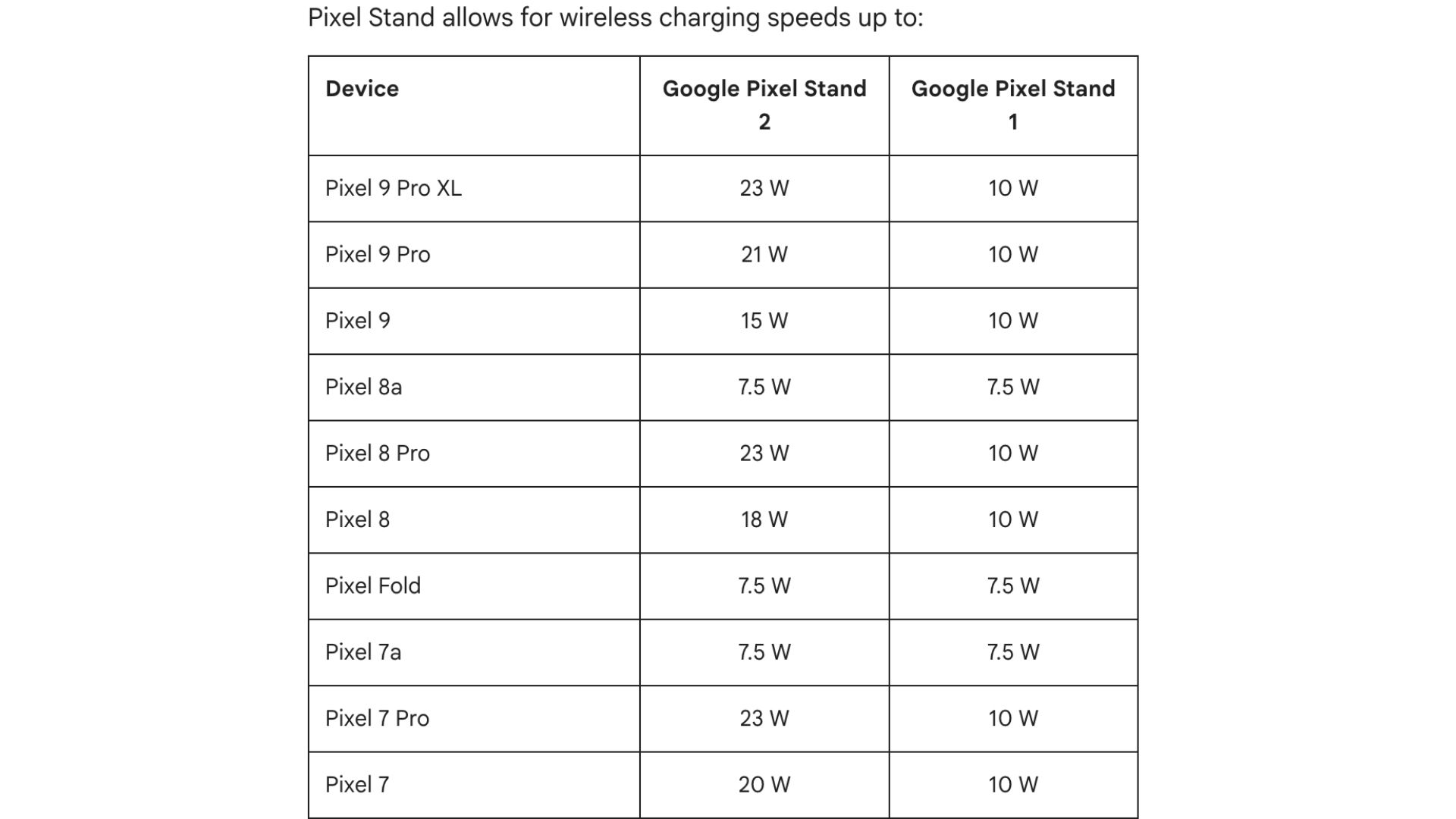
If you own Google’s fancy Pixel 9 Pro XL, it might be incredibly slow and only charge at 10W, or you could get upwards of 23W, making it a bit faster and closer to regular cable charging. The smaller Pixel 9 isn’t as fast, and as you go down the list, the numbers get even more scattered.
That’s just one example of one brand and one line of accessories. Multiply that by all of Samsung’s flagship or budget phones, other phone makers like Oppo or OnePlus with upwards of 50W charging, dozens of accessory brands, and different charging standards like Qi2, and it almost becomes more of a hassle than it’s worth.
Then we have Samsung’s 5-10W regular wireless charging, Fast Wireless Charging, Super Fast Wireless Charging, Qi-ready, Qi2-compatible, Qi2.2, cases, magnets, and more. Even Samsung’s latest Galaxy S26 Ultra only supports up to 25W wireless charging, but you’ll only get that if you have a Qi2.2 charger. And then the case needs to support it too, or you’ll be stuck fumbling with magnetic alignments and those camera humps.
Look all over Reddit, and owners are frustrated by a fancy new case that doesn’t support faster speeds — or even if it does, it often fails and drops to slower 15W speeds due to alignment issues.
Oh, and if you didn’t buy the Ultra, your S26 only supports 15W, and the S26+ offers 20W. Can we stop already! It’s not hard to make them all the same, but they do it so you’ll see a reason to buy the more expensive model. Samsung isn’t the only one, and it’s a problem.
Cable confusion, all over again
Back when phones had MicroUSB ports, some came with USB-C, and specific models had PD or some fast-charging technology, the idea of a simple wireless-charging future sure sounded promising. Turns out, that’s not the case.
Sure, USB-C solves most of that, even if it’s still not perfect, but now we’re left with the same jumbled mess of charging standards, speeds, and a never-ending specs chess game.


