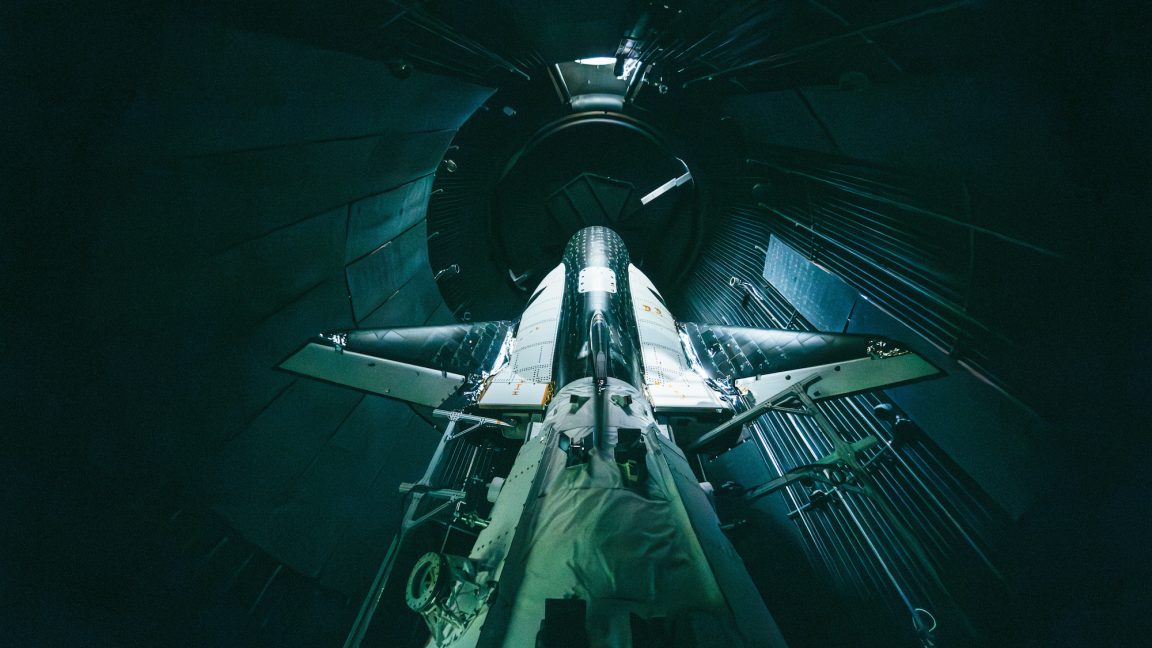

Is Dream Chaser’s Green Dream Fading? Challenges Mount for Spaceplane’s Debut
Is the future of space travel destined to be green? Sierra Space’s Dream Chaser spaceplane aims to revolutionize orbital transport with its reusable design and environmentally friendly propulsion system. However, realizing this vision is proving more challenging than anticipated. Technical hurdles with the propulsion system, coupled with launch vehicle availability, are casting doubt on the spacecraft’s planned debut. This article delves into the current state of the Dream Chaser program, exploring the obstacles it faces and the potential impact on the future of space logistics.
The Dream Chaser’s Ambitious Goals
Pursuing Sustainable Space Travel
The Dream Chaser isn’t just another space vehicle; it represents a paradigm shift in how we approach spaceflight. Traditionally, spacecraft have relied on hypergolic propellants – fuels that ignite spontaneously upon contact with an oxidizer. While effective, these substances are highly toxic and require stringent safety protocols, including the use of hazmat suits during handling. As then Sierra Space CEO Tom Vice stated, the goal was to develop “a fuel system that was green instead of using hypergolics, so we could land it on a runway and we could walk up to the vehicle without being in hazmat suits.”
This commitment to sustainability is a major differentiator for Dream Chaser. The use of non-toxic propellants not only simplifies ground operations but also reduces the environmental impact of space missions. The plane’s runway landing capability also allows for rapid turnaround and reuse, driving down the cost of access to space. This is aligned with the growing focus on environmental, social, and governance (ESG) considerations in the aerospace industry and a push for more responsible space activities.
Dream Chaser’s Role in Supplying the ISS
Beyond its green credentials, Dream Chaser is designed to play a crucial role in resupplying the International Space Station (ISS). Under contract with NASA’s Commercial Resupply Services 2 (CRS-2) program, Sierra Space is tasked with delivering cargo to and from the orbiting laboratory. Dream Chaser’s unique capabilities – including its large cargo capacity and gentle runway landing – make it an ideal platform for transporting sensitive scientific experiments and time-critical supplies. It is expected to bring back finished experiments that require delicate handling.
The CRS-2 program aims to foster a competitive commercial space sector, reducing NASA’s reliance on traditional government-run missions. Companies like Sierra Space are stepping up to provide reliable and cost-effective transportation services, enabling NASA to focus on deep-space exploration and other ambitious goals. The successful operation of Dream Chaser is therefore vital for the long-term viability of the ISS and the advancement of space research.
Propulsion System Challenges and Certification Delays
Ongoing Testing and Safety Reviews
Despite the ambitious goals, Dream Chaser is facing significant challenges in bringing its vision to fruition. The development and certification of its “green” propulsion system have proven particularly difficult. According to recent reports, the process of finishing testing and certifying the propulsion system for an uncrewed spaceflight remains ongoing.
“We still have some of our integrated safety reviews to do, and we’re in the process with updating both of our schedules to try to understand where does that really put us,” stated Weigel, highlighting the complex nature of the certification process. These safety reviews are crucial for ensuring the reliability and safety of the propulsion system, especially considering its innovative design.
The delays in propulsion system certification have knock-on effects on the overall Dream Chaser program. The spacecraft’s maiden voyage, initially planned for late 2024, is now highly unlikely to occur this year. This slippage raises concerns about Sierra Space’s ability to meet its contractual obligations with NASA and deliver on its promises of sustainable and affordable space transportation.
Potential Mission Modification: A Flyby Approach
To mitigate the impact of the propulsion system delays, Sierra Space is reportedly considering a modification to its first mission profile. Instead of attempting a full berthing with the ISS, the company is exploring a “flyby” approach. This involves flying Dream Chaser close enough to the station to test key elements of the vehicle in flight, but without actually docking.
The flyby mission would serve as a crucial in-flight demonstration of the spacecraft’s propulsion system, navigation capabilities, and overall performance. The data gathered during the flyby would provide NASA and partner space agencies with valuable insights and increase confidence in the vehicle’s ability to safely approach and berth with the station on its second flight.
However, the flyby mission is not without its challenges. It would require a modification of Sierra Space’s contract with NASA, and a final decision on whether to proceed with this approach has not yet been reached. The contractual negotiations could add further delays to the Dream Chaser program.
Launch Vehicle Availability: Vulcan’s Busy Manifest
Uncertainty Surrounding Vulcan Rocket Availability
In addition to the technical challenges, Dream Chaser faces uncertainty regarding the availability of its designated launch vehicle, the Vulcan Centaur rocket. After years of delays, Vulcan is finally poised to make its first national security launch. This initial mission is critical for the rocket’s certification and sets the stage for future commercial launches.
Assuming the first launch is successful, Vulcan has a busy manifest in the coming months, primarily serving the US Space Force. This high demand for Vulcan launch services could potentially delay Dream Chaser’s access to space. Dream Chaser was initially slated to fly on Vulcan’s second flight; however, because the spaceplane was not ready, that flight flew with a mass simulator instead.
Impact on Dream Chaser’s Timeline
The limited availability of Vulcan launch vehicles adds another layer of complexity to Dream Chaser’s already challenging timeline. Even if the propulsion system certification is completed promptly, Sierra Space will still need to secure a launch slot on Vulcan. The uncertainty surrounding launch vehicle availability makes it difficult to predict when Dream Chaser will finally make its debut spaceflight.
The potential delays in both propulsion system certification and launch vehicle availability underscore the inherent risks and challenges of developing and deploying new space technologies. While Dream Chaser holds immense promise, its success hinges on overcoming these obstacles and demonstrating its capabilities in a real-world environment.
Conclusion: Navigating the Challenges Ahead
The Dream Chaser spaceplane represents a bold vision for the future of space travel, one where missions are more sustainable and cost-effective. However, realizing this vision is proving to be a complex undertaking. Propulsion system challenges, safety reviews, and launch vehicle availability are all contributing to delays in the program. Sierra Space is actively working to address these challenges, exploring alternative mission profiles and navigating the complexities of the launch vehicle market. The coming months will be crucial in determining whether Dream Chaser can overcome these hurdles and pave the way for a greener future in space.
What are your thoughts on the challenges facing the Dream Chaser program? Do you believe that sustainable space travel is achievable in the near future? Share your comments below!
Sources & Further Reading:
Original article at arstechnica.com


