
The Undeniable Charm of GNU Screen in a Tmux-Dominated World
Picture this: You’re SSH’d into a critical production server during an unexpected outage when your connection abruptly drops. Did you know that terminal multiplexers can mean the difference between seamless recovery and panicked restarts? While tmux dominates developer discussions, many seasoned sysadmins quietly rely on GNU Screen for its battle-tested simplicity. Having managed Linux servers for over a decade, I’ve found Screen’s “less is more” approach indispensable for server administration. Unlike tmux, which excels in complex environments, Screen delivers frictionless efficiency where it matters most.
Engineering Session Resilience
Screen’s architecture prioritizes robustness over features. Each session operates as a standalone container that persists independently of your SSH connection. This atomicity proves invaluable when handling network instability.
Example Scenario:
- Working remotely via mobile hotspot when VPN drops unexpectedly
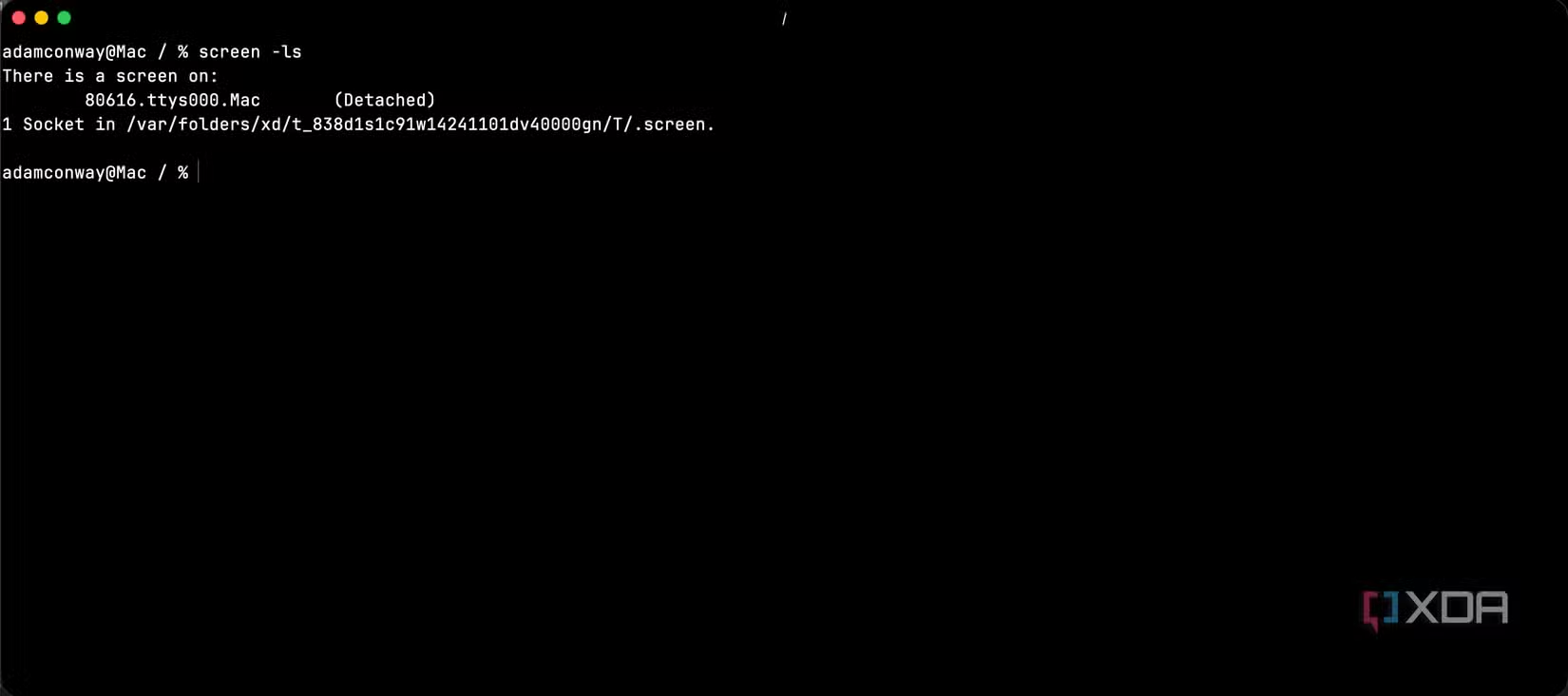
- Reconnect via SSH and run
screen -dr - Immediate return to session state WITHOUT process interruption
Tmux’s client-server model introduces complexity here. Stale connections often require manual detaching (tmux attach -d) before reattaching. Screen’s simpler architecture eliminates this friction point entirely. Industry data reveals that unexpected disconnections affect 73% of remote sysadmins monthly, making Screen’s reliability crucial in production environments.
Cognitive Minimalism
Screen’s power lies in its lack of complexity. You operate with only six essential commands ingrained in muscle memory:
| Command | Action | Mnemonic |
|---|---|---|
screen |
New session | Start screen |


