
Volkswagen’s Electric Dream Stalled: Can America’s Affordable EV Savior Get Back on Track?
Remember when Volkswagen vowed to deliver electric vehicles “for the millions, not millionaires”? Seven years after launching its ambitious ID family, that promise feels distant, especially in the crucial US market. While competitors race forward with compelling affordable EVs, VW’s mainstream offering is a single, aging model struggling against fresher, faster-charging rivals. After the roaring ambitions born from Dieselgate’s ashes, how did one of the most promising legacy EV efforts lose its charge? And is a rumored rebranding exercise enough to reignite the spark? The story of Volkswagen’s electric journey in America is a cautionary tale of ambition, distraction, and the relentless pace of the EV revolution.
From Scandal Spark to Global Electric Vision: The MEB Promise
The genesis of Volkswagen’s electric offensive is inextricably linked to its darkest hour: the “Dieselgate” emissions scandal. Seeking redemption and a path to meet tightening global emissions regulations, VW bet its future on electrification. The cornerstone of this strategy was the MEB (Modularer E-Antriebs-Baukastan, or Modular Electric Toolkit). Designed as a flexible, scalable architecture built from the ground up for electric vehicles, MEB promised volumes. The core idea was brilliant: high-volume production across multiple models and brands (within the VW Group) would create significant economies of scale, finally making electric cars affordable and profitable.
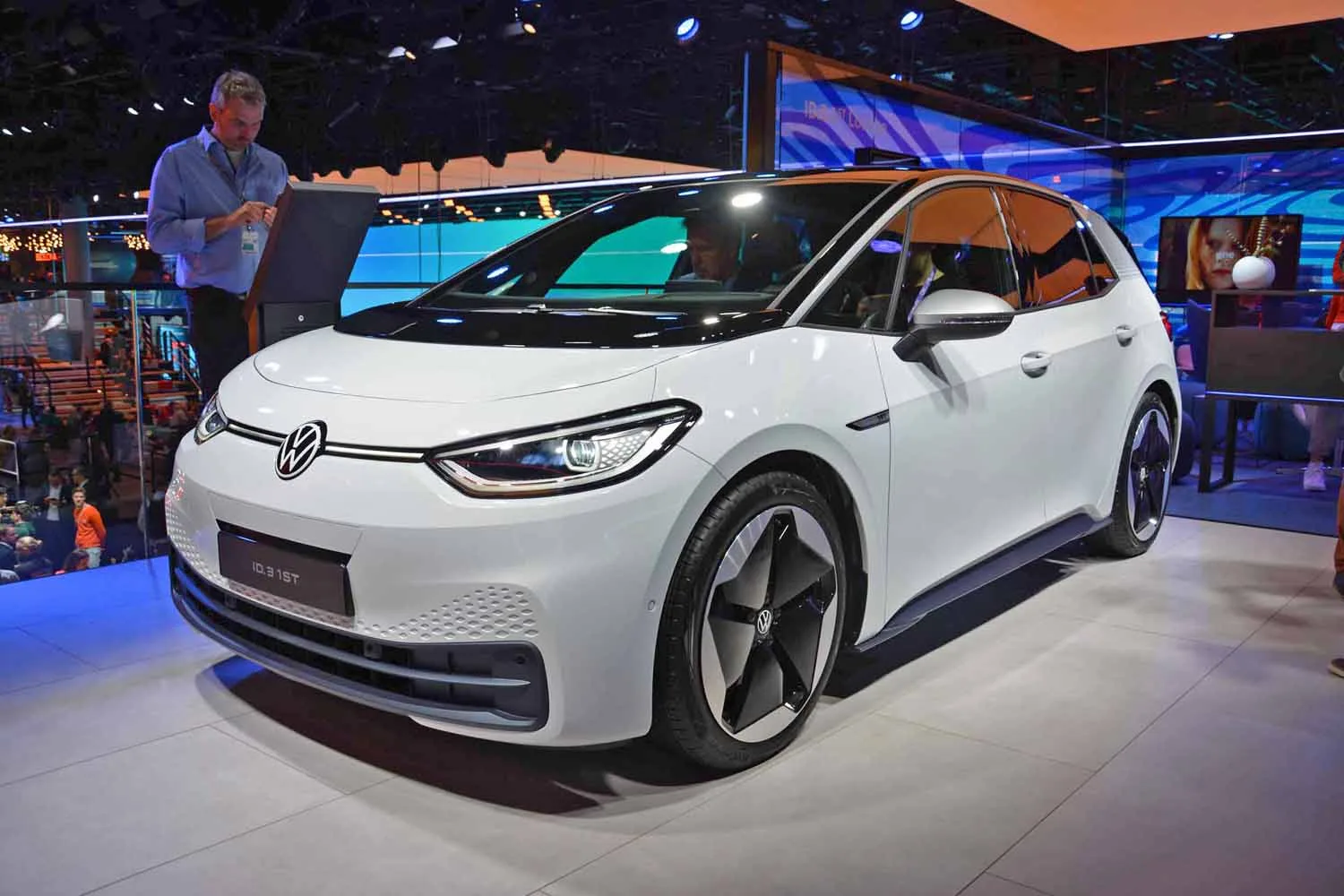
To signal the seismic shift, VW bestowed epoch-making status on the first MEB vehicle, the ID.3 hatchback (launched in Europe in 2019). Much like the transformative Beetle and Golf before it, the ID.3 represented a new era. VW projected staggering global ambition: 50 electric models and 15 million cumulative EV sales by 2028.
Understanding the American preference for SUVs and perhaps haunted by the specter of past diesel Golf models, VW bypassed the ID.3 for the US. Instead, it pinned its mainstream hopes on the ID.4 crossover SUV. Launched for the 2021 model year, the ID.4 was positioned as an electric counterpart to bestsellers like the Toyota RAV4. Crucially, VW planned US production at its Chattanooga, Tennessee plant – a key move for localizing production, reducing costs, and managing logistics. The initial target price hoveredSchool around an enticing $35,000.
Key Elements of the MEB Vision:
- Affordability Goal: EVs priced for mass-market appeal, leveraging scale.
- Market-Specific Strategy: MEB platform tailored for regional preferences (ID.4 SUV for the US).
- Vertical Integration: Domestic US manufacturing to improve cost control and market responsiveness.
- Volume Commitment: High production targets driven by shared platform architecture.
The ID.4 Experience: Promise Meets Muted Reality
The ID.4 arrived in the US in 2021, landing as a competent but undeniably conservative offering. Reviews often described it as “inoffensive” or “bland” – echoing the familiar gasoline crossovers it aimed to replace, albeit powered electrically. Its initial launch price was $41,190 for a rear-wheel-drive model with an EPA-estimated 260 miles of range – above the projected $35k, but still competitive at the time amidst growing EV interest. VW quickly expanded the lineup with an all-wheel-drive variant and ramped up Tennessee production.
Sales initially showed promise:
- 2023: Peak sales of 37,789 ID.4s in the US.
- 2024: Hampered significantly by a major door-latch recall forcing a production halt.
- 2025: Production resumed but faced a perfect storm: the withdrawal of federal EV tax credits for VW models compounded by broader economic instability dampening consumer demand. VW managed 23,373 sales for the year, but a significant production slowdown led to a mere 248 units delivered in the fourth quarter.
Beneath these chaotic fluctuations lay a more troubling trajectory. By 2025, the ID.4 was an aging platform facing formidable competition:
- Technology Gap: Competitors like the Hyundai Ioniq 5 and Kia EV6 adopted advanced 800-volt electrical architectures, drastically reducing charging times compared to the ID.4’s older 400-volt system. This difference is stark:
| EV Model | Electrical Architecture | Fast Charging Time (10-80% approx.) | Starting Price Range (Mid-2025) |
| :———— | :———————- | :———————————- | :————————————– |
| VW ID.4 | 400-volt | ~38 minutes | ~$45,000 |
| Hyundai Ioniq 5


