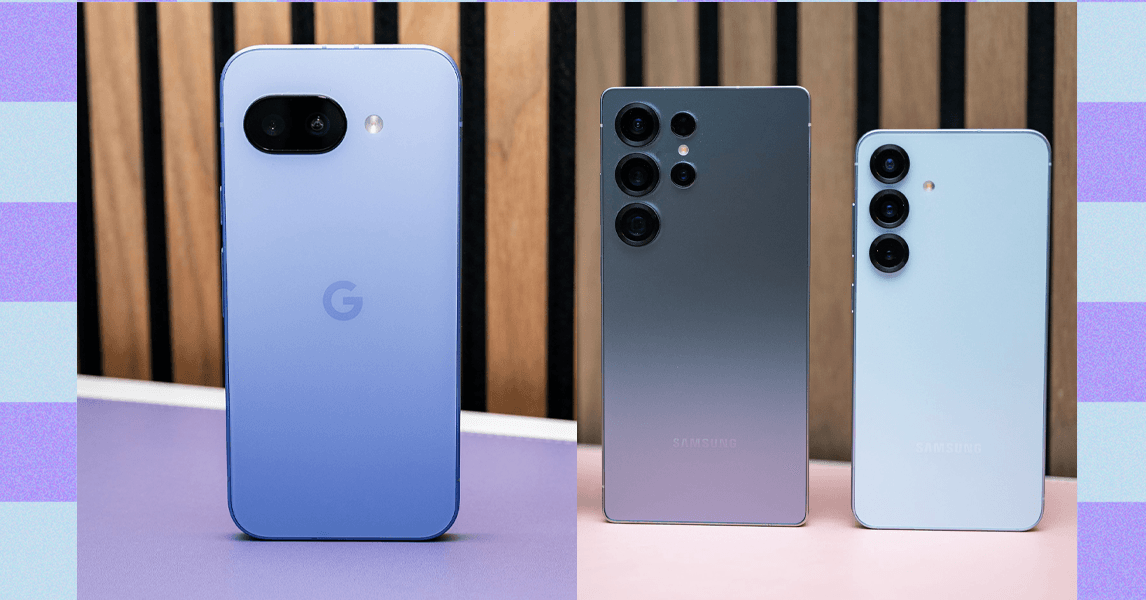

Navigating the Android Landscape: A Look at Some Compelling Smartphone Options
With over 85% of the global smartphone market running on Android, finding the right phone can feel overwhelming. But fear not! This guide dives into a curated selection of Android phones worthy of your consideration, offering a nuanced perspective beyond the typical top-tier recommendations. These Android smartphones represent diverse approaches to design, functionality, and price point, catering to different needs and preferences. Let’s explore these options and see if one aligns perfectly with your mobile needs.
Other Android Phones Worth Your Attention
While flagship devices often steal the spotlight, several other Android phones deserve recognition. These models offer unique features, cater to specific needs, or provide excellent value for money. Let’s examine some compelling alternatives.
Google Pixel 9: A Familiar Experience with a Questionable Value
The Google Pixel 9, priced at $599, receives a respectable 9/10 WIRED rating. However, its position within the Pixel lineup makes it a somewhat difficult recommendation. The Pixel 9 shares many features with its more expensive Pixel 9 Pro siblings while offering a similar experience to the more affordable Pixel 9a.
- Pros: Shares features with pricier Pixel models.
- Cons: Overlapped by the Pixel 9a in value and Pixel 9 Pro in features.
The question then becomes: why choose the Pixel 9? Unless specific promotions or unique hardware features sway the decision, potential buyers may find greater value and satisfaction by either saving money with the Pixel 9a or investing in the enhanced capabilities of the Pixel 9 Pro. Waiting for the Pixel 10 release might also be a prudent choice.
Samsung Galaxy Z Flip7: A Stylish Foldable with Some Drawbacks
Samsung’s Galaxy Z Flip7, priced at $1,100, earns a 7/10 WIRED rating and represents the latest iteration of the clamshell-style foldable phone. While it introduces improvements over its predecessor, it hasn’t quite dethroned the Motorola Razr Ultra 2025 as the top pick in this category.
- Pros: Solid cameras, excellent and larger displays, a more useful cover screen.
- Cons: Expensive, battery life is even worse than the Fold7.
The Z Flip7 boasts solid cameras, larger displays compared to previous models, and a somewhat improved cover screen experience. However, its high price point and disappointing battery life remain significant drawbacks. Potential buyers should consider these factors carefully, especially the need for a power bank due to the phone’s energy consumption. It’s a fashion-forward choice with compromises.
Samsung Galaxy S25 Edge: Thin and Light Comes at a Cost
The Samsung Galaxy S25 Edge, priced at $970, makes headlines for its incredibly slim 5.8mm profile. Earning a 6/10 WIRED rating, the Galaxy S25 Edge definitely turns heads. While undeniably impressive in hand, this focus on thinness comes at a cost.
- Pros: Amazingly thin and lightweight design.
- Cons: No S Pen stylus, no telephoto cameras, poor battery life.
It omits key features found in the Galaxy S25 Ultra, such as the S Pen stylus and telephoto cameras. More importantly, the battery life is severely compromised, requiring frequent top-ups throughout the day. While the slim design might appeal to some users, the lack of features and poor battery life makes it a tough sell for most users.
Nothing Phone (3a) and (3a) Pro: Budget-Friendly Options with Unique Appeal
The Nothing Phone (3a) and Phone (3a) Pro, priced at $379 and $459 respectively, stand out as well-rounded, sub-$500 Android phones. Both models receive an 8/10 WIRED rating, signaling their impressive value proposition.
- Pros: Smooth 120Hz display, snappy performance, reliable battery life, decent camera quality for the price.
- Cons: IP64-rated (not fully waterproof), no wireless charging, connectivity issues with Verizon and AT&T (requires whitelisting for 5G).
These phones offer a smooth 120Hz display, reliable performance, and decent camera quality. The Pro model offers slight advantages in zoom and low-light photography. The main drawbacks include limited water resistance (IP64 rating), the absence of wireless charging, and potential connectivity issues on Verizon and AT&T networks. Despite these limitations, the Nothing Phone (3a) and (3a) Pro offer exceptional value and a unique design aesthetic for budget-conscious buyers.
Samsung Galaxy S24 FE: A Familiar Choice at a Competitive Price
The Samsung Galaxy S24 FE, priced at $550, emerges as a strong contender in the mid-range market, especially as the flagship Galaxy S24 series becomes harder to find.
- Pros: Triple-camera array (including 3x telephoto), good performance, wireless charging, IP68 water resistance, solid day-long battery life.
- Cons: Drab design.
The Galaxy S24 FE boasts a capable triple-camera array, reliable performance, wireless charging, IP68 water resistance, and solid battery life. However, its design is considered somewhat uninspired. For those prioritizing functionality and performance over aesthetics, the Galaxy S24 FE represents a compelling alternative to the flagship models, particularly when the latter are unavailable at reasonable prices.
Motorola Moto G Power 2025: Power and Durability on a Budget
The Motorola Moto G Power 2025, priced at $300, continues Motorola’s tradition of offering budget-friendly phones with impressive features. While receiving a 7/10 WIRED rating, this newer model is not as great as its predecessor due to a chipset downgrade.
- Pros: Affordable, luxurious faux leather back, slim design, solid cameras, bright 120Hz display, wireless charging (rare for this price range), IP68/69-rated water and dust resistance, extended software updates.
- Cons: Slight performance hit due to chipset downgrade, bloatware.
The Moto G Power 2025 offers a faux leather back, solid cameras, a bright 120Hz display, wireless charging (a rarity in this price range), and impressive IP68/69-rated water and dust resistance. Motorola has also committed to providing extended software updates. The main drawbacks include a performance dip compared to its predecessor and the presence of some pre-installed bloatware. However, for users seeking a durable and feature-rich phone on a tight budget, the Moto G Power 2025 remains a strong option.
Asus ROG Phone 9: Gaming Prowess with Compromises
The Asus ROG Phone 9, priced at $1,000, caters specifically to the mobile gaming community. While offering unique features tailored to gamers, it faces challenges in other areas.
- Pros: Designed for serious gamers, dual USB-C ports, headphone jack, accessory support (cooler, mobile controller).
- Cons: Clunky software, underwhelming cameras for the price.
It offers dual USB-C ports for convenient charging while gaming, a headphone jack, and support for gaming accessories like coolers and mobile controllers. However, the software can feel clunky, and the cameras are underwhelming for a phone in this price range. The ROG Phone 9 excels in its niche but might not appeal to users who prioritize camera quality or a streamlined software experience.
Minimal Phone: Digital Detox in Your Pocket
The Minimal Phone, priced at $399, offers a unique approach to smartphone usage by focusing on minimizing distractions and promoting mindful technology consumption. Receiving a 6/10 WIRED review, it is designed for curbing screen time.
- Pros: E-paper display, physical keyboard, access to Android apps, reduces social media usage.
- Cons: Screen ghosting, plasticky build.
Instead of going cold turkey with a phone like the Light Phone III, try the Minimal Phone. This is an e-paper Android phone with a physical keyboard. The goal is to let you access the usual Android apps, but because the screen is ill-suited to videos and most social media, you’ll naturally be able to avoid those distractions. It’s successful in this task, but the constant screen ghosting and plasticky build dampen the experience.
Must-Have Mobile Accessories
Beyond the phone itself, several accessories can enhance the mobile experience. These include:
- Protective Cases and Screen Protectors: Essential for safeguarding your investment.
- Anker 45-Watt Charger: A compact and reliable charger supporting fast charging.
- Counterpart Retractable Charger: Design-forward charger with a retractable cable.
- Peak Design Everyday Case: Mount your phone to a bike or scooter.
- Nimble Champ Portable Charger: Small and powerful portable battery for on-the-go charging.
- Nomad ChargeKey V2: A USB-C charging cable that clips to your keychain.
- Wireless Chargers: Explore a wide range of wireless chargers for convenient power-ups.
Conclusion
Choosing the right Android phone involves considering your individual needs, priorities, and budget. While flagship devices often dominate the conversation, the alternatives discussed above offer compelling options for users seeking unique features, affordability, or a different approach to smartphone usage. Whether you prioritize gaming, battery life, affordability, or mindful technology consumption, there’s an Android phone out there to suit your needs. Carefully evaluate the pros and cons of each model before making your decision.
What do you think? Which of these Android phones caught your eye, and why? Comment below!
Sources & Further Reading:
Original article at www.wired.com


