
The Irony of the 1,000-Year Backup
Digital decay is a quiet nightmare. From crumbling hard drives to “bit rot” on flash drives, we are living through a precarious era of data storage. Historically, we’ve seen the tragedy of the Library of Alexandria, where an entire civilization’s knowledge vanished in a blaze of fire. In the modern age, we face a different kind of erasure: the slow degradation of the media we trust with our memories.
Enter the M-DISC
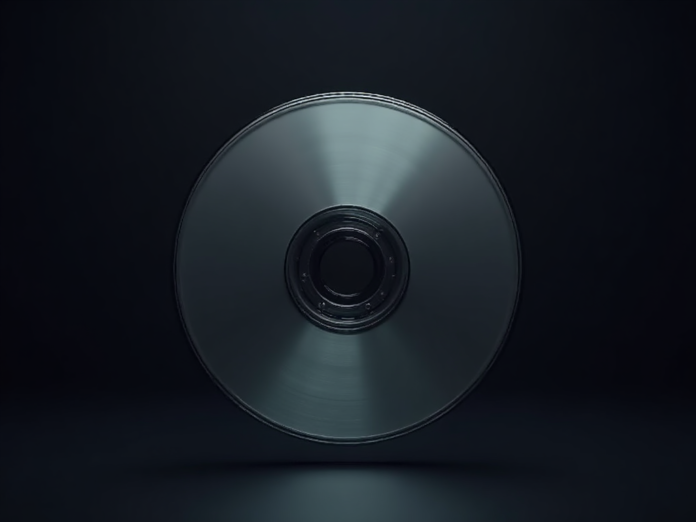
Enter the M-DISC, a piece of hardware that promised to solve the longevity problem once and for all. Unlike standard recordable CDs or DVDs, which rely on an organic dye layer that eventually breaks down, the M-DISC utilized a rock-like inorganic layer. By etching data directly into a glass-like material, the creators claimed these discs could preserve information for a staggering 1,000 years.
On paper, it was the ultimate insurance policy. While a factory-pressed disc might last a few decades under ideal conditions, the M-DISC was marketed as a permanent archive, immune to the environmental degradation that kills off traditional optical media.
A Short-Lived Legacy
However, there is a poetic, if frustrating, irony to the story. While the discs themselves were designed to outlast entire civilizations, the infrastructure and the companies behind them didn’t fare nearly as well. In the fast-paced world of consumer tech, a millennium is a long time to wait for a return on investment, and a decade is often the lifespan of the company selling the dream.
The M-DISC serves as a cautionary tale about the “archival paradox.” It doesn’t matter if your data lasts for ten centuries if the hardware required to read that data disappears in ten years. We may have a disc that survives a thousand years, but we are far more likely to lose the drive capable of spinning it.
Ultimately, the quest for digital immortality is a race against obsolescence, and in this case, the medium outlived the mission.


