
The Banana Test: Why Grocery Robots Won’t Steal Your Job (But Will Change Your Work)
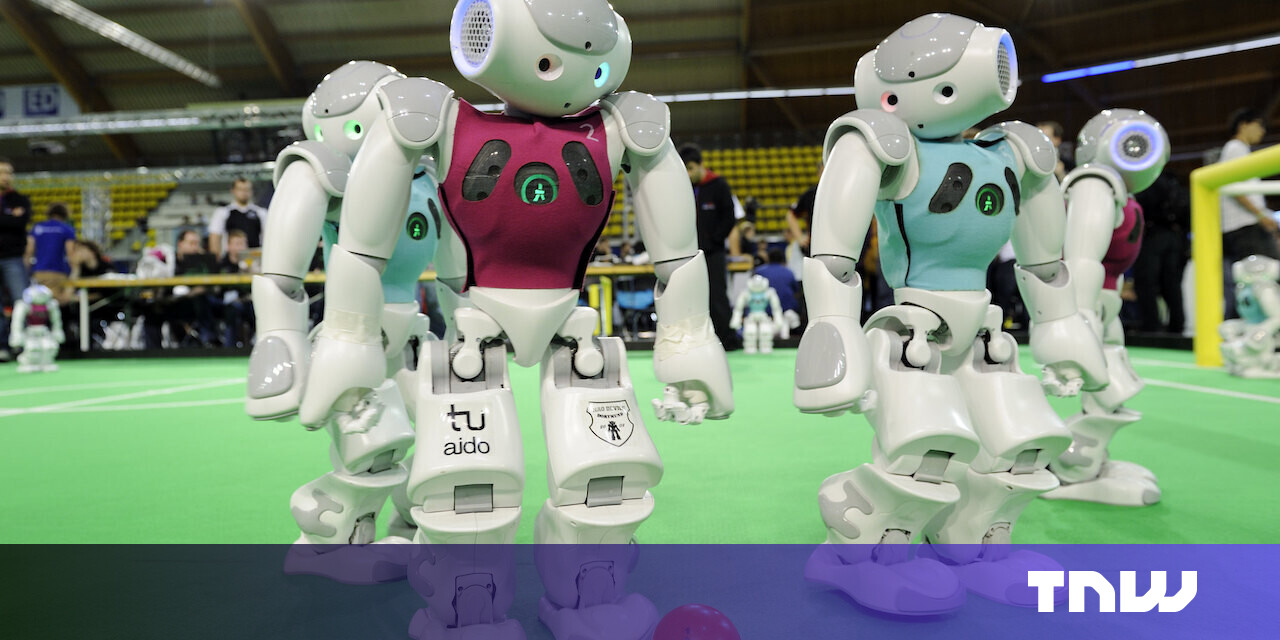
Did you see the humanoid robots at China’s Robot Games? Picture this: clumsy machines face-planting on soccer pitches and unexpectedly decapitating themselves during a 1500-meter “sprint.” While these mishaps are unintentionally comical, they starkly illustrate robotics’ state – remarkable progress shadowed by significant hurdles. Yet, far from gimmicky contests, human-robot collaboration is already reshaping critical industries with profound implications. Consider your weekly grocery order. At the cutting edge stands Picnic Technologies, Europe’s explosive online supermarket success, deploying 1,500 robots to assemble orders, showing that the future of work isn’t about replacement by automation, but a powerful reinvention where humans and machines amplify each other’s strengths. This pragmatic collaboration unlocks unprecedented scale while navigating the real-world challenges that trip up even advanced AI – quite literally.
Beyond the Wobble: Where Industrial Robotics Excels (and Why Picnic Scales)
Forget the stumbling humanoids briefly. In structured environments like Picnic’s automated fulfillment centers in the Netherlands and Germany, robotics is achieving real-world marvels:
- Crushing Scale: Plagued by thousands of daily online orders? Picnic’s Oberhausen, Germany center processes an staggering 33,000 orders daily, serving 200,000 households. Manual picking in vast warehouses simply couldn’t achieve this throughput economically.
- Eliminating “Miles in the Aisles”: Previously, Picnic “shoppers” walked vast distances locating individual items. Robotic arms now handle the bulk of item retrieval, drastically reducing physical strain and time, allowing human workers to focus on higher-value, less repetitive tasks.
- Speed & Accuracy: Robots excel at retrieving standardized, shelf-stable items quickly and without fatigue, speeding up order assembly significantly. This efficiency is key to Picnic’s rapid growth, challenging giants like Albert Heijn.
Picnic’s Warehouse Balance:
| Workforce Component | Role | Key Strengths |
| :———————- | :——- | :—————- |
| Robots (1500) | Primary item retrieval for standardized goods | Speed, precision, endurance, handling predictable tasks 24/7, scalability |
| Humans (1000) | Complex item handling, quality control, final customer box packing, problem-solving | Dexterity, adaptability, judgment, handling irregularities, customer touchpoints |
The “Bananas and Champagne” Problem: Automation’s Current Limits
CTO Daniel Gebler (PhD in AI) and engineer Jhon Mauro Gomez are unequivocal: robots won’t fully replace human warehouse workers. Why? Enter the “Bananas and Champagne” conundrum. This highlights critical areas where humans remain indispensable within even the most automated settings:
- Irregular Items: Robots struggle profoundly with non-uniform shapes and delicate items. Imagine a wobbly bunch of bananas, a fragile egg carton, or a slippery bag of flour. Human dexterity and tactile sensitivity are unmatched here.
- High-Value/Fragile Goods: The nuanced handling required for expensive champagne bottles or easily damaged produce is currently beyond reliable robotic capability. The risk of breakage is too high.
- Dynamic Packing: Humans effortlessly rearrange items on the fly to maximize crate space. Robots require rigid layouts, lack the improvisation for box opening struggles, and can’t consolidate items neatly into the final delivery box – Picnic’s “final touch” is always human.
- Unexpected Scenarios: What if an item is damaged on the shelf, misplaced, or the order contains an odd combination? Human judgment and adaptability are crucial.
Picnic mitigates these limitations with product whitelisting. Orders containing problematic items (e.g., chips and heavy soda bottles) are automatically routed for human handling, while simpler orders go to the bots. This isn’t failure; it’s smart workflow optimization based on the current realities of robotic capabilities (Source: Research on Robotic Dexterity Challenges).
Reinventing Management: From Hierarchy to Ownership in the AI Era
Gebler’s vision extends beyond warehouse logistics. He sees AI and automation fundamentally transforming management structures:
“Most likely, what we now have as management won’t exist anymore… The relevance of ownership — owning what you build, owning what you run — will become even more important. Because everybody will be a designer, a builder, and also an operator.”
This is a seismic shift, powered by automation handling routine coordination and reporting. What emerges?
- Empowered Teams: Greater autonomy and ownership for individuals and teams responsible for specific outcomes. AI handles data crunching, freeing up cognitive space.
- The Hybrid Creator/Operator: Team members increasingly design solutions, build them (often using automation tools), and operate or manage the resulting system, fostering holistic understanding and agency.
- Space for Experimentation: Picnic developers leveraged this autonomy to pioneer new features like cross-brand return deliveries (boosting fleet efficiency) and curated meal packages (adding value beyond simply dropping off individual items) – innovations driven by empowered teams See Agile Manifesto Principles.
Safeguarding Human Ingenuity: The Case for “AI-Free Fridays”
Recognizing the critical need to maintain essential human skills alongside AI adoption, Gebler advocates for “AI-Free Days” or “AI-Free Fridays.” This dedicated time encourages developers and other knowledge workers to:
- Sharpen Foundational Skills: Coding, debugging, critical design thinking – skills that could atrophy with over-reliance on AI co-pilots.
- Prevent Over-Dependence: Maintaining deep understanding prevents becoming mere supervisors or prompters for black-box AI solutions.
- Foster Pure Human Creativity: AI generates based on patterns; humans invent beyond them. Improvisation and truly novel approaches still spring from the unfiltered human mind.
This initiative underscores the understanding that while AI can augment problem-solving, the spark of original thought and innovative leaps remains a distinctly human domain (McKinsey on Future Workforce Skills).
The Collaboration Multiplier: Humans + Robots = A Third Way
The narrative isn’t “Robots vs. Humans.” Picnic’s model showcases the Collaboration Multiplier Effect. Automation excels at:
- High-speed, repetitive tasks (retrieving tin cans).
- Operating tirelessly in structured environments.
- Precise data processing and logistics.
Humans excel at:
- Adapting to unpredictability (the bruised peach).
- Applying nuanced judgment (assessing quality, handling exceptions).
- Innovative problem-solving and creativity (designing new processes, meal packages).
- Physical dexterity for complex manipulation.
- The crucial human touch in final customer interactions.
Integrating both, guided by smart systems like whitelisting, unlocks efficiency and scale while maintaining flexibility and quality control. This synergy allows Picnic to handle massive order volumes efficiently, freeing human workers from drudgery for roles requiring adaptability and intelligence (World Economic Forum Future of Jobs Report consistently flags collaboration with automation as a key future skill).
Conclusion: Reinvention Over Replacement
The clumsy charm of the Robot Humanoid Games serves as a delightful microcosm of a profound truth: while robotics continues its meteoric advancement, the real-world victories are happening where humans and machines collaborate intelligently. Picnic’s journey, balancing 1,500 robots against 1,000 humans, navigates the “bananas and champagne” realities of automation. It demonstrates that efficiency gains don’t necessitate human obsolescence but rather a redistribution of tasks – leveraging robotic precision and endurance for the predictable, while relying on human adaptability, dexterity, and ingenuity for the complex and the chaotic. Coupled with the reshaping of management towards ownership and innovation, and proactive efforts like “AI-Free Fridays” to safeguard core human skills, the future of work is clear: it’s not about who gets replaced, but how we reinvent roles and processes to harness the unique strengths of both carbon and silicon. The result? More efficient businesses, more fulfilling work, and better services. What tasks in your job do you see being reinvented through collaboration rather than replaced by automation? Share your thoughts below!
Sources & Further Reading:
Original article at thenextweb.com


