
The Enduring Mirage: Why Today’s Tech Utopias Echo Yesterday’s Broken Promises
What if the dazzling future promised by tech visionaries is merely a recycled fantasy? Ray Kurzweil’s prediction of “the singularity” by 2045 – a moment when humans merge with AI – captivates Silicon Valley. Elon Musk echoes this, declaring Neuralink will “unlock new dimensions of human potential” through brain-computer interfaces. Yet, this techno-utopian faith in technology fundamentally transforming humanity isn’t new. Its roots dig deep into early 20th-century movements whose grand visions of a machine-made paradise collapsed under the weight of reality. Understanding this cyclical pattern is crucial for evaluating whether this era’s prophecies will materialize or crumble, revealing how techno-utopianism repeatedly masks unintended consequences.
Kurzweil, Musk, and the Modern Singularity Creed
Ray Kurzweil’s core thesis remains powerful: accelerating technological progress will soon create a “Singularity” – a point where artificial intelligence surpasses human intelligence and humans merge with machines, transcending biological limits. His 2045 forecast hinges on exponential growth in computing power and AI capabilities. Elon Musk embraces and amplifies this vision. Through Neuralink, Musk aims for direct brain-computer symbiosis, framing it as essential not just for enhancement but survival. He frequently pairs this with apocalyptic warnings: humanity must merge with machines or risk obsolescence or extinction. Proponents frame this not as sci-fi, but an inevitable technological destiny promising solutions to aging, disease, and intellectual limitations. The central pillar is unwavering belief in technology as the sole engine of human evolution and societal salvation.
The Industrial Revolution’s Dangerous Offspring: Early Techno-Utopianism
Techno-utopianism, the conviction that technological progress inherently drives social and moral perfection, coalesced during the 19th-century Industrial Revolution. As Howard Segal notes in Technology and Utopia, believers envisioned factories’ grime magically birthing a future of “perfect cleanliness, efficiency, quiet, and harmony.” By the early 1900s, revolutionary technologies—electricity, automobiles, airplanes—ignited movements convinced machines would birth a radically transformed human.
Filippo Marinetti and the Italian Futurist Machine Cult
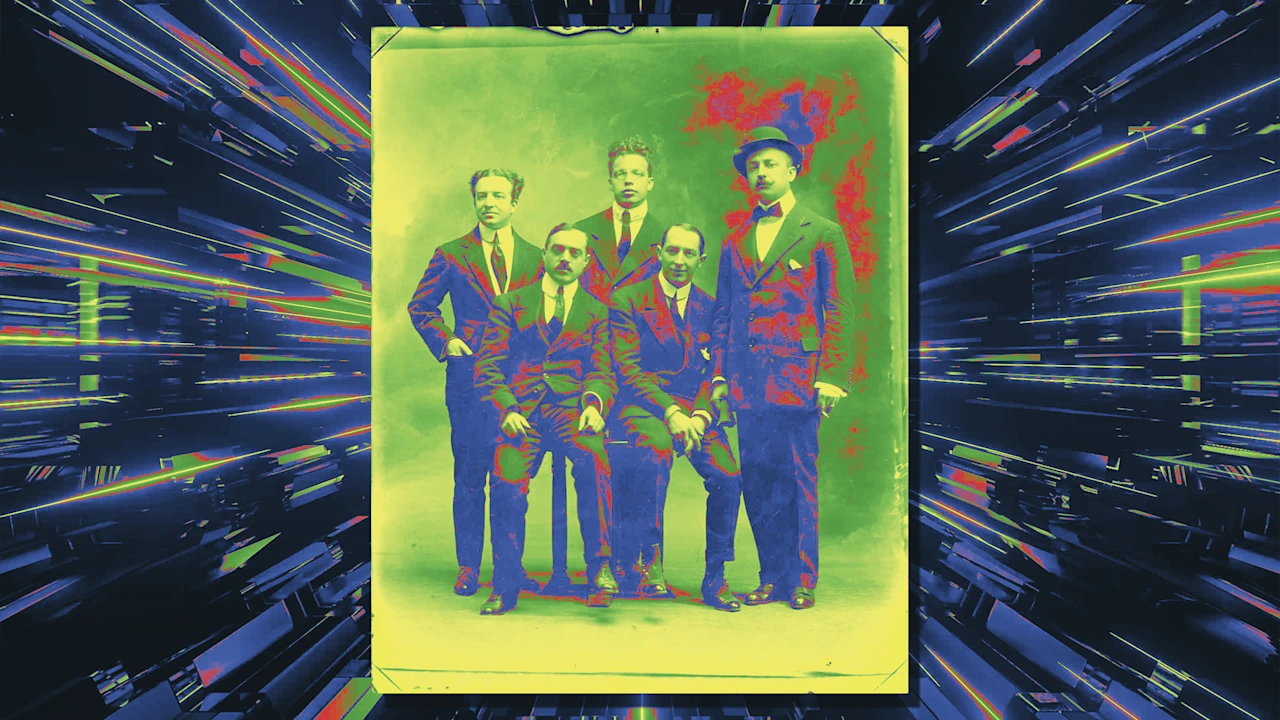
The Italian Futurists, led by Filippo Marinetti, became technology’s most fervent apostles. Marinetti’s 1909 Founding and Manifesto of Futurism is a shocking blueprint:
- Worship of Speed & Destruction: Glorifying “eternal, omnipresent speed,” it demanded “aggressive action” to demolish the old world (museums, libraries, traditions) and forge a new techno-reality.
- Dehumanizing Ideology: It championed war as “hygiene,” exhibited “scorn for woman,” and envisioned workers fused with “fiery machines.”
- Path to Fascism: As Katia Pizzi documents in Italian Futurism and the Machine, Marinetti’s aesthetics and embrace of violent renewal directly influenced Benito Mussolini’s early fascism, showcasing the dangerous political potential of unchecked tech-utopian fervor.
Their vision presaged Musk’s “burning platform” apocalypticism, advocating destruction as a necessary precursor to rebirth via machine dominance.
The New Soviet Man: Engineering Humanity in the USSR
Parallel movements surged in revolutionary Russia. Bolshevik leaders held a utopian faith that technology combined with Marxist science could engineer not just society, but the human soul itself. Historian Richard Stites (Revolutionary Dreams) described their core belief: the “immediate and complete remaking” of humanity was achievable by destroying bourgeois culture and propagating mass technical education.
The ideal was the New Soviet Man – a technocratically trained “master of nature by means of machines and tools” (George Young, The Russian Cosmists). Figures like Anatoly Lunacharsky, Commissar of Education, pushed polytechnical training over liberal arts, aiming to create a logically optimized, machine-integrated populace. Like the Futurists, they believed material progress would spontaneously generate societal perfection.
| Era/Group | Vision of New Human | Means of Transformation | Political Alignment | Ultimate Goal |
|---|---|---|---|---|
| Italian Futurists (1909+) | Dynamic merger with machine; embodiment of speed & power | Destruction of old society/culture; aggressive technological adoption | Early Fascism | National rebirth through technological-militaristic dominance |
| Soviet Technocrats (1917+) | The “New Soviet Man” – scientifically rational master of machines | Destruction of bourgeois culture; mass polytechnical education; state planning | Revolutionary Marxism | Harmonious communist society via scientific progress |
| Contemporary Singularitarians | Digitally augmented/uploaded consciousness; merged with AI | Neural implants (Neuralink); AI development; pursuing “Singularity” | Libertarian-Transhumanist | Transcend biological limits; prevent human extinction via technological supremacy |
Broken Promises: The Persistent Gap Between Utopian Vision and Reality
Did early techno-utopian dreams materialize? Emphatically, no. Italian Futurism became entangled in and ultimately consumed by the brutality of fascism. The Soviet Union’s engineered utopia collapsed into a repressive state apparatus, failing to create the harmonious, efficient society it promised. The pollution and social disruption of industrialization didn’t vanish into “perfect cleanliness”; they intensified.
Fast forward to the 21st century, and similar gaps appear. While technology offers convenience and connectivity, it exacerbates:
- Environmental Degradation: Hyper-efficiency demands vast resource extraction and energy consumption (evidenced by the environmental footprint of data centers and complex supply chains).
- Social Inequity: The labor sustaining our digital abundance is often exploitative and precarious.
- Unplanned Disruption: Governments grapple with AI’s societal impacts after deployment.
LSI Keywords: Technology dystopian realities, limitations of technological progress, AI ethics controversy, e-waste crisis, labor exploitation digital economy.
Why This Time Might (Not) Be Different: Musk vs. the Futurists
Current techno-utopian leaders wield unprecedented power, making the stakes far higher. Unlike Marinetti or Soviet educators, Musk operates through:
- Massive Capital: Resources dwarfing historical state programs ($ billions vs. state propaganda budgets).
- Corporate Sovereignty: Companies like Neuralink operate with significant autonomy, less constrained by national politics.
- Global Leverage: Technologies fundamental to economies (e-recognition potential authoritarian control, automation disrupting labor). Musk’s influence extends to policy, like implementing a tech-driven “Department of Government Efficiency” pushing cuts into public systems under efficiency arguments. His heavy lobbying drives massive, often under-scrutinized, government AI investment. This concentrated power could propel his visions faster than past movements, potentially bypassing democratic deliberation.
Yet, core obstacles persist:
- Complexity: Human biology and consciousness remain profound mysteries. Neuralink’s early challenges highlight the immense gap between implantation and meaningful “merging.”
- Unpredictability: AI systems often produce harmful, biased, or uncontrollable outcomes (see Anthropic’s research on AI misalignment).
- Human & Environmental Costs: The resources required clash with planetary limits and ethical labor practices.
Bullet Points: Key Differences in Implementation Power
- Technology Scale: Early Futurists used manifestos and art. Musk deploys global R&D labs and rockets.
- Implementation Speed: Digital tech iterates exponentially faster than 20th-century machinery.
- Impact Velocity: Social media showed how quickly emergent technologies reconfigure society, often negatively.
Recurring Cycles of Technological Salvation
The historical pattern is clear: dreams of a technology-forged paradise often stumble against humanity’s persistent complexities, ethical failures, unintended consequences, and the messy realities of social systems and physical limits. While Kurzweil’s Singularity is Nearer and Musk’s Neuralink represent pinnacle expressions of techno-utopian faith, their blueprints share undeniable DNA with Marinetti’s destructive fervor and the Soviet dream of the engineered human. The critical takeaway? Beware of technological salvations promising to transcend fundamental human flaws. The allure of merging with AI to unlock limitless potential is potent, but history warns us that such movements often misjudge complexity, overlook ethical pitfalls, and underestimate collateral damage. This time, with stakes exponentially higher, critical scrutiny isn’t optional — it’s essential. Share your thoughts below: Are we genuinely approaching transformation, or repeating a flawed, dangerous fantasy? What safeguards must accompany rapid tech acceleration?


