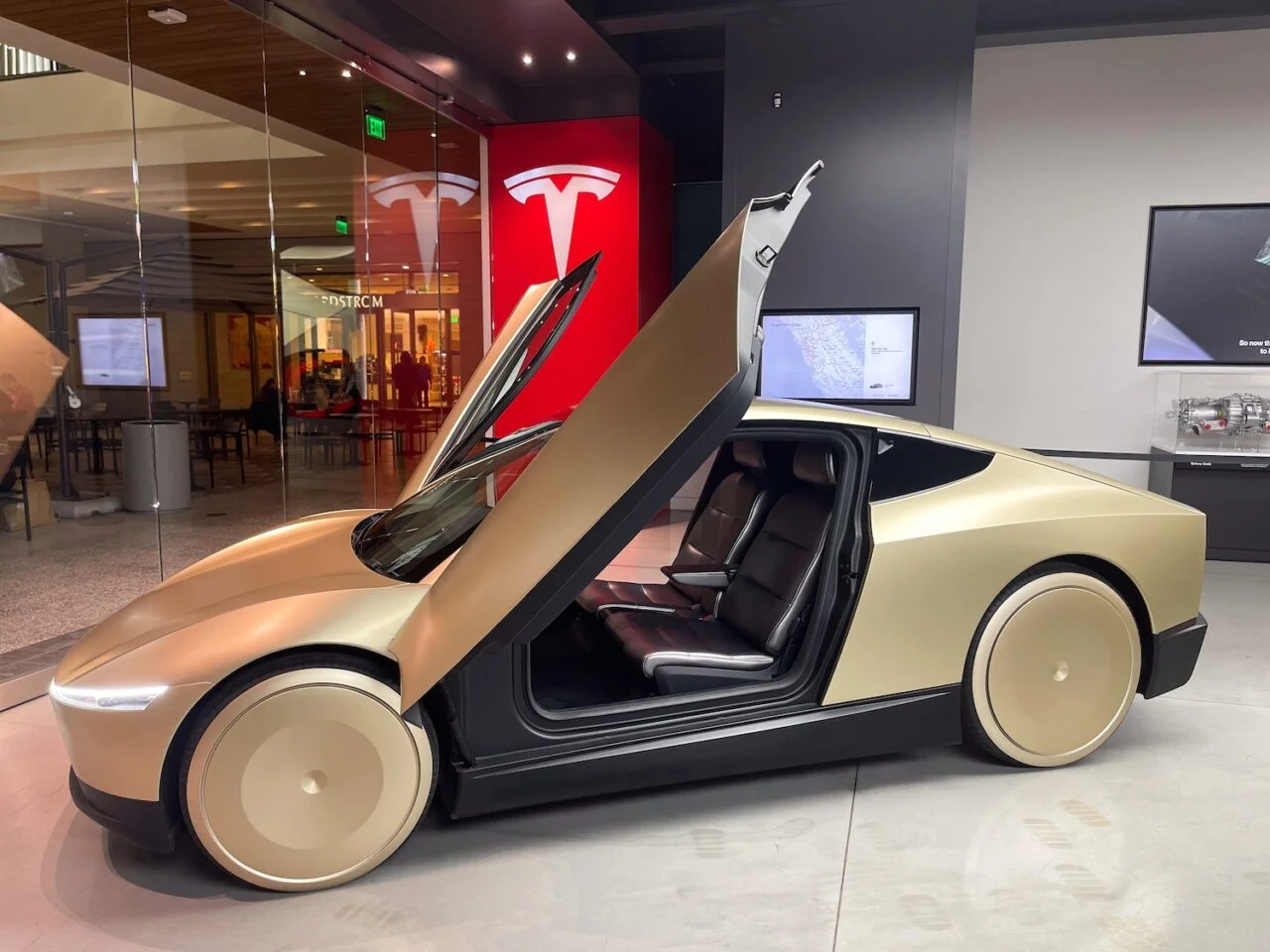

Tesla’s Cybercab Hits Trademark Roadblock: Could a French Beverage Derail Musk’s Robotaxi Plans?
Imagine pouring millions into developing revolutionary self-driving technology, only to risk derailment over naming rights. That’s precisely Tesla’s reality. A leaked USPTO suspension letter reveals Tesla’s “Cybercab” trademark application is stalled following a French beverage company’s unexpected move. This unfolds against Tesla’s confusing “Robotaxi” branding saga, raising questions: How did a hard seltzer maker potentially outmaneuver the EV giant on automotive tech, and what does it reveal about Tesla’s trademark strategy?
Tesla Branding Tangled: Robotaxi vs. Cybercab
Decoding Tesla’s autonomous driving ecosystem is the first hurdle. Public announcements created confusion even before trademark troubles began:
- Robotaxi: Functions primarily as Tesla’s ride-hailing app, allowing users to summon autonomous vehicles. Crucially, Elon Musk himself used this term interchangeably during the Cybercab reveal event.
- Cybercab: Represents the actual vehicle Tesla unveiled – a futuristic, wheel-and-pedal-free model designed specifically for the Robotaxi network. It’s intended as the hardware cornerstone.
This inherent overlap in terminology (“Robotaxi” sometimes referencing the vehicle concept itself) laid groundwork for public confusion – and foreshadowed deeper legal complexities.
Why Robotaxi Was Dead on Arrival Trademark-Wise({}^{\text{(1)}})
Tesla’s ambition to trademark “Robotaxi” collided headlong with trademark basics. As confirmed by TechCrunch reports last year:
- Genericism: The USPTO categorically rejected Tesla’s “Robotaxi” application. The term is deemed generic for autonomous taxi services.
- Industry Usage: Competitors like Zoox use “robotaxi” descriptively(^{[2]}). Establishing distinctiveness is nearly impossible when the word is industry vernacular.
- Strategic Blunder: This rejection underscored Tesla’s failure to secure a foundational trademark for its core service offering.
| Tesla Trademark Timeline: Cybercab Missteps |
|---|
| Date |
| :—————- |
| Oct 10, 2024 |
| Oct 28, 2024 |
| Nov 2024 |
| Nov 2024 – Present |
The Cybercab Clash: How Unibev Caught Tesla Snoozing
Sources like Electrek reveal Tesla’s critical error: a 3+ week gap between announcing “Cybercab” and filing the trademark application. This delay provided a golden opportunity:
- Trademark Strategy 101: Leading companies file trademarks before public disclosure to prevent opportunistic registrations. Tesla operated with dangerous nonchalance.
- Unibev’s Maneuver: On October 28, 2024, Unibev’s U.S. trademark application surfaced, specifically covering “Cybercab” for automotive uses – a surprising pivot for a beverage firm ([Official USPTO Records, TSDR Search Required]^{[3]}).
- USPTO Procedures: Examined Tesla’s arguments against suspension but deemed them “not persuasive”. The telecom confirms suspension hinges on Unibev’s application outcome (^{[USPTO Suspension Letter Cited by Electrek]}).
- Likelihood of Confusion: USPTO suspension signifies the potential exists for consumer confusion if Unibev’s similar trademark registers first (^{[15 U.S.C. §1052(d)]}).
Squatting or Savvy Business? Unpacking Unibev’s Motives
While Unibev’s intentions aren’t explicit, actions align with opportunistic filing:
- Classic Trademark Squatting: Involves registering marks resembling existing ones or exploiting weak foreign systems for profit from confusion (^{[WIPO Guide to TM Rights]} ^{[4]}).
- Unibev’s Variant: Theirs looks cruder – potentially filing knowingly before its anticipated applicant to disrupt plans or solicit payment(^{[Harvard Business Review: Modern TM Squatting Tactics]}).
- Tesla’s Position: Whispers suggest negotiations are ongoing. Tesla will likely pay significantly to resolve this self-inflicted hurdle.
Beyond Tesla: The Broader Implications of Trademark Lag
Tesla’s Cybercab predicament illuminates vulnerabilities beyond Palo Alto:
- Startups BEWARE: Filing trademarks post-publicity invites copycats. Premature leaks or event launches become liabilities without IP protection locked in.
- IP Strategy Matters: Companies like Apple meticulously file trademarks globally pre-launch. Tesla’s haste contrasts starkly, prioritizing hype over core business safeguards.
- The Cost of Delay: Resolution likely means paying Unibev, rebranding (damaging early marketing), or abandoning “Cybercab” – expensive options vs. timely filing.
Imagining France’s Alternative Cybercab Experience
Should talks with Unibev falter, France might pioneer a unique Cybercab concept – perhaps a “Cyberpunk Cabernet Tour” chauffering enthusiasts through vineyards? While whimsical, this emphasizes the absurdity a beverage firm could wield such influence over an advanced automotive program. It underscores the very tangible consequences of lax trademark management: potential brand dilution in key markets.
Navigating Tesla’s Trademark Maze
Tesla’s quest to dominate autonomous rides faces a bureaucratic hurdle manufactured by its own delays. The suspension over “Cybercab” reveals inadequate trademark preparation despite the “Robotaxi” genericism lesson. This empowers Unibev’s strategic filing, forcing Tesla into negotiation or costly alternatives. Fundamentally, it highlights critical blindspots: Revolutionary tech demands watertight IP foundations. As observers watch the Tesla-Unibev resolution unfold, crucial questions linger: Will Musk’s team overcome their trademark neglect? Could this derail ambitious rollout timelines? And crucially – will French vineyards be first to host Cybercab rides?
Do you think Tesla underestimated trademark risks, or is this just a bump in the road? Could Unibev realistically deploy its own ‘Cybercab’ vehicles? Share your take below!
Citations & Relevant Links:
- TechCrunch Report on Tesla Robotaxi Trademark Denial (Generic Term):
techcrunch.com/{article-slug} - Zoox website referencing “robotaxi”:
zoox.com - USPTO Trademark Status & Document Retrieval (TSDR) Search:
tsdr.uspto.gov(Search “Cybercab”) - WIPO Guide to Understanding Trademark Rights & Squatting:
wipo.int/trademarks/en/trademark_rights.html


