
Can the Tenstorrent Blackhole Accelerate RISC-V Adoption in the Linux Kernel?
Is the future of computing shifting toward more open and customizable architectures? The recent news of patches being submitted to enable the mainline Linux kernel to run on the Tenstorrent Blackhole SoC represents a significant step in that direction. This development promises to bring the power of high-performance RISC-V cores to the broader Linux ecosystem, potentially unlocking new possibilities for developers and researchers alike. This article will delve into the details of this exciting development, exploring the Tenstorrent Blackhole hardware, the significance of upstreaming kernel support, and the potential implications for the future of RISC-V and Linux.
Unveiling the Tenstorrent Blackhole: A RISC-V Powerhouse
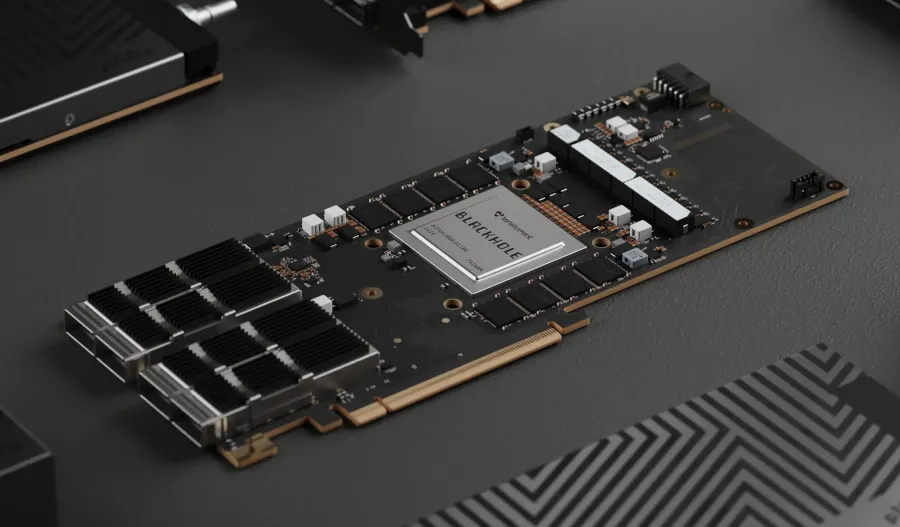
The Tenstorrent Blackhole SoC is not your average piece of hardware. It’s a specialized accelerator card designed for demanding computational tasks. Here’s a closer look at its key features:
- RISC-V Architecture: At its core, the Blackhole SoC leverages the RISC-V (Reduced Instruction Set Computer – V) architecture. RISC-V is an open-standard instruction set architecture (ISA) that offers unprecedented flexibility and customization opportunities compared to proprietary architectures like x86 and ARM. (Source: RISC-V Foundation)
- Four CPU Tiles: The Blackhole SoC is composed of four distinct CPU tiles. Each tile functions as an independent processing unit.
- SiFive X280 Cores: Within each tile, you’ll find four SiFive X280 cores. The SiFive X280 is a high-performance RISC-V core known for its efficiency and scalability. This configuration results in a total of 16 high-performance cores on a single card.
- Independent Linux Instances: Crucially, each of the four CPU tiles can run its own instance of the Linux operating system. This allows for parallel processing and workload distribution, maximizing the card’s computational potential.
- PCIe Accelerator Card: The Tenstorrent Blackhole is designed as a PCIe accelerator card, meaning it can be easily integrated into existing computer systems through a PCIe slot. This allows users to add significant processing power to their servers or workstations without requiring a complete system overhaul.
- Two Models: P100 and P150: Currently, two models are available: the Blackhole P100a, retailing for $999 USD, and the Blackhole P150a, marketed at $1399 USD. The P150a likely offers enhanced performance or memory capacity compared to the P100a, justifying the higher price point.
The Significance of Upstreaming Linux Kernel Support
While Tenstorrent already provides a “Linux on Blackhole” project that allows users to boot Linux on these cards, the submission of patches for the mainline Linux kernel represents a crucial step forward.
Why is upstreaming so important?
- Mainline Kernel Integration: Upstreaming refers to incorporating code directly into the official Linux kernel source code. This means that future versions of the Linux kernel will natively support the Tenstorrent Blackhole hardware.
- Wider Adoption: Mainline kernel support makes the hardware much more accessible to the wider Linux community. It simplifies the process of using the Blackhole cards, as users no longer need to rely on potentially outdated or unsupported downstream projects.
- Improved Stability and Security: Code integrated into the mainline kernel undergoes rigorous testing and review by a large community of developers. This leads to improved stability, security, and long-term maintainability.
- KernelCI Integration: Drew Fustini, the author of the patches, specifically mentions the importance of integration with KernelCI, a continuous integration system for the Linux kernel. KernelCI performs automated testing of kernel builds on various hardware platforms. By supporting the Blackhole in KernelCI, the development team can ensure that future kernel changes don’t break compatibility with the Tenstorrent hardware. This further enhances the stability and reliability of the platform.
- Encouraging Contributions: By making it easier to boot and test the mainline kernel on the Blackhole, the patches encourage more developers to contribute to the RISC-V ecosystem and the Linux kernel itself.
The Difference Between Downstream and Upstream Support:
| Feature | Downstream Support | Upstream Support |
|---|---|---|
| Source | Vendor-maintained | Mainline Linux Kernel |
| Maintenance | Vendor-dependent | Community-driven |
| Stability | Potentially less stable | Generally more stable |
| Availability | Limited, requires extra steps | Widely available |
| Long-term Support | Uncertain | More likely to be maintained |
The upstream patches, while not as comprehensive as Tenstorrent’s existing downstream project, are focused on enabling basic boot functionality. This is a deliberate strategy to get the ball rolling and establish a foundation for future enhancements.
Implications for RISC-V and the Future of Computing
The effort to integrate the Tenstorrent Blackhole into the mainline Linux kernel has several important implications:
- Boosting RISC-V Adoption: The Blackhole provides a powerful and accessible platform for developers and researchers to experiment with and develop applications for the RISC-V architecture. The relatively affordable price point of the P100a and P150a makes it easier for individuals and smaller organizations to get involved.
- Diversifying the Computing Landscape: The dominance of x86 and ARM architectures has stifled innovation in the computing industry. RISC-V, with its open-standard nature, offers a viable alternative that can foster greater competition and innovation.
- Enabling Specialized Computing: The Blackhole’s architecture, with its multiple CPU tiles and high-performance cores, is well-suited for specialized computing tasks such as machine learning, data analytics, and high-performance computing (HPC).
- Accelerating Kernel Development: By providing more RISC-V boards for boot testing, the Blackhole can help accelerate the development and testing of the Linux kernel on RISC-V architectures. This can lead to improved performance, stability, and feature support for RISC-V in the kernel.
What’s Next for the Tenstorrent Blackhole and Linux?
The initial patch submission is just the first step in a longer process. We can expect to see further development and refinement of the Blackhole support in the Linux kernel. Future efforts might include:
- Adding support for more Blackhole features: The initial patches focus on basic boot functionality. Future patches could add support for more advanced features of the Blackhole hardware, such as its memory management unit (MMU) or its I/O peripherals.
- Optimizing performance: As the Blackhole support matures, developers will likely focus on optimizing the performance of the Linux kernel on the hardware. This could involve tuning the kernel’s scheduler, memory management algorithms, and device drivers.
- Integrating with other open-source projects: The Blackhole could be integrated with other open-source projects, such as TensorFlow or PyTorch, to provide a powerful platform for machine learning research and development.
Conclusion: A Promising Step for RISC-V and Open Source
The submission of patches to enable the mainline Linux kernel to run on the Tenstorrent Blackhole is a significant development. It promises to make RISC-V more accessible to a wider audience, promote innovation in the computing industry, and accelerate the development of the Linux kernel on RISC-V architectures. While the journey towards full upstream support is just beginning, this move marks a promising step towards a more open and diverse future for computing.
What do you think about the potential of RISC-V and the Tenstorrent Blackhole? Share your thoughts in the comments below!
Sources & Further Reading:
Original article at www.phoronix.com


