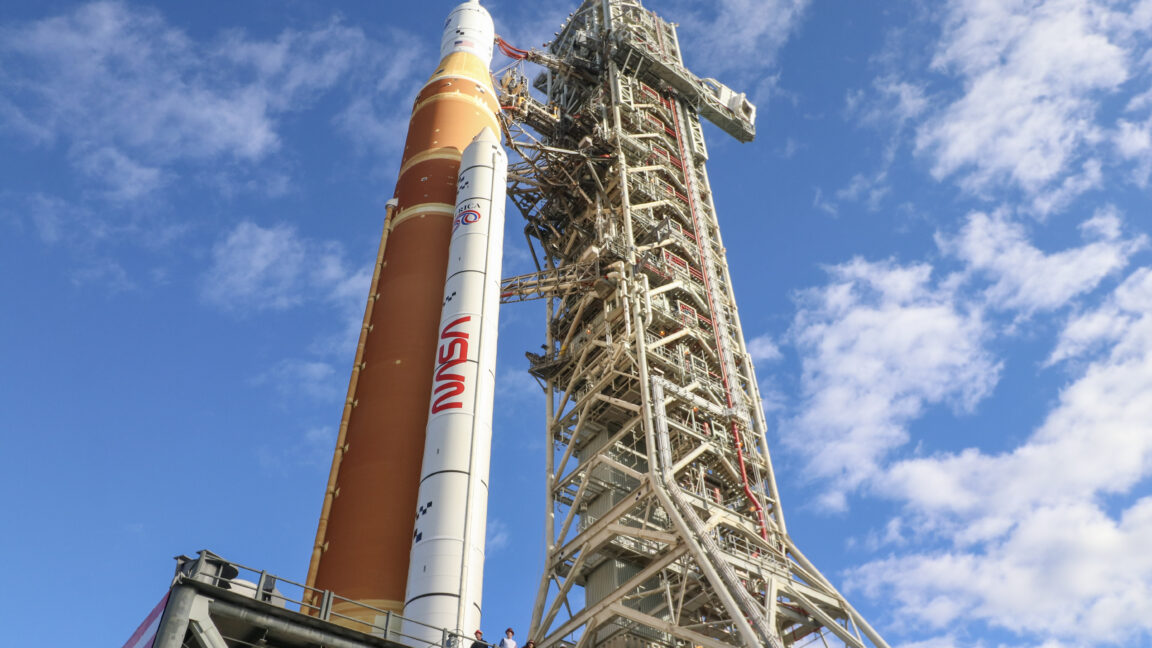

The Rocket Fuel Resilience: NASA’s Artemis II Preparations Take Center Stage
Imagine a propellant so chilling it could freeze steel in seconds, with molecules so tiny they escape seals like whispers—this is liquid hydrogen propulsion. Yet NASA’s Artemis II mission hinges on mastering this volatile fuel while racing toward a landmark lunar orbit launch. Following Artemis I’s test flight in 2022, engineers face familiar ghosts: hydrogen leaks. But this time, they’re better equipped.
Hydrogen Handling: Efficiency Meets Volatility
Hydrogen remains rocket science’s ultimate paradox—highly efficient but notoriously leak-prone. At -423°F (-253°C), it shrinks metal joints, while its tiny molecules exploit microscopic gaps. Artemis II’s Space Launch System (SLS) depends on hydrogen for both RS-25 core engines and the Exploration Upper Stage engine. After Artemis I witnessed multiple leaks, engineers redesigned seals and rewrote the fueling playbook:
- Gentler Loading Tactics: Hydrogen now flows at reduced pressure, easing thermal shocks.
- Dynamic Repairs: Teams fixed leaking connectors using helium testing to pinpoint failures.
NASA’s Charlie Blackwell-Thompson credits Artemis I: “We learned how to load LOX (liquid oxygen) and hydrogen—those lessons changed our approach”.
The Wet Dress Rehearsal: Launch’s Decisive Gatekeeper
NASA’s public silence on a launch date isn’t indecision—it’s practicality. Wet dress rehearsals (WDR) are exhaustive simulations where teams load fuel, count down to ignition, then halt at T-10 seconds. For Artemis II, passing this test is mandatory. As Blackwell-Thompson notes: “Wet dress is the driver to launch.” Key stakes include:
- Refining cryogenic loading sequences
- Validating emergency-response protocols
A flawless WDR could verify February feasibility. Failure means delays.
Flight Termination System Evolution: Breakthrough Flexibility
One Artemis I episode haunted planners: the Flight Termination System (FTS). Mandated by U.S. Space Force Eastern Range principles, this self-destruct mechanism activates if rockets deviate toward populated zones. Its pyrotechnic charges required retesting every 28 days—a headache during Artemis I since technicians couldn’t access components at the pad. Rollbacks to the Vehicle Assembly Building (VAB) ate weeks. This time:
- New Structural Arms: Enable ground teams to reach FTS units atop the SLS rocket at the pad.
- Extended Pad Stays: Artemis II can now pursue launch windows through March before needing battery replacements in the VAB.
February Feasibility vs The Unforseen
Pressure simmers for a February launch—the program’s first window. Engineers have maintained schedules rigorously, with core stage boosters stacked ahead of projections. However, NASA’s Phil Isaacman cautions, “We have zero intent to communicate a date until after wet dress.” Optimistic signs: Improved leak detectors and stabilized hydrogen-loading algorithms from Artemis I. Yet extremes linger: a hurricane season delay or mechanical hiccups could alter timelines—proof that deep-space missions dance with uncertainty.
Closing Insights: NASA’s Artemis II combines caution with ambition. Hydrogen rigor and structural ingenuity illustrate evolution since Artemis I’s challenges. However, spaceflight’s reality demands humility—every bolt & valve must stand cosmic stress. Now, eyes lock on wet dress trials.
What unknowns should NASA conquer next? Share your perspective below.
Sources & Citations:
- Artemis Mission Updates: NASA’s Official Artemis Portal
- Cryogenic Fuel Dynamics: American Institute of Physics
- FTS Protocols: Space Force Eastern Range Guidelines
- Hydrogen Propulsion Overview: European Space Agency Technical Documents


