
When Satire Meets Power: South Park’s Blistering Take on Tech Titans and Trump’s “Gift Economy”
What happens when one of America’s most fearless satirical institutions collides with an era defined by reality-bending politics, billionaire flattery, and golden trinkets? The latest season of South Park provides the answer. For 26 years, Trey Parker and Matt Stone’s animated juggernaut has skewered American culture and politics with scandalous irreverence. Yet, Season 26, particularly the episode “Sickofancy,” marks an escalation, focusing laser-sharp satire on the transactional theatrics of the Trump era. Central to this critique? The episode’s portrayal of Apple CEO Tim Cook parading a lavish golden plaque to curry presidential favor. This isn’t just comedy; it’s a magnifying glass held over the uneasy dance between billion-dollar tech empires and political power, underscoring the show’s enduring importance in critiquing modern American absurdity.
The Evolution of South Park’s Political Weaponry: From Cartman to Capitol Hill
South Park has never shied away from controversy. Its foundational DNA mixes juvenile humor with surprisingly sophisticated social commentary. However, the Trump presidency (and its lingering cultural shadow) catalyzed a distinct shift:
- Early Targets (1997-2016): Often satirized broader societal issues (political correctness, religion, celebrity culture) or lampooned figures through metaphor (Saddam Hussein as Satan’s lover, implicit critiques of Bush Jr.).
- The Trump Era Escalation (2017-Present): The show adopted a more direct, rapid-fire approach. Real names (Trump, Biden, Kushner), specific scandals (Russia, impeachments, Jan 6th), and unfiltered portrayals became commonplace. The absurdity of real events demanded an equally unflinching satire.
- Documentary-Style Realism: Modern episodes seamlessly splice real footage and near-photorealistic animations of figures like Trump, creating a jarring, almost surreal, blend of reality and caricature. Season 26’s speed and specificity exploit how recent history feels like satire already written.
According to research by the Peabody Awards, South Park’s influence stems from its unique ability to “simultaneously offend and illuminate,” becoming a critical lens through which audiences process complex events, especially among younger demographics distrustful of traditional news media (Peabody Awards Archives, 2006).
Dissecting “Sickofancy”: A Groveling Parade of Power Brokers
The episode “Sickofancy” serves as a masterclass in political satire. Its core premise, per Deadline, is “a long line of visitors bearing gifts, now a prerequisite for any presidential request.” This simple narrative device lays bare perceived systemic corruption and the transactional nature of access. The episode functions as a viciously accurate critique of lobbying and influence peddling, presented with South Park’s signature crassness.
Key Figures & Their “Tributes”:
(The Episode’s Satirical Gifts vs. Real-World Context)
| Figure | Episode’s “Gift” | Real-World Inspiration/Parallel | Satirical Target |
|---|---|---|---|
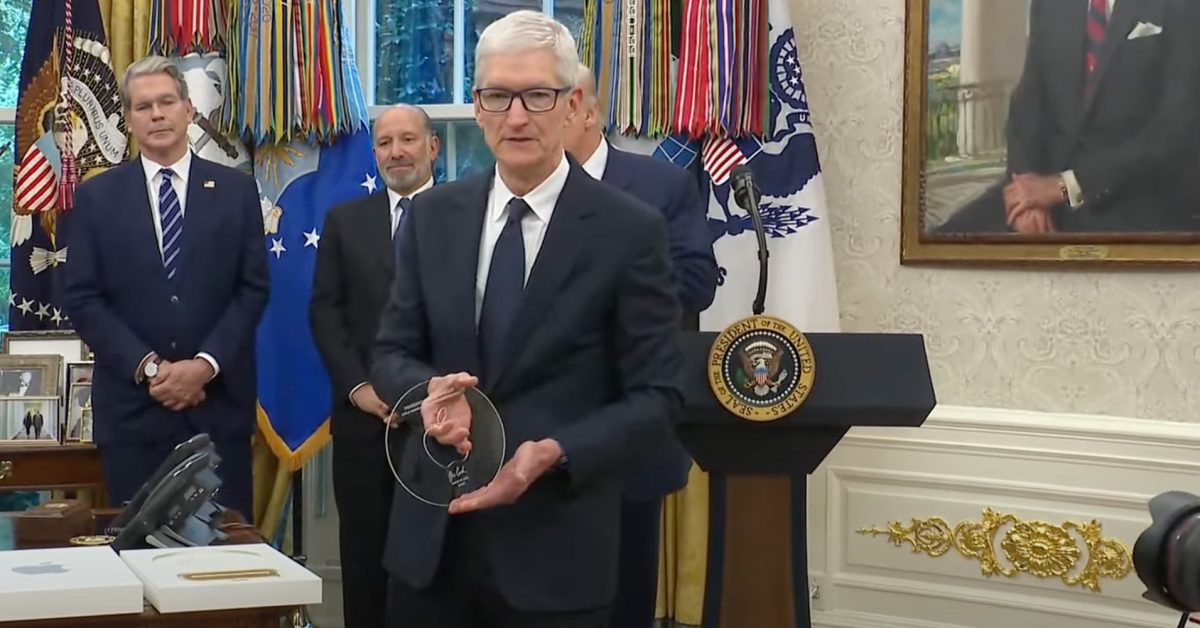
| Tim Cook (Apple) | Glass & 24K Gold Plaque | Actual plaque gifted by Cook to Trump in 2024 announcing the “American Manufacturing Program” |
|
| Mark Zuckerberg (Meta) | Golden Meta Quest Headset | Meta’s aggressive lobbying on tech regulations/metaverse push |
|
| Florida Delegation | Silver-Plated Space Shuttle | Florida’s significant political influence & DeSantis/Trump dynamics |
|
| Qatar Representatives | Golden Qatar Airways Airplane | Qatar’s massive US investments & diplomatic lobbying |
|
Tim Cook’s Golden Tribute: The Ultimate Symbol of Tech Sycophancy?
The episode’s rendition of Cook is meticulously detailed and devastatingly cynical. Holding an almost identical replica of the real golden plaque gifted during the Oval Office announcement of Apple’s American Manufacturing Program in January 2024, Cook embodies the subservience of corporate titans to political spectacle.
The satire deepens later when Trump, depicted sharing an intimate moment in bed with Satan – a recurring motif depicting his alleged moral compromise – scoffs at Cook’s offering: “Look at what some dipshit tech CEO gave me,” before crudely suggesting its anatomical placement. This layered joke operates on multiple levels:
- Critique of Corporate Optics: Apple’s presentation touted domestic investment, but critics noted minimal new spending, framing it as PR leveraging patriotism. South Park amplifies this cynicism, framing the plaque as a hollow, overpriced bribe.
- The Irony of the “Dipshit” Label: Trump’s derisive comment satirizes his well-documented transactional view of relationships. Even billion-dollar gifts are deemed inadequate or foolish by the recipient, highlighting the insatiable nature of political ego.
- Tech’s Uncomfortable Alliance: Cook represents tech execs navigating the perilous path between public pressure for ethical governance and the pragmatic need to appease administrations that could deeply impact their business through regulation or rhetoric.
The scene powerfully underscores how corporate image-consciousness collides with raw political ambition – and how easily symbolic gestures become the subject of mockery.
Beyond Cook: Zuckerberg, Florida, and Qatar in the Barrel
South Park’s satire extends beyond Apple. Zuckerberg’s offering of a golden Meta Quest headset lampoons:
- Meta’s controversial investments in virtual reality via the heavily-hyped, yet widely criticized, Metaverse.
- The notion that tech offers seductive escapism over tangible solutions – perhaps ironic given Trump’s own relationship with reality.
The Florida delegation’s silver space shuttle mocks the state’s outsized political influence and Governor Ron DeSantis’s space ambitions (Space Florida), symbolizing expensive vanity projects potentially more about political legacy than tangible public benefit.
Qatar’s golden airplane model explicitly targets foreign state influence in US politics. Qatar is a major global investor, a key US military ally, and has faced scrutiny over lobbying efforts and human rights issues, notably related to the FIFA World Cup. The gift symbolizes the exchange of geopolitical favors disguised as diplomatic pleasantries.
The Underlying Commentary: Flattery, Access, and the Absurdity of Power
“Sickofancy” transcends mere celebrity parody. It dissects a dysfunctional political ecosystem:
- The “Gift Economy” of Influence: The episode literalizes the idea that political access and favors require extravagant tributes, turning lobbying into a grotesque, medieval ritual.
- Dehumanization & Ego Inflation: Reducing powerful figures (world leaders, CEOs) to sycophants bearing shiny objects underscores how power dynamics breed grotesque displays of flattery. Getting close to the “president” requires self-abasement.
- The Audience’s Complicity: By reflecting reality so accurately – Cook did gift Trump a golden plaque – South Park forces viewers to confront the inherent absurdity in the systems they witness daily. As media scholar Henry Jenkins notes, South Park’s strength lies in its ability to make the “familiar strange and the strange familiar” (The Wow Climax, 2007).
South Park’s Enduring Relevance: Why It Still Stings After 26 Years
Despite nearly three decades on air, South Park maintains its cultural sting through:
- Unparalleled Production Speed: Satire often ages badly, but the show’s lightning-fast production allows it to comment on events mere days (or hours) old, keeping its edge razor-sharp.
- Equal-Opportunity Offense: Parker and Stone target all sides—liberal piety, conservative hypocrisy, corporate greed, and public gullibility with ruthless impartiality. This creates a unique space for critical distance.
- Refusal to Preach: The show presents absurdity without offering easy solutions, forcing audiences to grapple with uncomfortable truths themselves. It’s the antithesis of moralizing “message” TV.
- Adaptation to the Post-Truth Era: In a time when traditional news struggles with polarization, South Park processes chaos through absurdity, providing an alternative, albeit cynical, form of cultural sense-making. Its “Everything is awful, let’s laugh” ethos resonates.
A 2019 Pew Research Center study highlighted how satire programs like South Park contribute to political awareness, particularly among audiences who distrust conventional media, underscoring its unintended civic role amidst its profane exterior.
Conclusion: When Comedy Cuts Closer to the Bone Than Journalism
South Park’s “Sickofancy” and its skewering of Tim Cook aren’t just cheap laughs. They represent a sophisticated critique of a world where billion-dollar gestures are performed for political favor, where ego trumps substance, and where the lines between reality and dark comedy have irrevocably blurred. By dragging the real and the ridiculous into the same infernal bed, Parker and Stone hold a funhouse mirror to the absurd power dynamics defining our era. The flame grill of criticism spares no one – from CEOs crafting golden trinkets to world leaders welcoming them. Far from losing its edge, South Park’s latest season proves that in times of peak political absurdity, satire becomes not just entertainment, but a vital act of cultural defiance.
What do you think of South Park’s no-holds-barred dig at Tim Cook and the theatre of political influence? Does this brand of satire help make sense of the chaos, or does it simply add to the noise? Share your thoughts in the comments below!
Sources & Further Reading:
Original article at 9to5mac.com


