
The Hidden Revolution Reshaping Your Google Experience
Have you noticed something… off lately about Google? That once-reliable oracle now serves up baffling results—AI summaries that answer your query before you can click, unexpected websites dominating page one, and a gnawing suspicion that trustworthy sources vanished overnight. You’re not paranoid. Google’s algorithm overhauls—particularly the June 2024 core update—have fundamentally scrambled what we see, a seismic shift dubbed “Google Zero” for its cratering impact on publisher traffic.
As journalists, researchers, and everyday users grapple with sporadic hallucinations in AI overviews (those slick answer boxes synthesizing web content), the very ecosystem of online information faces disruption. Understanding these Google search changes moves beyond frustration—it’s vital for digital literacy and reclaiming control over how we access knowledge.
The Algorithm Maze: Constant Change Behind the Curtain
Google tweaks its algorithm roughly 500–600 times yearly, with two to four major core updates creating seismic ripples across the web. While minor adjustments might tweak local results or image rankings, core updates are tectonic. By definition, they alter “how Google assesses content overall,” leading to traffic surges for some and punishing drops for others—even sites with historically top-performing content.
The most recent update (March–June 2024) exemplifies this unpredictability:
- Unprecedented Drops: Major publishers like The Verge reported sudden traffic declines surpassing 40% post-update. Small niche blogs vanished from search visibility entirely.
- Rise of “Unexpected” Sources: Forum threads, vendor pages, or thinly-sourced blogs increasingly dominate results, sidelining traditional authorities due to ambiguously weighted “helpfulness” signals.
- The Zero-Click Trend: Statista data shows 62% of searches now end without any site visit—accelerating as AI summaries satisfy queries mechanically.
These shifts aren’t random chaos. They reflect Google’s strategic pivot toward direct, AI-mediated answers—prioritizing speed over sourcing fluidly.
Google Zero: How AI Overviews Dismantled Traditional Search
The term “Google Zero” emerged early this year, coined by The Verge’s Nilay Patel to describe a vicious cycle: AI overviews (built from compiled web snippets) discourage users from clicking source links, starving publishers of ad revenue and verification incentives, thereby hollowing out the quality content Google needs to train its AI.
Key facets of this crisis:
- Aggregation vs. Credit: AI summaries repackage reporting from media outlets without meaningful attribution or traffic flow. For example, a complex medical query might generate a tidy Gemini answer box cobbling Nature, the CDC, and a Medium blog—but sends zero visits to them.
- Hallucination Risks: When these summaries hallucinate dangerously—like recommending glue pizza toppings or jumping off bridges to passersby—public trust erodes. As per research posted on arXiv, LLMs hallucinate 15–20% of the time when processing nuanced queries.
- Brand Dilution: Credible publishers lose authority as Google favors “diverse” sources. A search for “election integrity” may bury The Washington Post beneath agenda-driven aggregators.
It’s algorithmic cannibalism: the system feeding on its own input pipeline until the pipeline breaks.
The Publisher Squeeze: Data Tells the Story
[Table: Impact Metrics of Google Core Updates (2023–2024)]
| Core Update | Avg. Publisher Traffic Change | Key Driver Identified |
|——————|———————————-|—————————-|
| August 2023 | -11.7% | “Helpful Content” Policy |
| March 2024 | -29.2% | Spam Policy Expansion |
| June 2024 | -41.1% | AI Overviews Rollout |
Beyond traffic metrics, publishers face existential angst:
- Resource Drain: Writing “SEO-friendly” articles is a sprint against rewriters using AI tools to churn out lower-quality versions.
- Revenue Collapse: News Media Alliance studies indicate publishers lose $12B yearly to unmonetized scraped content.
- Quality Penalty: Original investigative work sinks behind shallow listicles gaming “EEAT” (Experience, Expertise, Authoritativeness, Trustworthiness).
“The algorithm no longer rewards depth,” notes digital strategist Rand Fishkin. “It rewards alignment with Google’s AI training patterns—ironic for a system that relies on human expertise.”
The Escape Hatch: Regaining Control With Preferred Sources
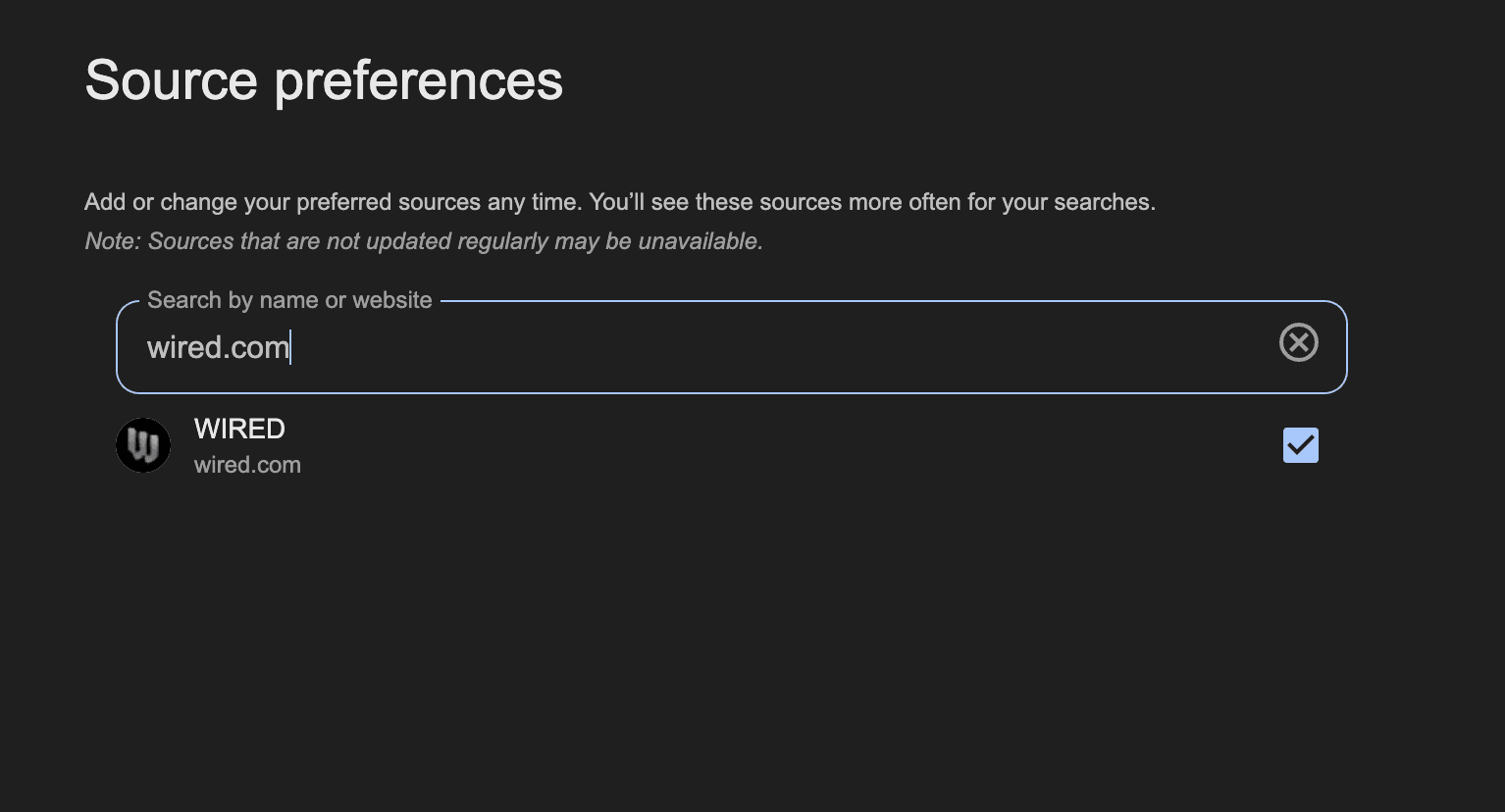
Despite opaque algorithm mechanics, Google offers one discretion tool: the Preferred Sources feature. Rolled out quietly in mid-2024, it allows users to prioritize trusted publications directly within Top Stories and dedicated sections.
How it works:
- Opt-In Results: For queries with news angles (e.g., “quantum computing breakthroughs”), your preferred publishers jump above AI overviews and general results.
- Multi-Source Flexibility: You can stack outlets like WIRED, Scientific American, and local press via a counterintuitive interface: Google app > Collections > Added to Search. Activating WIRED requires simply toggling a checkbox here.
- Certainty Friction: Unlike social media algorithms, preferences don’t filter out sites—they elevate vetted ones. Think Spotify’s “Favorite Artists” displacing algorithmic radio suggestions.
While limited to Top Stories formats, the feature signals a rare concession: users crave discernment, not just speed. Even niche outlets like Consumer Reports or TechDirt can shield loyal readers from AI drift.
What Lies Beyond the Algorithm Jungle?
Preference tools offer temporary refuge—but the core tension remains unresolved. Will Google prioritize sustainable sourcing over sticky session duration? Can publishers pivot beyond search dependency? Short-term solutions emerge:
- Audiences embrace newsletters and RSS feeds to sidestep algorithmic whims.
- Vetted directories like Wikipedia curate sources manually, offering clarity absent in AI summaries.
- Policy voices advocate regulatory action mandating “snippet payments” similar to EU copyright law.
Meanwhile, your next search needn’t feel futile. Setting preferences acts like a compass in chaos—small, user-centric rebellions preserving credibility amidst flux.
Google’s transformation from portal to oracle demands our vigilance. Embracing tools like Preferred Sources isn’t passive acceptance; it’s tactical reclaiming of digital agency. As the dance between creators and algorithms intensifies, thoughtful curation—whether by tech or people—remains our strongest compass. What’s your survival strategy? Share how you’ve adapted your searches below!
Places to learn more about algorithm shifts: How Google’s Algorithm Works | Stanford Study on AI & Media Sustainability | Initial “Google Zero” Coverage at The Verge


