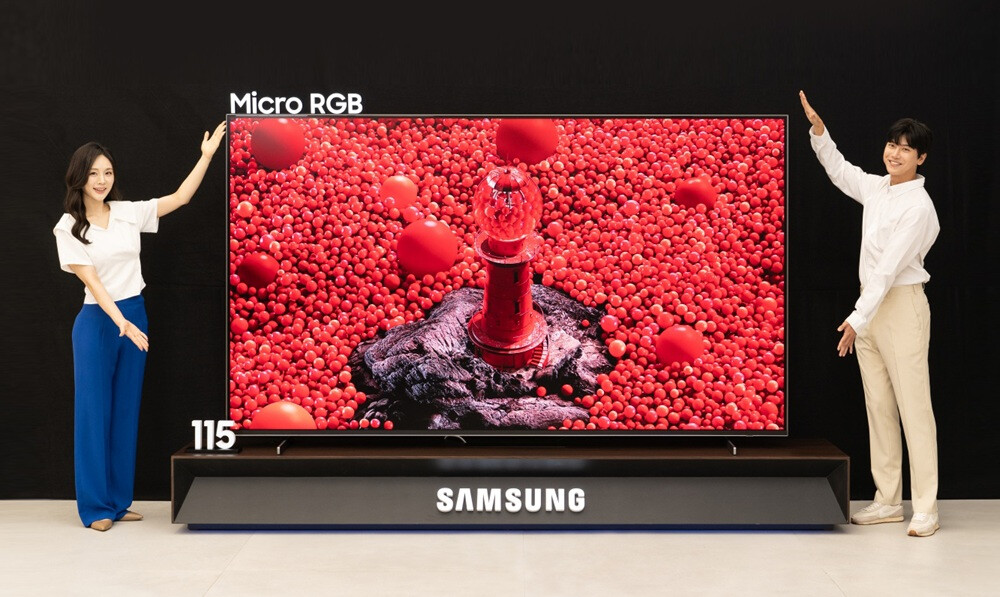

The Ultimate Home Theater Revolution: Has Samsung’s $30,000 Micro RGB TV Rewritten the Rules of Picture Quality?
Have we finally breached the final frontier of visual realism in consumer displays? Samsung Electronics America has ignited the high-end TV market with the revolutionary launch of its Micro RGB TV, marking a quantum leap beyond conventional screens. This colossal 115-inch behemoth isn’t just big; it’s the world’s first to integrate a Micro RGB TV backlight system using micrometer-sized LEDs. Priced at a stratospheric $29,999, it promises unprecedented color accuracy, contrast, and immersion. Samsung’s proprietary technology literally rewires how light is managed, aiming for perfection in color reproduction that challenges the boundaries of human vision. For cinephiles, gamers, and tech innovators, this isn’t merely an upgrade—it’s a paradigm shift redefining what “premium” means in home entertainment. Let’s dissect why this technological marvel demands attention and justifies its price tag.
The Core Innovation: Samsung’s Proprietary Micro RGB Technology Explained
The magic lies under the hood—or, more precisely, behind the massive 115-inch panel. Samsung’s Micro RGB technology replaces the monolithic backlight units of standard LCDs or the inorganic color layers of OLEDs with something radically different: billions of individually controlled red, green, and blue micro-LEDs, each smaller than a human hair (under 100 micrometers/µm). This isn’t simple miniaturization—it’s a complete architectural overhaul enabling pixel-level lighting precision previously unachievable outside laboratory conditions.
Unpacking the Micro-Scale Engineering Marvel
- Size Matters: By shrinking LEDs to under 100µm, Samsung packs billions into an “ultra-fine pattern.” This density is critical—it allows granular control, eliminating the blooming (light bleed) common in mini-LED TVs where zones contain hundreds of pixels. Think of it as swapping a floodlight for millions of laser pointers.
- Individual RGB Control: Unlike white LED backlights requiring color filters (which absorb light and reduce purity/vibrancy), each Micro RGB LED emits pure, specific red, green, or blue light. This bypasses color filtration bottlenecks, delivering light directly in its intended primary hues.
- Beyond Mini-LED/OLED: Compared to Mini-LED (larger zones, still blending colors) or OLED (organic compounds, potential burn-in, lower peak brightness), Micro RGB offers inorganic LED longevity, higher peak brightness, and zero risk of burn-in while achieving superior lighting precision (VDE).
The Holy Grail of Color: 100% BT.2020 Coverage
Samsung claims an industry-first accomplishment : 100% coverage of the BT.2020 color space mandated by the International Telecommunication Union (ITU). This standard represents the widest practical color gamut for ultra-high definition (UHD), encompassing significantly more hues than the commonly referenced DCI-P3 (cinema standard) or Rec.709 (HD). Achieving full coverage has been the elusive goal of display manufacturers for a decade.
- Why BT.2020 Matters: BT.2020 defines the colors for 4K/8K UHD content, including vibrant cyans, deep emerald greens, and intense reds impossible to accurately reproduce on most consumer TVs. Rusted red barns, deep underwater scenes, or a neon-lit sci-fi cityscape finally display with intended cinematic impact.
- Certification & Credibility: The Verband der Elektrotechnik (VDE), a globally respected German institute, awarded Samsung’s Micro RGB Precision Color certification—an independent validation of its groundbreaking color fidelity claims. This isn’t just marketing; it’s engineering validated.
Table: Micro RGB vs. Competing High-End Display Technologies
| Feature | Samsung Micro RGB TV | Premium OLED | High-End Mini-LED |
|---|---|---|---|
| Light Control Level | Individual Micro RGB LEDs | Per Pixel (OLED Emitter) | Zones (Hundreds to Thousands) |
| Color Gamut Coverage | 100% BT.2020 (Claimed/VDE) | ~70-80% BT.2020 (typical) | ~80-90% BT.2020 (best-in-class) |
| Peak Brightness | Very High (Exact nits N/A) | High | Highest (Often 2000+ nits) |
| Risk of Burn-In | None (inorganic LEDs) | Yes (Organic diodes degrade) | None |
| Viewing Angles | Excellent (Standard for LCD+FALD) | Superior (inherent OLED trait) | Very Good (With Viewing Layer) |
| Core Tech Limitation | Manufacturing Complexity/Cost | Brightness Limits/Burn-In Risk | Blooming Around Highlights |
AI as the Invisible Painter: Enhancing Realism Frame-by-Frame
Raw hardware power gets amplified exponentially by Samsung’s Micro RGB AI Engine—a sophisticated processor dedicated to real-time image and sound optimization.
Inside the AI Processing Pipeline
The AI engine constantly analyzes every frame fed to the TV:
- Scene Detection: Identifies content type (movie, sports, nature docs), setting (dark cave, sunny beach), and objects.
- Color Analysis: Pinpoints scenes or elements with “dull color tones.”
- Micro RGB Precision Control: Adjusts the intensity and output of the individual red, green, and blue micro-LEDs behind the panel. This isn’t boosting saturation blindly; it’s surgically enhancing specific hues revealed by the scene analysis for a natural, hyper-vivid look (Micro RGB Color Booster Pro).
- Dimensionality Enhancement: “Micro RGB Precision Color” goes beyond gamut – it analyzes depth cues in scenes. The AI subtly adjusts hues and contrasts in different image zones (foreground vs. background) to create a heightened sense of three-dimensionality, making a jungle appear lush and layered or cityscapes receding infinitely.
- Audio Synergy: While source material isn’t detailed, Samsung states the AI optimizes sound in tandem. Likely, this means matching audio dynamics and virtual surround processing to the visual action on screen.
Real-World Impact: Seeing is Believing
Imagine:
- Recapturing the faded vibrancy of a classic film mastered decades ago.
- Elevating dimly lit HDR content without crushing shadow detail.
- Experiencing nature documentaries where the plumage of exotic birds genuinely pops with perceived depth, unaffected by the glare of ambient lights (Glare Free Technology).
Industry analysts expect this level of AI-driven, hardware-specific optimization to become the benchmark for ultra-premium displays, setting a new trajectory for Samsung’s competitors like LG and Sony.
Beyond the Picture: Design, Intelligence, and Sustained Value
Samsung understands that a display this groundbreaking must deliver a holistic experience beyond sheer image quality.
- Viewing Comfort Redefined: Glare Free technology uses an ultra-low reflection coating and diffusing layers, not just filters. This actively counters ambient light reflections across the massive surface – crucial for daylight viewing in open-plan living spaces.
- Fitting the Future: The super-slim metal frame embodies minimalist luxury despite the enormous screen size. Its discreet profile ensures the focus remains on the content, not the bezel.
- Smart Intelligence: Samsung Vision AI integrated features, powered by Bixby, enable Click to Search. Pause a scene, ask “Who directed this?” or “What award did this actor win?” for instant, relevant answers overlayed on-screen. Actor bios, related titles, and contextual data appear instantly—no need for phones or tablets interrupting the immersion.
- Longevity & Trust:
- Security: Samsung Knox, the military-grade security platform built into Samsung phones and TVs, protects streaming logins, payment information, and connected device data.
- Software Support: The 7-year free Tizen OS upgrade program offers unprecedented longevity, ensuring new smart features, security patches, and compatibility updates well into next decade. This addresses consumer frustration with TVs becoming prematurely obsolete.
- Positioning & Availability: Targeting the “Ultra-Premium” segment means exclusivity. Launching in the US and Korea at $29,999, a global rollout will follow with various sizes. Analysts view this as Samsung planting a flagship technology stake, anticipating trickle-down to more affordable models as manufacturing scales.
Conclusion: A Glimpse into Display’s Bleeding-Edge Future
Samsung’s Micro RGB TV isn’t just a TV; it’s a technological tour de force. By shrinking and individually controlling RGB LEDs, it leapfrogs current limitations in color accuracy (achieving unprecedented 100% BT.2020 coverage), contrast, and brightness. Powered by purpose-built AI that pushes visual realism to uncanny levels, and wrapped in intelligent software and formidable security, it redefines the pinnacle of home entertainment. While its price positions it firmly in the ultra-luxury realm (for now), its breakthroughs herald the future of displays. The certified BT.2020 coverage depth, micro-scale LED precision, and decade-long software commitment demonstrate Samsung’s ambition—not just to lead the market, but to reshape it entirely. Does this justify the five-figure investment? For those who demand the absolute zenith of visual fidelity and have the means, the answer might be a resounding yes. Does Samsung’s Micro RGB technology signal the true successor to OLED? Weigh in below!
Sources & Further Reading:
Original article at www.techpowerup.com


