
The Intricate Web of SAMSON: Where Urban Grit Meets Indie Innovation
In an era where $70 AAA titles dominate headlines, how often does an indie game truly promise to deliver triple-A level intensity without the premium cost? Enter SAMSON, the upcoming action title from Christofer Sundberg’s studio, poised to challenge expectations with its ambitious vision at a notably accessible $24.99 price point. This isn’t just another generic open-world offering; it’s a tightly focused, mature experience prioritizing physicality, emergent gameplay, and a reactive metropolis teeming with consequence. The substantial hype following its announcement reflects a hunger for this specific brand of systemic, character-driven action. Let’s delve into the gritty details of SAMSON, dissecting its design pillars, reactive world, and unique position within the action genre.
Urban Playground: Driving Ambition and Structural Design
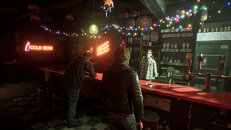
At the heart of SAMSON lies its modern, grounded city – a stark departure from the desolate wastelands of many contemporaries. This environment isn’t an endless sandbox, but a meticulously crafted “density box,” prioritizing meaningful encounters, tight pacing, and purpose-driven exploration.
- Mission Mindset: The core experience is structured around a compelling mission-based narrative, estimated to take roughly 10 hours for the main story arc. However, depth explodes to 25+ hours through extensive side content integral to gameplay progression and immersion. Players navigate the city’s underworld, taking on diverse “vehicle-based jobs” like high-stakes hits, underground races, daring getaways, theft rings, tailing missions, and hand-to-hand combat challenges. Completing these isn’t mere busywork; it builds player skills, unlocks vital knowledge, and shapes efficiency within the main story.
- The Soul of Transit: Driving isn’t just transportation; it’s co-protagonist. Developed from day one with immense care, vehicle handling emphasizes physicality, tension, and genuine reward. Expect weighty collisions, intuitive weight distribution, and distinct personalities across the vehicle roster. You can drive anything, but illicit acquisition carries risk. Unlike titles promoting casual chaos, finesse and consequence prevail over careless destruction – dragging civilians out of cars, notably, is intentionally forbidden.
Combat, Consequences, and Systemic Reactions
SAMSON rejects flashy spectacle for functionally brutal realism. Combat isn’t a separate mini-game; it’s a dynamic outcome of interacting systems.
- Anything Goes Tactics: Prepare for visceral, improvisational encounters combining hand-to-hand combat and environmental exploitation. Forget pre-defined loadouts. Instead, look for interactive elements: grab a wrench, lure enemies under unstable debris, utilize parked cars defensively, or leverage urban architecture. Damage is visceral, perceptible, and consequential – bodies bruise, objects break, and mistakes are costly. Combat, whether on foot (“melee combat”) or involving vehicles (“car brawling”), prioritizes function and survival above stylistic flourishes.
- A Living, Breathing Entity: The city actively watches and responds. NPCs aren’t static set dressing. They’ll react dynamically: commenting on a near-miss collision, assisting injured citizens, fleeing violence, or fiercely defending themselves if attacked. This unpredictability forces strategic consideration – every action carries plausible risk. Law enforcement provides a thrilling test case:
- Escalating Enforcement: Stealing a car? If seen, police presence intensifies rapidly, escalating pursuit tactics based on evasion maneuvers. Think tightening cordons, strategic roadblocks, and mounting pressure.
- Objective: Tension: Chases prioritize nerve-wracking tension over bombastic spectacle. Its success hinges on realism – mistakes matter immensely.
Legacy & Lineage: The Avalanche Influence Re-forged
The Sundberg connection (founder of Avalanche Studios/Creative Lead on Just Cause 1 & 2) sparks inevitable comparisons. While SAMSON embraces foundational Avalanche principles, it forges its own identity:
| Feature/Subject | Similarity to Avalanche Legacy (e.g., Just Cause) | Distinction in SAMSON |
|---|---|---|
| Design Philosophy | Physicality, Momentum, Systemic Interactivity | Focused, Purposeful, Reigned-In Chaos |
| Driving | Weighty Feel, Kinetic Motivation | Tactical Emphasis & Environmental Risk |
| Combat Style | Improvisational Potential | Realistic Damage & Functional Grittiness |
| Tone/Spectacle | Large-Scale Interaction | Intimate Urban Setting Character Drive |
| Core Experience | Engine Systems Built w/ Reactionary Worlds | More Paced Structure & Moral Ambiguity |
The influence manifests in how the game feels – the satisfying heft of movement, the domino effect of systemic interactions (physics collisions creating emergent chaos), and a world engineered to react dynamically to player actions. However, this isn’t Just Cause 5. Sundberg emphasizes SAMSON trades pure, outrageous spectacle for intimacy, deeper character exploration, moral ambiguity, and urban grounding. Expect chaos within boundaries, emerging from deliberate player choices rather than rampant freedom.
Technical Considerations and Player Experience
Originating from Sundberg’s studio formed in 2020 (with active development since late 2021 alongside underlying tech developed over ~5 years), SAMSON leverages seasoned open-world experience. Performance optimization is acknowledged as crucial (“Performance in an open-world game is always a challenge”) and backed by Epic support. Initial PC specs confirm ambitious visuals will push hardware:
- OS: Windows 11
- Processor: 6 Cores
- Memory: 16 GB RAM
- Graphics: NVIDIA GeForce RTX 2000-series / AMD Radeon RX 6000-series
- Storage: 15 GB free space
Reflecting its mature tone (“Includes drug use and sexual depiction”), SAMSON demands thoughtful interaction. Civilians react realistically; harming them has noticeable bystander feedback. Policing relies on escalating procedural tactics studied within urban game design (akin to emergent AI systems championed by studios like Rockstar relevant research cited on Wikipedia). The team consciously avoids global difficulty settings (“We believe it makes for a better experience if players play the game we built”), instead designing naturally escalating challenges players choose to navigate through exploration and skill development. Skill trees/perks tailor gameplay towards preferred styles, encouraging diverse interaction with the mechanics.
A Distinct Beast Emerges
SAMSON carves a distinct niche: an indie-priced action game delivering AAA systemic ambitions. Its strengths lie in deliberate contradictions: a price point defying ambitious visuals, a reactive open world contained within purposeful scope, chaotic physics wielded with player intention, and gritty realism prioritized alongside improvisational engagement. It honors Sundberg’s legacy not through mimicry but through distilled philosophies brought into a sharper, modern urban lens.
Rejecting intrusive monetization and superfluous multiplayer, SAMSON offers a deliberately curated single-player journey. From managing escalating police pursuits demanding strategic evasion to navigating morally complex missions resolving a significant debt, the experience promises mature storytelling tightly woven into gameplay loops that reward creativity. For fans craving weighty vehicle combat, improvisational emergent battles, and an organic urban sandbox reacting authentically to chaos, SAMSON stands poised as a uniquely compelling prospect. Its 2026 PC debut looms – follow the unfolding chapters via Steam wishlists and developer insights.


