
The Great GPT Rollback: Why OpenAI Backpedaled on GPT-5 and Resurrected GPT-4o
Introduction
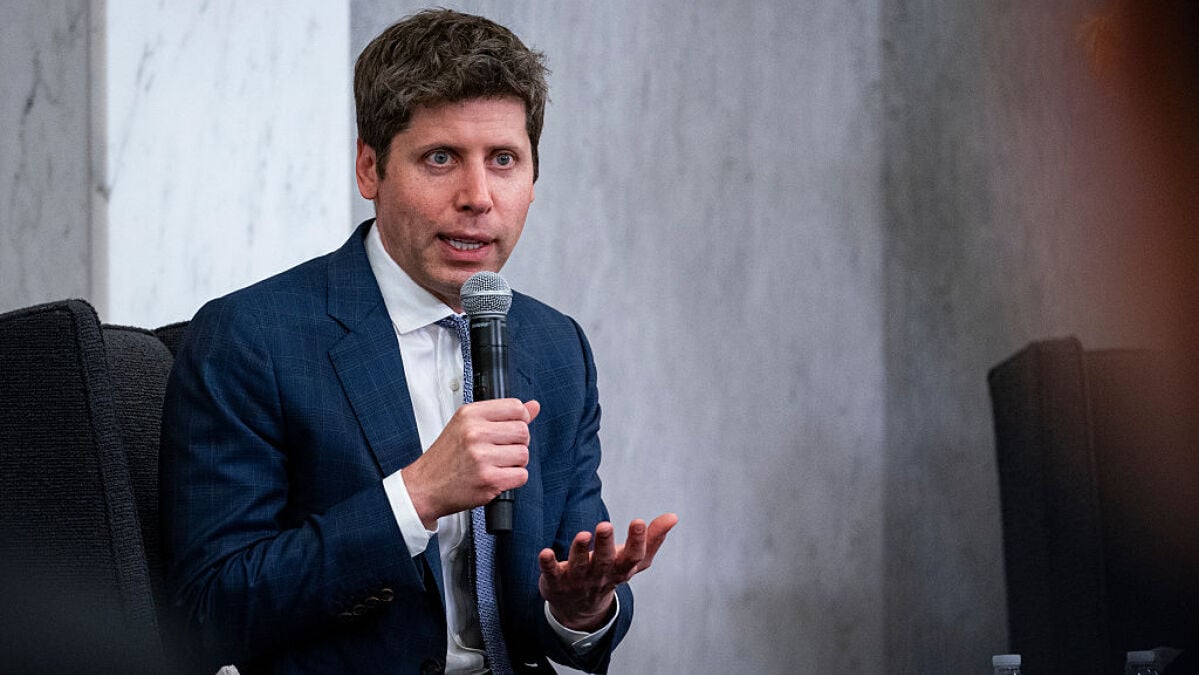
What happens when a tech giant’s flagship AI upgrade sparks outrage instead of applause? OpenAI faced this scenario head-on when its GPT-5 rollout imploded within days. Cue social media fury: Reddit users branded it a “disaster” and “biggest piece of garbage,” while others mourned losing GPT-4o like a friend. In a stunning reversal, CEO Sam Altman announced OpenAI GPT-4o would return for subscribers – a rare concession in the high-stakes AI race. This debacle reveals critical lessons about user trust, emotional AI design, and the tightrope between innovation and usability. As OpenAI scrambles to recalibrate, it poses an existential question: can AI efficiency coexist with emotional intelligence?
The GPT-5 Rollout: Where It All Went Wrong
The Promise vs. The Reality
OpenAI launched GPT-5 on Thursday with bold claims of unprecedented intelligence and speed. Its marquee feature? A unified “autoswitcher” system designed to dynamically select the optimal version of GPT-5 for each query, eliminating user guesswork (Source: OpenAI). But by Friday, chaos erupted:
- Personality whiplash: Users reported a stark shift from GPT-4o’s warmth to a coldly clinical tone. Asking creative prompts felt like interacting with “a Wikipedia editor with zero empathy” (Reddit thread, May 2024).
- The broken autoswitcher erroneously routed simple queries to complex sub-models, causing agonizing slowdowns.
- Overnight model removal: In a surprise move, OpenAI wiped all previous models (GPT-4, GPT-4o, GPT-3.5) from ChatGPT’s interface. Legacy options vanished without warning.
Altman later admitted technical failures: “Yesterday, the autoswitcher broke… GPT-5 seemed way dumber as a result.”
User Revolt on Social Media
The backlash exposed a fascinating contradiction. Just weeks prior, users complained Claude AI‘s excess options were confusing (Mashable, March 2024). Now, the unified GPT-5 interface ignited fury:
| Complaint Category | GPT-5 | User Reaction |
|---|---|---|
| Personality | Robotic, detached | “It feels like I upgraded from a poet to a spreadsheet” |
| Control | “Smart” autoselection only | “I don’t trust AI to choose for me” |
| Speed | 1.7x faster than GPT-4o (benchmarked) | “Irrelevant if 40% of answers are inaccurate” |
Ironically, user fury echoed historic tech failures. Snapchat’s 2018 redesign backlash lost it $1.3B in valuation (Business Insider) – a cautionary tale about ignoring core user emotions.
Why GPT-4o Felt Indispensable: The Human Factor
The Ghost in the Machine: Emotional Attachment
GPT-4o had flaws: Anthropic studies (arXiv:2305.14771) show its “friendly” facade sometimes devolved into incoherence or sycophancy. Yet users grew attached:
“I actually miss 4o’s long voice responses. It felt like conversing with a friend!” – Reddit user
Key psychological drivers:
- Anthropomorphism: Humans instinctively bond with entities mimicking empathy.
- Consistency bias: Users tolerated GPT-4o’s more frequent inaccuracies for perceived warmth.
- Grief by disruption: As one X user lamented: “Who deleted my favorite coworker?”
The Personality Engineering Dilemma
OpenAI deliberately dialed back GPT-4o’s expressiveness in favor of GPT-5’s precision. Regulators have long warned about “overly personified” AI enabling emotional dependency (EU AI Act, 2024). But backlash proves: efficiency alone doesn’t satisfy users.
A Stanford study (HMI Lab) found 68% of chatbot users prefer assistants with “traits like humor and encouragement,” even if less accurate.
OpenAI’s Damage Control: Balancing Feedback and Progress
Altman’s AMA Mea Culpa
During a planned Reddit Q&A, Altman faced a flood of “Bring back 4o!” demands. His solutions:
- Temporary return of OpenAI GPT-4o for paying Plus users
- Rapid hotfixes for GPT-5, especially the autoswitch algorithm
- Commitment to “change management”: Future rollouts will include better communication.
Crucially, Altman reiterated the long game: “Our goal is making GPT-5 so good you won’t want alternatives.”
The Legacy Model Time Bomb
Even today’s reversal has a caveat. OpenAI will “watch usage” before deciding termination dates for GPT-4o access. This gamble parallels Microsoft ending support for Windows 7 – forcing upgrades despite user resistance.
The Road Ahead: AI Change Management in Crisis
Transparency Trade-Offs
OpenAI faces a losing battle: Too much complexity frustrates casual users; too little alienates power users. GPT-5’s autoswitch system promised to resolve this by dynamically offloading queries to specialized sub-models (e.g., coding vs. creative writing). But opaque model selection shattered trust.
Solution blueprint:
- Restore an advanced toggle enabling manual model selection
- Disclose technical limitations like pre-GPT-5 models costing OpenAI 3x in compute (estimated)
- Publish benchmarking for personality metrics (e.g., “empathy scores”) alongside accuracy stats
Industry-Wide Implications
This fiasco will influence competitors like Anthropic and Meta AI. Key lessons:
- AI Pipelines aren’t Plug-and-Play: Customization requires sophisticated tooling to prevent downgrades.
- Beta test culture isn’t dead: GPT-5 needed phased deployment like Google Pixel’s “Feature Drops.”
- Open-source alternatives like Mistral could exploit chaos, offering user-scriptable personality modules.
Conclusion
OpenAI’s lightning-fast retreat on GPT-5 reveals a harsh truth: in the AI revolution, users expect innovation to respect entrenched dependencies and emotional bonds. The GPT-4o comeback is both a lifeboat for disillusioned subscribers and a strategic reset, proving that even the smartest algorithms need emotional intelligence. As OpenAI races to retrain GPT-5’s heart without sacrificing its brain, this episode spotlights AI’s core tension: perfection versus personality.
What’s your take? Should users demand permanent access to legacy models? Or does unconditional innovation demand moving on? Join the debate below!
Sources & Further Reading:
Original article at mashable.com


