
Why Aren’t We All Talking About Rai Rai Rai?
Picture this: a kaiju-sized void exists where female-led action-comedy manga should thrive beyond flagship hits like Kaiju No. 8. Yet lurking in the shadows is Rai Rai Rai, Viz Media’s criminally underrated gem that deftly juggles alien monsters, physical comedy, and biting social critique. This isn’t just Kaiju No. 8 with a gender swap—it’s a subversive heartwarmer where our heroine transforms into a plushy kaiju amid dystopian chaos. With the manga industry’s brutal cancellation rates targeting series centered on women, Rai Rai Rai’s blend of whimsy and grit demands attention before it’s crushed by obscurity.
From Abduction to Kaiju: Sumire’s Reluctant Hero Journey
Set in 2052 Earth—recovering from an alien invasion—Rai Rai Rai follows 18-year-old Sumire Ichigaya, a perpetually teary klutz trapped in predatory odd jobs to pay off her parents’ debts. Abducted by the same extraterrestrials littering Earth as “varmints,” she develops a shocking ability: transforming into a kaiju. While echoes of Kaiju No. 8 (an alien-fighting adult protagonist) resonate, Rai Rai Rai takes a distinct trajectory:
- Sumire’s Humanity as Foundation: Unlike Kafka Hibino’s steadfast resolve (Kaiju No. 8), Sumire’s vulnerability drives the narrative. Her “crybaby” persona isn’t played for cheap laughs but frames her perseverance amid trauma—including physical abuse and economic exploitation. This grounding in realistic suffering pulls readers deeper than many monster romps.
- Raiden’s Dark Echos: Sumire is forcibly recruited by Raiden, a varmint-assault squad clad in plug suits recalling Neon Genesis Evangelion’s militaristic flair (source: Wikipedia). Where competitors might glorify such factions, Rai Rai Rai critiques institutional manipulation. Raiden openly exploits Sumire’s desperation—a nod to Chainsaw Man’s Denji, sacrificing flesh for survival.
Visual Alchemy: Bridging Classic Whimsy and Sci-Fi Edge
Creator Yoshiaki architects a world where Rumiko Takahashi’s charm collides with Q Hayashida’s dystopia. Sumire’s ponytail and expressive reactions are deliberate homages to classic manga like Ranma ½—a design language adopted by modern hits Dandadan and Gokurakugai. But Rai Rai Rai flips expectations:
| Element | Conventional Trope | Rai Rai Rai’s Twist |
|---|---|---|
| Kaiju Design | Berserk monstrosity (Godzilla) | Cuddly Plush Form (Labubu-like) |
| Protagonist | Brooding Shonen Hero | CrybabALL post-traumatic Optimist |
| Tone | Pure Grit/Dystopia | Comedy-Horror Blender Experience |
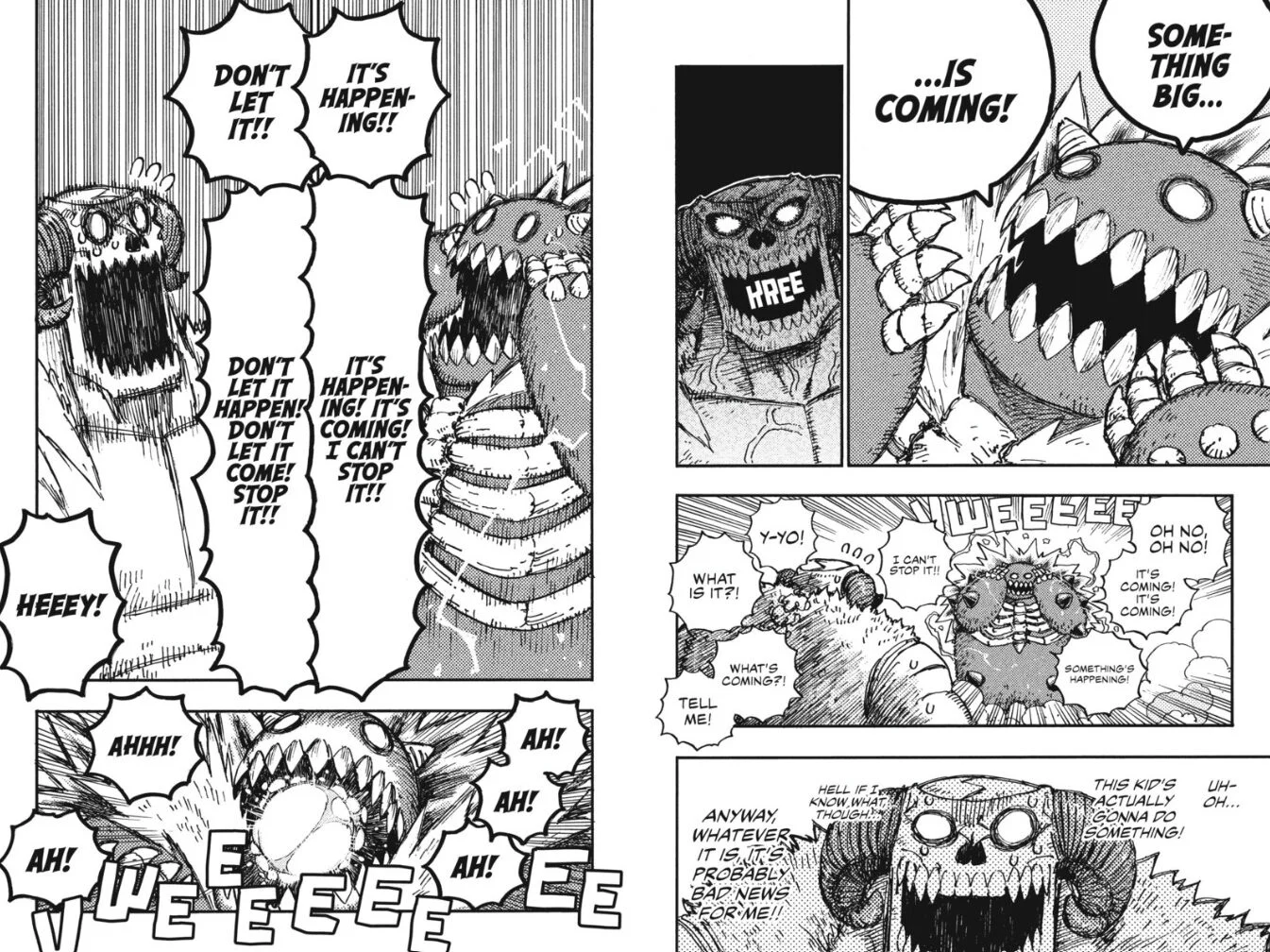
Her kaiju form exemplifies this. It channels Gunbuster’s heroic posing (source: Wikipedia), resisting atomic destruction urges to become a symbol of public hope—Superman reborn as giant pokémon. Meanwhile, twist-heavy fights against genuinely ghastly varmints fuse gag comedy (think Dragon Ball Pilaf arc) with visceral horror.
Deceptively Deep: Trauma, Debt, and Militarism Tell
Under playful battles lies a sharp interrogation of systemic flaws:
- Domestic Tragedy: Sumire’s parental abuse and financial burdens flesh her out beyond archetypes—contrasting sidelined female trauma narratives in adjacent genres.
- Economic Horror: Debt cycles force Sumire into hazardous gigs, critiquing societal disregard for struggling youth. As Consumer Bankruptcy Laws tighten globally (source: OECD), her plight echoes real-world precarity.
- Institutional Critique: Raiden represents state institutions prioritizing control over compassion. Operatives in tech-enhanced suits symbolize disposable labor tools—an unsubtle jab at military propaganda tropes ubiquitous across sci-fi.
Yet Rai Rai Rai avoids nihilism through Sumire’s growth. Her defiance—clumsily saving civilians while sputtering atomic breath—questions why heroes must be hardened to be valid.
The Vanguard’s Fragile Survival in a Cutthroat Industry
At 40+ chapters, Rai Rai Rai thrives at risk. Manga publishers aggressively cancel series with low initial traction—especially female-fronted stories relying on word-of-mouth lifts like Love Bullet or Magilumiere Co. Ltd. (which legitimizes female leads sans sexualization). Adding muscle grandma Melt, a Metal Gear Rising-esque rival, hints at deeper arcs Yoshiaki wishes to unfurl:
- Industry Realities: Shueisha’s Shōnen Jump alone axes 60% of new series within a year (source: Sankei Shimbun). Female-targeted titles face added hurdles securing adaptations or merchandising.
- Fresh Yet Familiar: While coalescing romance, horror, and satire, Rai Rai Rai offers razor-sharp commentary gemmed through accessible comedy—an advantage in volatile markets starving for innovation.
Charm Weaponized Against Collateral Threats
Here lies Rai Rai Rai’s brilliance: weaponizing its aesthetic lightness to disarm gritty tropes. Its gadfly humor doesn’t undermine pathos—it amplifies it. Every slapstick stumble humanizes the heroine against epic-scale monstrosities. The manga’s uncanny fusion proves female characters can helm kaiju sagas without sacrificing complexity for bombast. Much like Sumire’s kaiju form absorbs horror into hope, Rai Rai Rai reshapes what pop culture demands from “monster” narratives—an undervalued rebellion.
Truly great manga dances on the brink of cancellation, surviving only if we shout loud enough. Rai Rai Rai deserves echoing support before it becomes a bittersweet footnote. Dive into Viz Media’s digital shelves today—and tell everyone tagging #SaveRaiRaiRai. The storm may be gathering, but lightning strikes twice. What secrets do you hope unfold if Rai Rai Rai survives? Chime in below!


