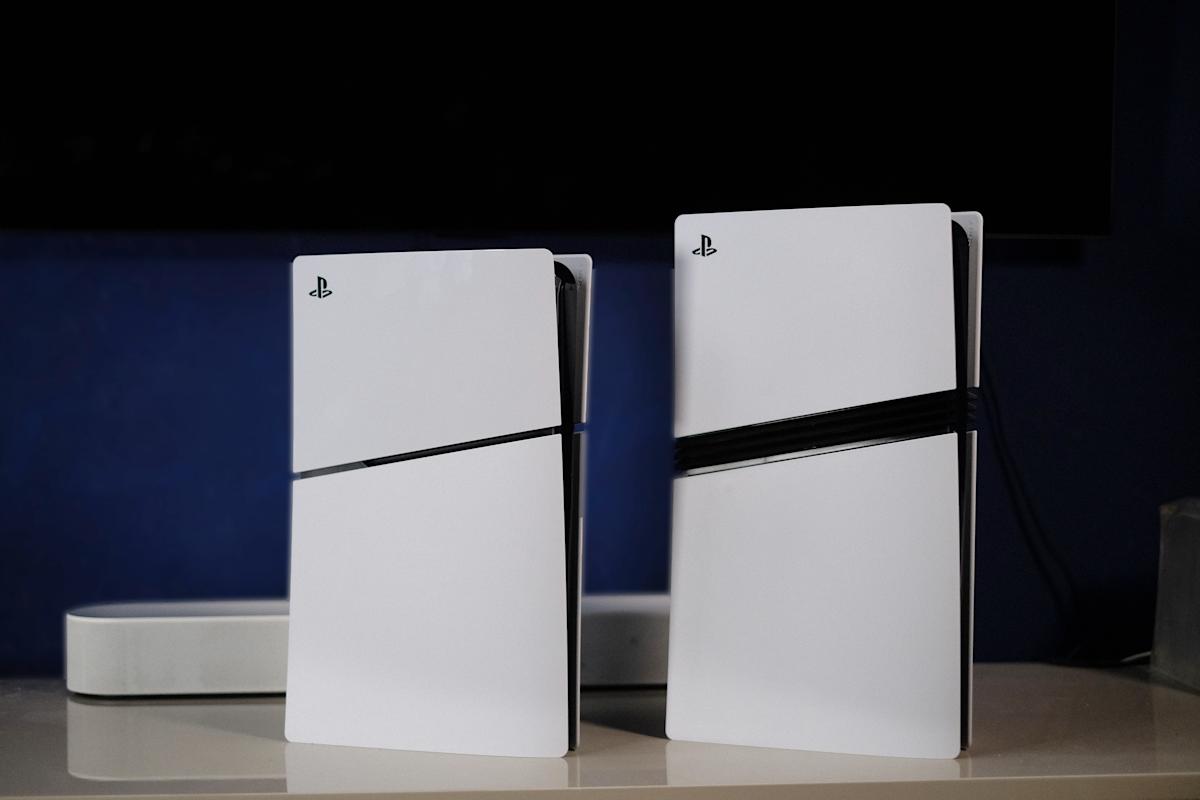

The Tech Frontier: Next-Gen Consoles, AI Ambitions, and Creative Shifts
Is Sony quietly plotting to dominate the next console war with an affordable powerhouse? Five years after the groundbreaking PlayStation 5 launch, the tech world buzzes with inevitable speculation: what does Sony have cooking for the PlayStation 6? A recent leak, purportedly from an internal AMD presentation to Sony in 2023, throws fascinating details into the ring, suggesting a focus on balanced power and price stability. Beyond the console arena, intriguing shifts are happening: a new smartphone contender juggles ambition and compromise, a tech titan bets big on its own AI future, and the largest video platform reimagines collaboration. These developments represent the relentless drive for technological evolution, balancing performance gains, user experience, and market realities. The future isn’t just about raw specs; it’s about smarter integration, creative empowerment, and strategic positioning.
H2: Decoding the PlayStation 6 Blueprint: Power, Efficiency, and Value
Industry whispers, amplified by the YouTube channel Moore’s Law is Dead (MLID), offer a potentially tantalizing glimpse into Sony’s vision for the PlayStation 6. While emphasizing that the sourced information is from a 2023 leak and subject to change, the leak provides substantive talking points for the next console generation.
-
H3: Prioritizing Performance Gains Without Exorbitant Power Demands
MLID reports that Sony might be prioritizing significant, but not outrageous, performance improvements while focusing on lower power output. This echoes trends seen in the PS5 generation (especially comparing base to Pro), where efficiency gains were notable. Key reported specs include:- 3x Rasterization Performance vs. Base PS5: This core 3D rendering metric governs polygon throughput – crucial for higher frame rates and resolutions.
- ~2x Performance vs. PS5 Pro: Doubling the power of the upcoming Pro model would represent a massive generational leap.
This focus suggests Sony is looking to deliver tangible next-gen experiences (think consistently higher frame rates at 4K, potential for 8K-upscaling techniques, more complex physics and world density) without requiring unwieldy cooling solutions or unsustainable power consumption. AMD’s chiplet technology and more efficient Navi/rdna architectures are likely key enablers here.
-
H3: The Crucial $499 Price Point Strategy
The leak strongly points towards a possible starting price of $499 for the PlayStation 6. This isn’t arbitrary; it’s a calculated callback to the highly successful PlayStation 4 launch strategy. The PS4 famously launched at this price point in 2013, significantly undercutting the Xbox One ($499 vs. Xbox One’s $499 without Kinect, but effectively $100 more for it initially) and reaping substantial market share benefits. Key implications:- Consumer Appeal: A $499 launch maintains accessibility in an era of rising component costs and inflation pressure.
- Competitive Landscape: Positions Sony strategically against Xbox, especially if Microsoft opts for a higher-tier Series X successor price.
- Profitability Balancing Act: Hitting $499 requires careful component selection and potential subsidization (relying on software/services for long-term profits), signaling confidence in the platform’s ecosystem. Historical console pricing analysis consistently shows price sensitivity.
-
H3: Technical Frontier: Beyond Raw Teraflops
While rasterization is a headline number, the next generation of gaming leverages multiple advanced technologies:- Ray Tracing Expectations: Increased hardware acceleration for ray tracing is almost a certainty, aiming for more realistic lighting, reflections, and shadows without crippling performance.
- Generative AI Integration: Potential for dedicated AI cores to power NPC behaviors, dynamic world generation, advanced upscaling, and even content creation tools for devs. This could be a key differentiator.
- Memory & Storage: Continued SSD focus is guaranteed, likely with even faster speeds and potentially larger base storage capacities. GDDR7 memory will likely provide the necessary bandwidth boost.
- Form Factor & Cooling: Achieving targeted performance gains within lower power targets will heavily influence physical design, potentially leading to more optimized but still recognizable console profiles.
H2: Nothing Phone 3: Promising Steps, But Flagship Hurdles Remain
While the PS6 buzz pertains to the future, the Nothing Phone 3 is a present-day proposition aiming to disrupt the hyper-competitive flagship space. Its approach embodies a distinctive philosophy blending design novelty with pragmatic decisions.
-
H3: Strengths: Premium Foundations & Glyph Evolution
The Phone 3 establishes strong baseline credentials:- Display: A generous 6.67-inch screen offers ample real estate for media and productivity.
- Battery Life & Charging: A large battery combined with fast charging tackles a key user pain point effectively.
- Storage Value: 256GB base storage is a significant advantage over competitors often starting at 128GB (e.g., base models of rumored Pixel 9, Galaxy S25).
- Glyph Interface Refined: The signature rear “Glyph” lighting system evolves beyond a gimmick. MLID notes it’s “much more helpful” than predecessors, likely integrating more tangible functionality like app notification prioritization or personalization. Its software (Nothing OS) remains a key selling point for its cleanliness and aesthetic cohesion.
-
H3: Compromises: Defining the “Not-Quite-Flagship” Status
Nothing’s first true flagship carries notable concessions:- Chipset Gap: Utilizing a “less-than-flagship” SoC places it behind rivals using the latest Snapdragon 8 Gen x-series or Apple A-series chips during its launch window. This impacts peak performance, especially in intensive gaming and prolonged multitasking.
- Camera Inconsistency: Despite improvements, inconsistent camera performance remains a hurdle in matching the computational photography prowess of established players like Google Pixel or Apple. This is often a critical factor for many buyers.
- Design Element: While distinctive, the reviewer notes the design “isn’t quite as bold” as earlier Nothing phones (like Phone 1), potentially diluting a core brand identity. This positions it as a powerful alternative for design-conscious users seeking value stock Android but not the absolute pinnacle of raw performance or photography.
H2: Apple’s Strategic Pivot: Building A Future Beyond ChatGPT Reliance
Bloomberg’s Mark Gurman revealed a significant internal shift at Apple: the creation of the “Answers, Knowledge and Information” (AKI) team. This signals a deeper commitment to foundational AI development than previously indicated.
-
H3: From Partnership to Proprietary Solutions
This move marks a clear departure. Apple famously partnered with OpenAI in 2024 to integrate ChatGPT into Siri, essentially outsourcing advanced generative AI capabilities. The AKI team’s mission, developing a “stripped-down rival to ChatGPT,” suggests:- Control & Integration: Apple wants deeper control over the technology for tighter integration with its ecosystem and operating systems (iOS, macOS, visionOS).
- Privacy Architecture: Developing in-house potentially allows for stronger privacy-centric implementations compared to relying on external partners, a core Apple tenet.
- Strategic Independence: Reducing dependence on a key rival (OpenAI, heavily backed by Microsoft) in a critical future-facing field.
-
H3: Vision: AI-Powered Revitalization of Siri and Search
AKI’s goals extend beyond matching chatbots:- Next-Gen Siri: Apple explicitly stated the delayed “new-and-improved Siri” will arrive “in the coming year.” AKI’s work is almost certainly the engine driving this long-awaited, more capable, context-aware, and proactive voice assistant overhaul.
- Revolutionized Search: Developing a “new ChatGPT-like search experience” capable of crawling the web implies a potential shift beyond simple link provision. Imagine asking Siri or Spotlight complex questions and receiving synthesized, summarized answers directly – a direct challenge to Google Search’s dominance and the current limitations of voice assistants. This could be delivered via standalone apps (akin to Perplexity or Claude) or deeply integrated into existing tools like Spotlight Search.
H2: YouTube Enhances Community with New Collaboration Experiment
In a bid to foster creator connections and cross-pollinate audiences, YouTube is piloting a new collaboration feature.
-
H3: Mirroring Success: The “Collab” Model
This feature, currently in limited testing, allows creators to add collaborators to a video. Inspired by successful similar features on Instagram and TikTok (“Collab”), this lets multiple creators appear as joint uploaders on a single video. Core benefits:- Audience Expansion: Easily exposes each creator’s audience to the other(s), accelerating discoverability.
- Streamlined Collaboration: Simplifies the process of sharing a single collaborative project for participants, avoiding the complexity of reuploads and linking.
- Community Building: Encourages partnerships and strengthens the perception of a creator ecosystem on the platform.
-
H3: The Evolving Creator Platform Landscape
YouTube’s move highlights the intense competition among platforms to attract and retain top creators:- Feature Parity: Playing catch-up to rivals like Instagram and TikTok who already offer this social boost tool shows YouTube’s responsiveness to creator needs that drive engagement.
- Algorithmic Advantage: Collaboration videos often generate high engagement (comments, shares, watch time). Making them easier to create encourages more such content, potentially boosting overall platform metrics.
- Monetization Synergy: Collaborative efforts can combine different monetization strategies (e.g., combining sponsorships), making them financially attractive.
Conclusion: Balancing Innovation, Pragmatism, and Connection
The tech landscape continues its dynamic evolution, revealing distinct strategic paths. Sony’s rumored PlayStation 6 ambitions prioritize significant yet balanced performance leaps within a crucial $499 sweet spot, echoing the PS4’s winning formula. Nothing’s Phone 3 showcases the challenge of cracking the premium market, delivering notable value and unique design but facing stiff competition in core performance metrics. Apple’s shift to develop its own “stripped-down” AI signals a strategic pivot towards foundational control and integration, promising to revitalize Siri and potentially redefine device-based search. Meanwhile, YouTube’s adoption of collaborative features illustrates the relentless pursuit of community building and audience engagement, adapting successful models from rivals to empower creators. Ultimately, innovation thrives at the intersection of ambition (performance gains, AI capabilities, novel design) and pragmatism (cost control, platform synergies, meeting core user needs). Whether it’s generating worlds, answering questions, creating content, or connecting people, technology continues its push towards a more capable, integrated, and collaborative future. What tech development most excites YOU? Share your thoughts on the future of consoles, AI, phones, or creator tools in the comments below!
Sources & Further Reading:
Original article at www.engadget.com


