
Cracking the Code: A Deep Dive into the NYT Mini Crossword and Puzzle Solving
Stuck on today’s New York Times Mini Crossword? You’re not alone! Millions of people worldwide enjoy the daily mental workout that these puzzles provide. The Mini Crossword, in particular, offers a bite-sized challenge perfect for a quick brain boost. But even seasoned solvers occasionally need a little nudge. This article will explore the nuances of the NYT Mini Crossword, including strategies for solving, analyzing specific clues, and understanding why these puzzles are so captivating. We’ll even dissect a recent puzzle to illustrate these concepts in action.
Understanding the Appeal of the NYT Mini Crossword
Why are puzzles like the New York Times Mini Crossword so popular? The answer lies in their ability to provide a sense of accomplishment in a short amount of time. In a world of constant distractions, a quick puzzle offers a focused, rewarding activity. The Mini Crossword, especially, stands out because of its:
- Accessibility: Its smaller size (typically 5×5) makes it less intimidating than the full-sized crossword.
- Speed: Most experienced solvers can complete it in under five minutes, making it ideal for a quick break.
- Variety: The clues range from straightforward to cleverly cryptic, keeping things interesting.
- Daily Dose: A new puzzle every day provides a consistent mental challenge and a sense of routine.
Strategies for Conquering the Mini Crossword
While the Mini Crossword is designed to be accessible, a few strategic approaches can significantly improve your solving speed and accuracy.
- Start with the Obvious: Begin by filling in the answers that immediately come to mind. This often provides a foundation of letters that help decipher more difficult clues.
- Look for Common Patterns: Crosswords frequently use abbreviations (e.g., Rd. for Road), common suffixes (e.g., -er, -ing), and common crossword answers (e.g., EER, ORE, ESS). Familiarize yourself with these patterns.
- Utilize Cross-Referencing: Use the letters from already solved answers to narrow down the possibilities for intersecting clues.
- Pay Attention to Clue Wording: Clues often contain subtle hints about the answer. For example, clues that use words like “informally” or “slang” indicate that the answer is likely to be a colloquialism. Question marks at the end of a clue often signal a pun or wordplay.
- Consider Letter Frequency: In English, certain letters are more common than others. For example, E, T, A, O, I, and N are among the most frequently used letters. Keep this in mind when guessing at possible answers.
- Embrace the Theme (If Any): While the Mini Crossword rarely has explicit themes like the regular crossword, sometimes subtle connections exist between the answers. Looking for these connections can provide valuable insights.
Deconstructing a Recent NYT Mini Crossword: October 14, 2025
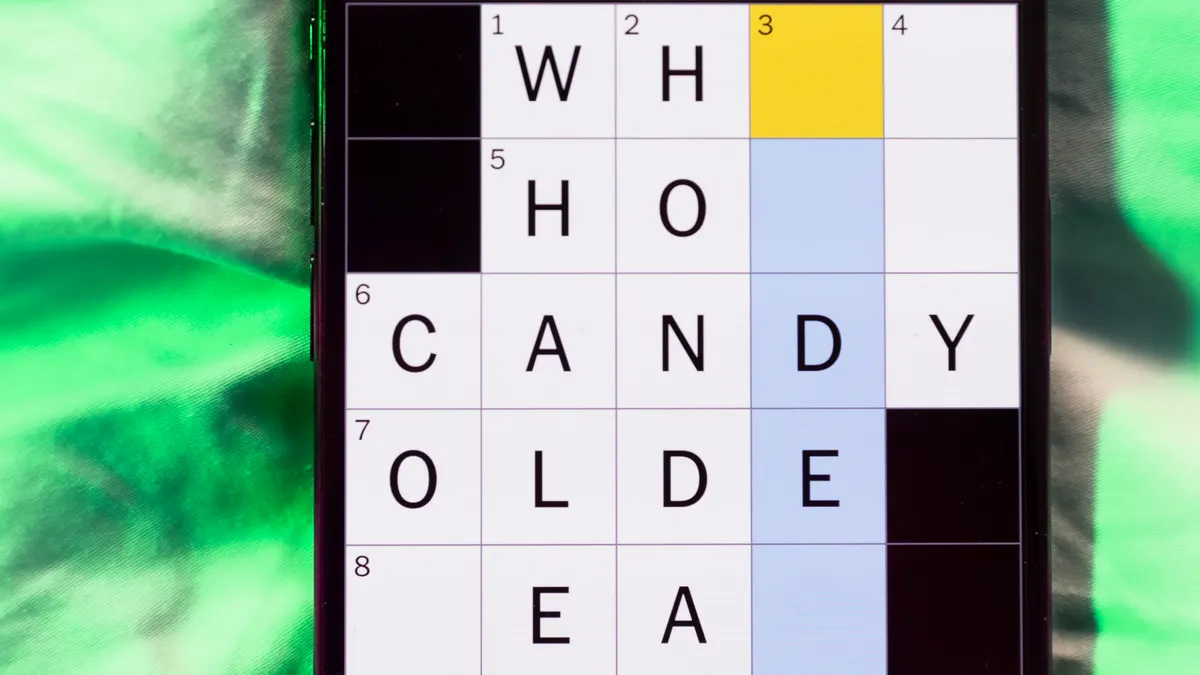
Let’s examine the NYT Mini Crossword from October 14, 2025, to illustrate these strategies. This particular puzzle had a unique vertical shape, making its solve a bit different than standard formats. Here’s a breakdown of the clues and answers:
Across
- 1A: Smokes, informally (CIGS) – This is a relatively straightforward clue. The “informally” suggests a slang term for cigarettes.
- 5A: “Don’t have ___, man!” (Bart Simpson catchphrase) (ACOW) – This clue relies on pop culture knowledge, specifically the iconic catchphrase from The Simpsons.
- 6A: What the vehicle in “lane one” of this crossword is winning? (RACE) – This is a cleverly worded clue that plays on the layout of the puzzle itself.
- 7A: Pitt of Hollywood (BRAD) – A simple clue referencing the famous actor, Brad Pitt.
- 8A: “Yeah, whatever” (SURE) – Another straightforward clue with a common expression.
- 9A: Rd. crossers (STSM) – This utilizes an abbreviation (Rd. for Road) and refers to streets.
Down
- 1D: Things to “load” before a marathon (CARBS) – This refers to carbohydrate loading, a common practice for endurance athletes.
- 2D: Mythical figure who inspired the idiom “fly too close to the sun” (ICARUS) – This clue requires knowledge of Greek mythology. Icarus is a well-known figure, making this a relatively accessible clue.
- 3D: Zoomer around a small track (GOCART) – This clue uses the word “zoomer” informally to describe a vehicle.
- 4D: Neighbors of Norwegians (SWEDES) – This clue requires geographical knowledge.
Analysis and Solving Process
Many solvers likely started with the easier clues, such as “BRAD” or “SURE.” These answers immediately provide letters to work with in the intersecting clues. The “Bart Simpson catchphrase” clue (ACOW) might have been tricky for those unfamiliar with the show, but the surrounding letters from “CIGS” and “RACE” likely helped narrow down the possibilities. The clue for “RACE” is a good example of lateral thinking. One needs to think about what the crossword is doing (Winning) and where a vehicle may be on the crossword (Lane one).
The down clues are fairly accessible. “CARBS” is a common term related to running, and “ICARUS” is a well-known mythological figure. The “GOCART” clue is slightly more challenging, but the “zoomer” hint points towards a small, fast vehicle. “SWEDES” is another geographical clue that’s straightforward, especially once a few letters are filled in.
Common Pitfalls and How to Avoid Them
Even with a strategic approach, it’s easy to fall into common traps when solving the Mini Crossword.
- Assuming the First Answer: Don’t immediately lock in the first answer that comes to mind. Consider all the possibilities and how they fit with the intersecting clues.
- Overthinking: Sometimes the answer is simpler than you think. Avoid overcomplicating the clues.
- Ignoring the Grid: Pay close attention to the length of the answer and the existing letters in the grid. This can help eliminate incorrect possibilities.
- Giving Up Too Soon: Don’t be afraid to take a break and come back to the puzzle later with fresh eyes. A different perspective can often help you see the solution.
The Mini Crossword vs. Other NYT Puzzles
The NYT offers a variety of puzzles, each with its own unique appeal. How does the Mini Crossword stack up against others like Wordle, Connections, and Strands?
| Puzzle | Skill Required | Time Commitment | Complexity |
|---|---|---|---|
| Mini Crossword | Vocabulary, General Knowledge | Low | Low to Medium |
| Wordle | Vocabulary, Pattern Recognition | Low | Low |
| Connections | Association, Logic | Medium | Medium |
| Strands | Vocabulary, Word Search | Medium | Medium to High |
The Mini Crossword generally requires a broader range of general knowledge than Wordle, but less focused logical association than Connections, and less of a word search than Strands. Its appeal lies in its balanced combination of accessibility and mental stimulation.
The Future of Puzzle Solving
The popularity of online puzzles like the NYT Mini Crossword shows no signs of slowing down. As technology continues to evolve, we can expect to see even more innovative and engaging puzzle formats emerge. AI and machine learning may also play a role in generating more personalized and challenging puzzles. This could lead to even more sophisticated and rewarding puzzle-solving experiences for players of all skill levels.
Conclusion
The NYT Mini Crossword offers a daily dose of mental stimulation in a convenient and accessible format. By understanding the strategies for solving, analyzing clues carefully, and avoiding common pitfalls, you can improve your solving speed and accuracy. Whether you’re a seasoned crossword enthusiast or a casual puzzle solver, the Mini Crossword provides a rewarding challenge that can sharpen your mind and boost your problem-solving skills. So, the next time you’re looking for a quick brain workout, give the Mini Crossword a try.
What are your favorite strategies for solving the NYT Mini Crossword? Comment below and share your tips!
Sources & Further Reading:
Original article at www.cnet.com


