
Record-Breaking Resupply: How SpaceX and Northrop Grumman Are Powering ISS Science
What happens when you combine a powerful SpaceX Falcon 9 rocket with an upgraded Northrop Grumman Cygnus supply ship? You get a record-breaking resupply mission to the International Space Station (ISS). In a significant leap for space logistics, the recent NG-23 mission showcases advancements in cargo capacity and efficiency. Understanding the details of this mission, including the Cygnus XL upgrade and its impact on ISS operations, is crucial for appreciating the future of space exploration and research. This article delves into the specifics of this remarkable mission and the innovative technology that makes it possible.
Cygnus XL: Ushering in a New Era of ISS Resupply
The first flight of the Northrop Grumman Cygnus XL spacecraft, launched atop a SpaceX Falcon 9 rocket, marks a pivotal moment in the ongoing mission to support the International Space Station. Designated NG-23, this mission is delivering a staggering 10,827 pounds (4,911 kilograms) of vital cargo to the orbiting laboratory. This delivery eclipses all previous commercial resupply missions to the ISS, setting a new benchmark for cargo capacity and demonstrating the growing capabilities of private spaceflight.
What is the Cygnus Spacecraft?
The Cygnus spacecraft, developed by Northrop Grumman, is an unmanned cargo spacecraft designed to resupply the International Space Station. It plays a vital role in ensuring the station and its crew have the necessary supplies, equipment, and scientific experiments to continue their operations. The Cygnus spacecraft is not designed to return to Earth intact. Instead, it burns up in the atmosphere after its mission is complete. Learn more about the Cygnus spacecraft here.
The Cygnus spacecraft is composed of two main components:
- The Service Module: This segment provides power, propulsion, and communications for the spacecraft. It is manufactured at Northrop Grumman’s facility in Northern Virginia.
- The Pressurized Cargo Module (PCM): This is where the cargo is stored. It is built by Thales Alenia Space in Turin, Italy, and is based on designs used for several of the space station’s permanent modules.
The Cygnus XL Upgrade: More Space for Science
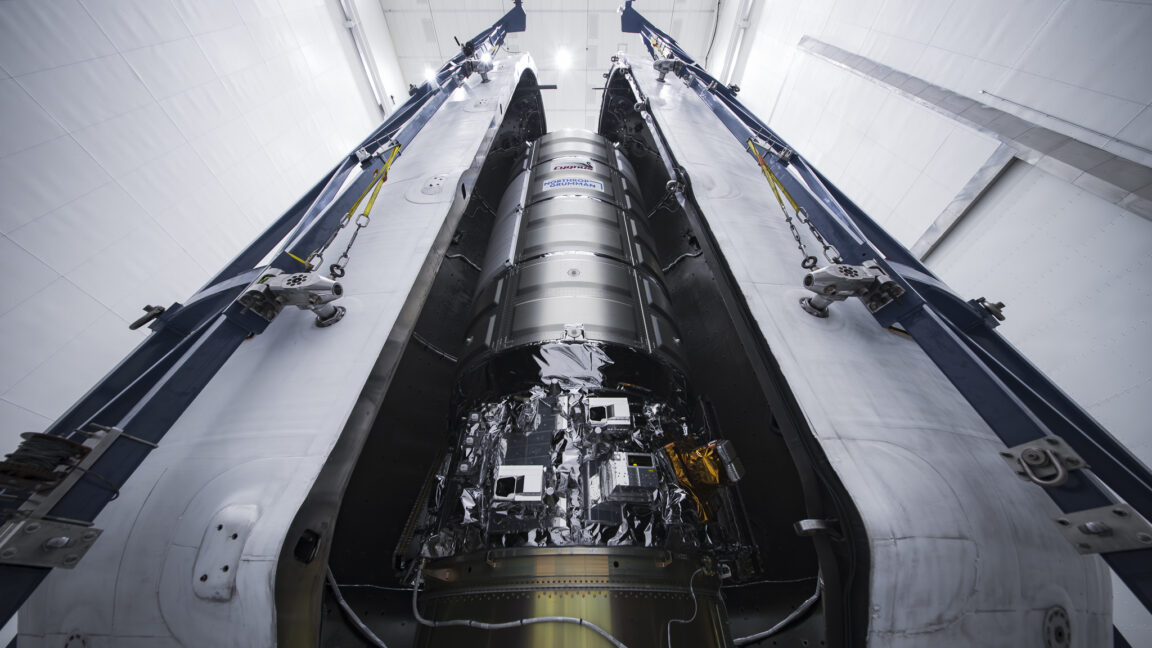
The Cygnus XL represents a significant upgrade to the existing Cygnus spacecraft. The most notable difference is the extended cargo module, which adds 5.2 feet (1.6 meters) in length. According to Ryan Tintner, vice president of civil space systems at Northrop Grumman, this increase in size translates to a 33% increase in cargo capacity.
- The increased cargo capacity is crucial for delivering more scientific experiments and other vital supplies to the ISS.
- By transporting more cargo per launch, the Cygnus XL helps to reduce the overall cost per kilogram of payload delivered to the station.
- The total volume of the cargo section on the Cygnus XL is equivalent to about two-and-a-half minivans.
The cylindrical pressurized cargo module bears a visual resemblance to a “keg of beer,” as the source puts it, but inside lies a wealth of equipment and supplies essential for maintaining the ISS and supporting its crew of seven astronauts.
NG-23: Details of the Record-Breaking Resupply Mission
The NG-23 mission, aptly named in honor of Northrop Grumman’s ongoing resupply efforts, represents a crucial step forward in the commercialization of space logistics. The sheer volume of cargo transported – exceeding 4.9 metric tons – demonstrates the growing capabilities of private companies in supporting critical space infrastructure.
The mission unfolds as follows:
- Launch: The Cygnus XL launched successfully from Cape Canaveral Space Force Station, Florida, propelled by a SpaceX Falcon 9 rocket. This combination highlights the collaboration between different private space companies in achieving common goals.
- Arrival at ISS: The Cygnus XL is scheduled to arrive at the ISS early Wednesday.
- Capture: NASA astronaut Jonny Kim will use the space station’s robotic arm, Canadarm2, to capture the Cygnus spacecraft. This precise maneuver is a testament to the advanced robotics capabilities available on the ISS.
- Attachment: The Cygnus will then be attached to a designated port on the space station.
- Unloading: Once securely attached, the ISS crew will open the hatches and begin the process of unpacking the cargo.
SpaceX Falcon 9: A Reliable Ride to Orbit
The SpaceX Falcon 9 rocket played a vital role in the success of the NG-23 mission. Known for its reliability and reusability, the Falcon 9 has become a workhorse for space launches, both for government agencies like NASA and for commercial clients. By utilizing a Falcon 9, Northrop Grumman was able to efficiently deliver the Cygnus XL and its massive cargo load to orbit.
Falcon 9 Key Features:
- Reusability: The Falcon 9’s first stage is designed to return to Earth and be reused on future missions, significantly reducing launch costs.
- High Payload Capacity: The Falcon 9 can carry substantial payloads to low Earth orbit (LEO) and beyond.
- Proven Track Record: With numerous successful launches, the Falcon 9 has established itself as a reliable and trusted launch vehicle.
The combination of the Falcon 9’s launch capabilities and the Cygnus XL’s increased cargo capacity is a powerful combination that will help to drive down the cost of resupplying the ISS and other space destinations.
The Importance of ISS Resupply
The resupply of the International Space Station is critical for several reasons:
- Sustaining the Crew: The ISS is home to a crew of astronauts who require food, water, air, and other essential supplies. Regular resupply missions ensure that the crew has everything they need to live and work safely in space.
- Supporting Scientific Research: The ISS is a unique platform for conducting scientific research in a microgravity environment. Resupply missions deliver new experiments, equipment, and materials to the station, allowing scientists to continue their groundbreaking research.
- Maintaining the Station: The ISS requires regular maintenance and upgrades to keep it operational. Resupply missions deliver replacement parts, tools, and other equipment to keep the station in good working order.
- Advancing Space Exploration: The ISS serves as a testbed for new technologies and techniques that will be essential for future space exploration missions, such as missions to the Moon and Mars. Resupply missions deliver new technologies to the station, allowing astronauts and engineers to test them in a real-world space environment.
What Happens to the Cygnus Spacecraft After Resupply?
Unlike some other cargo spacecraft, such as SpaceX’s Dragon, the Cygnus spacecraft is not designed to return to Earth. Once the crew has unloaded all of the cargo, the Cygnus is filled with trash and waste. The spacecraft is then detached from the ISS and sent on a trajectory that causes it to burn up harmlessly in the Earth’s atmosphere. This incineration process is a controlled and safe way to dispose of waste generated on the ISS.
Future Implications and Conclusion
The successful launch and upcoming arrival of the Cygnus XL on the NG-23 mission represents a significant achievement in the field of space logistics. The enhanced cargo capacity of the Cygnus XL, combined with the reliability of the SpaceX Falcon 9, paves the way for more efficient and cost-effective resupply missions to the International Space Station. This increased efficiency is crucial for supporting the ongoing scientific research conducted on the ISS and for enabling future space exploration endeavors.
Key Takeaways:
- The Cygnus XL boasts a 33% increase in cargo capacity compared to previous Cygnus spacecraft.
- The NG-23 mission is delivering a record-breaking 10,827 pounds (4,911 kilograms) of cargo to the ISS.
- The SpaceX Falcon 9 provides a reliable and cost-effective launch platform for the Cygnus XL.
- The Cygnus XL is built in collaboration between Northrop Grumman and Thales Alenia Space.
- The increased cargo capacity allows for more science to be delivered, driving down costs per kilogram to NASA.
The advancements demonstrated by the NG-23 mission underscore the growing importance of commercial partnerships in supporting space exploration. As private companies continue to innovate and develop new technologies, the future of space travel and research looks increasingly promising. What do you think about the rise of commercial spaceflight and its impact on scientific discovery? Comment below!
Sources & Further Reading:
Original article at arstechnica.com


