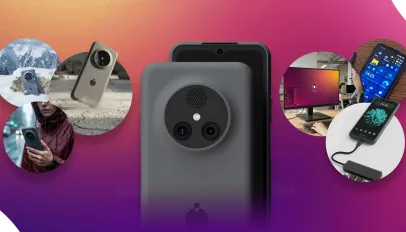

The Long Wait Is Over: NexPhone Pre-Orders Finally Arrive (14 Years Later)
Remember the dream of carrying your entire computer in your pocket? Imagine pulling out your smartphone, docking it, and instantly having a full desktop experience on a big screen. It’s a vision that captivated tech enthusiasts back in 2012, spearheaded by Canonical’s ambitious Ubuntu Phone. Fast forward to today, and that promise re-emerges: NexPhone is officially open for pre-order. But here’s the twist – it arrives a staggering 14 years behind schedule. Is this long-delayed project finally ready to deliver the seamless convergence dream by acting as a pocket-sized PC powerhouse? Let’s explore the fascinating journey and renewed potential of the NexPhone.
The Genesis of a Vision: NexPhone’s Original Promise
The year was 2012. Ubuntu for Android was generating buzz as Canonical’s innovative solution to mobile convergence. Enter Nex Computer, initially known for concepts like NexPad tablets. They announced plans for the NexPhone: a smartphone designed explicitly to run Ubuntu for Android as its sole operating system. This wasn’t just about apps scaling up; the goal was transforming a single device into the brain of multiple form factors. Docking it into a tabletยุcontroller shell? Instantly a tablet. Connecting it to a NexDock lap dock shell? Voilà, a fully-fledged Linux laptop. This hardware-agnostic approach fueled excitement over mobile computing convergence, promising users ultimate flexibility. Yet, unanticipated roadblocks loomed. Ubuntu Phone development faced hurdles, delays mounted, and the original NexPhone hardware envisioned as its flagship carrier quietly faded from the immediate public eye.
Why Convergence Failed to Flourish Initially
While compelling, the convergence concept faced significant challenges:
- Technical Bottlenecks: Early smartphones lacked the processing power, RAM, and crucially, cooling tech to smoothly handle demanding desktop-level multitasking and graphics. Creating a robust desktop-like Linux environment within Android required deep system-level integration Canonical couldn’t finalize universally.
- Market Timing: In 2012, the smartphone market was fixated on app ecosystems (iOS and Android), thinness, camera quality, and simple mobile experiences. Consumers weren’t yet demanding pocket-sized PCs, making mass adoption difficult.
- Ecosystem Fragmentation: Ensuring Ubuntu for Android worked reliably across diverse phone hardware proved extremely loro complex. Lacking strong hardware partnerships (beyond select initial proofs-of-concept), achieving a seamless


