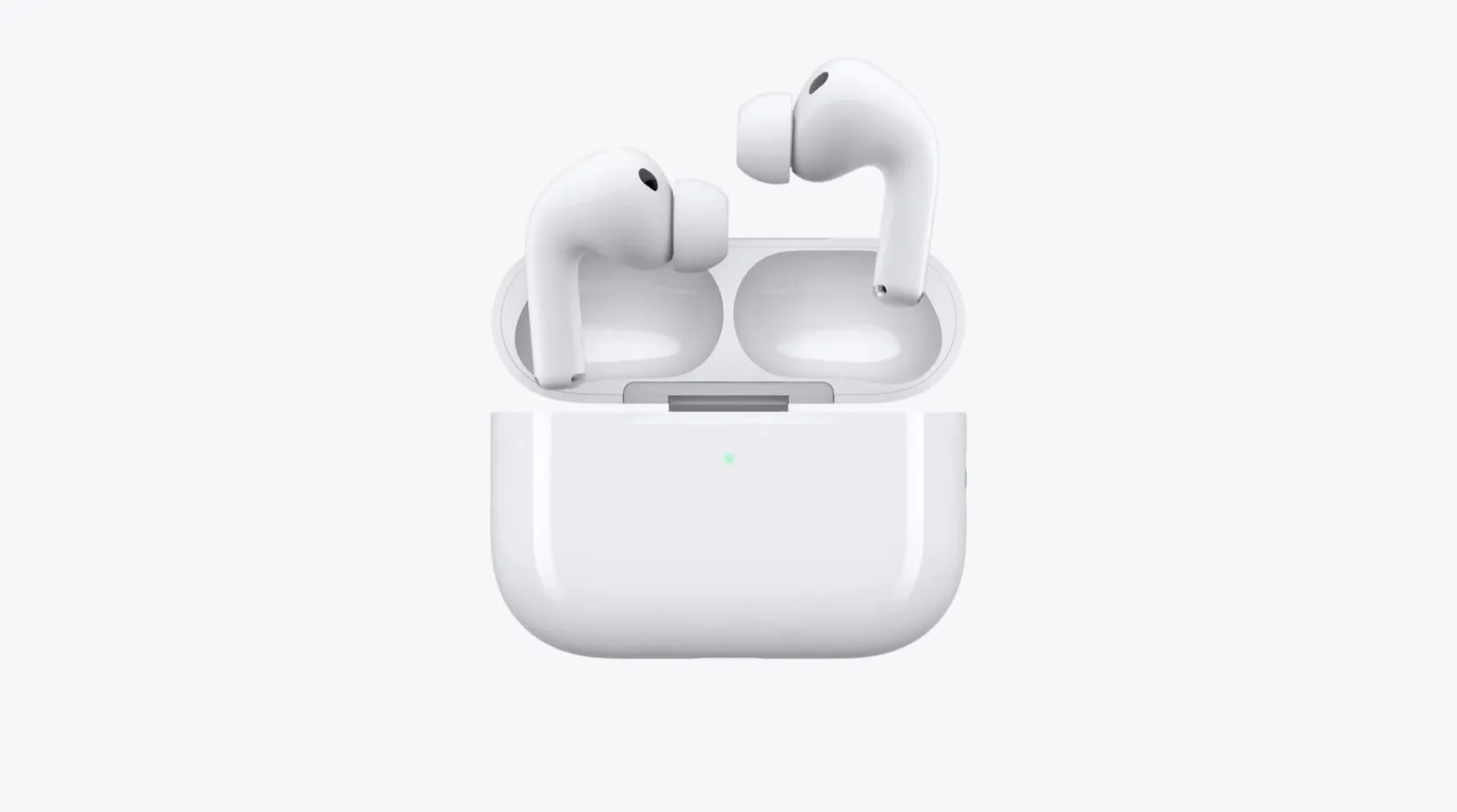

Beyond Silence: Why Apple’s Camera-Equipped AirPods Could Redefine Wearables (Again)
Imagine earbuds that not only immerse you in crystal-clear audio but also understand the world around you. Just months after the impressive AirPods Pro 3 launched, persistent whispers suggest Apple is poised to disrupt its own lineup again – this time with a premium model featuring infrared cameras. This unexpected upgrade ignites questions: Is the future of audio about more than just sound? Recent leaks hinting at AirPods Pro 3 with IR cameras suggest Apple’s ambitions extend far beyond noise cancellation and spatial audio, potentially integrating sophisticated Visual Intelligence directly into our ears.
The Rumored Vision: IR Cameras Arrive in AirPods
The core speculation centers on Apple developing a distinct, higher-end AirPods Pro 3 hardware model slated for later this year. Unlike the standard AirPods Pro 3, which focused on refining existing features like Active Noise Cancellation (ANC) audio quality, this variant reportedly incorporates miniature infrared (IR) cameras. This is a significant departure, positioning earbuds not just as audio output devices but as sophisticated environmental sensors.
- Why Infrared? IR cameras detect light invisible to the human eye, excelling in low-light conditions and tracking motion differently than standard visual-light cameras. This technology is commonly found in facial recognition systems (like Face ID), night vision, and gesture control interfaces. Its inclusion suggests features less reliant on perfect visibility and potentially more focused on proximity, motion detection, and interpreting spatial relationships near the wearer.
Unlocking Apple Intelligence with Visual Context
Bloomberg’s Mark Gurman, a highly credible Apple analyst, has shed light on the potential purpose behind adding cameras for Apple Intelligence. He reported that these “external cameras and artificial intelligence” would combine to “understand the outside world and provide information.” Crucially, Gurman emphasized “Visual Intelligence” as the core capability enabled by this hardware.
While specifics remain hidden within Apple’s labs, plausible applications emerge:
- Enhanced Spatial Awareness & Contextual Interaction: IR cameras could precisely track head movements and orientation relative to nearby objects or screens. Imagine:
- Smart Control: Gesture-based volume or track control becomes incredibly precise, understanding nods, tilts, or subtle finger movements without touch.
- Environment Sensing: Automatically pausing audio or lowering volume when you start speaking to someone nearby (building on Conversation Awareness, but potentially more contextually aware).
- Object Interaction Awareness: Recognizing if you’re looking at your phone screen versus a television, adjusting controls accordingly or even enabling glance-based input.
- Augmented Reality (AR) Anchoring: As Apple pushes its Vision Pro ecosystem, Advanced AirPods Pro could serve as auxiliary sensors. They might provide precise head-tracking data independent of the main headset, enhancing AR interaction fluidity and spatial audio positioning accuracy. They could also detect hand gestures near the face for interacting with AR elements visualized via Visio Pro or future glasses.
- Accessibility Evolution: Visual Intelligence could revolutionize accessibility features. Think:
- Environmental descriptions for visually impaired users – identifying obstacles, reading basic signs or displays overhead, recognizing familiar people approaching.
- Enhanced sound recognition cues – not just identifying a siren, but visually confirming its direction relative to the user.
- Real-time translation augmented with visual context (identifying the speaker).
Control Shake-Up: Gestures vs. Buttons
Adding another layer of intrigue, leaker “Instant Digital” speculated that this camera-equipped model might fundamentally change the interface: replacing the current pressure-sensitive stem buttons with hand gesture control. This aligns logically with integrating cameras designed for motion tracking. However, Instant Digital noted Apple could potentially support both methods.
This potential shift raises practical considerations:
- Pros: Hands-free control enhanced; potential for entirely new gesture-based interactions; removes need for precise button presses when hands are full or dirty.
- Cons: Risk of accidental activation; potential learning curve; reliability concerns compared to tactile buttons; complexity of handling numerous gestures reliably.
|AirPods Pro 3 Control System Comparison|||
|—|—|—|
|Feature|Standard AirPods Pro 3|Rumored Camera Model|
|Primary Control Method|Pressure-Sensitive Stem Buttons|Hand Gestures (IR Camera-Based)|
|Secondary Control Option|”Hey Siri” Voice Commands|Possibly retains Voice Commands; May retain buttons too?|
|Reliability|High (tactile feedback)|TBD (Dependent on sensor accuracy and algorithms)|
|Potential Gestures|N/A|Tap, Swipe, Wave, Head Nod?|
|Learning Curve|Low|Potentially Higher|
|Hands-Free Focus|Partial (Voice only)|High (Gestures)|
The rumored removal underscores a challenge: As features multiply (ANC toggling, Conversation Awareness, volume control, track skip, Siri activation), relying solely on a single pressure-sensitive stem button becomes increasingly complex (e.g., differentiating single press vs long press vs double press). Gestures could offer a more intuitive path for sophisticated interactions enabled by cameras and Visual Intelligence technology.
Positioning: A New High-End Tier Emerges
Sources emphasize that except for the camera addition and possible control shift, these new AirPods are expected to share the core DNA of the current AirPods Pro 3: likely similar drivers, ANC performance, Transparency mode, battery life, MagSafe charging case, etc. The critical differentiator will be the computational capabilities unlocked by the IR sensors and Apple’s AI integration.
Consistent reporting indicates this model will command a significantly higher price point. This mirrors Apple’s increasingly common tiered product strategy:
- Standard AirPods with ANC.
- Professional AirPods Pro 3 (camera-less).
- Premium AirPods Pro 3 with IR cameras (Apple’s rumored moniker unknown).
Think iPhone Pro vs Pro Max, iPad Air vs iPad Pro. Gurman draws a direct parallel to the AirPods 4 strategy, offered with and without ANC. This dual-model AirPods Pro lineup allows Apple to cater to audiophiles and tech enthusiasts seeking the absolute cutting edge, while retaining a strong premium option without cameras.
Challenges and Considerations
Integrating cameras into earbuds presents significant hurdles:
- Miniaturization: Space inside an earbud is scarce. Apple must fit tiny IR sensors without sacrificing battery life or impacting the ergonomic design and acoustic seal critical for ANC performance.
- Computational Power: Real-time Visual Intelligence demands significant processing. Will reliance be on the earbuds’ H2 chip, the iPhone’s Neural Engine via Bluetooth, or a combination?
- Power Consumption: Constant image processing is power-hungry. Can Apple implement it without drastically reducing battery life? Aggressive power management tailored to camera use cases will be essential (Apple Power Management Tech Overview).
- Privacy: Tiny cameras near your ears raise obvious privacy questions. Apple will need absolute clarity: When are cameras active? What data is processed on-device? How is user consent managed? Robust firmware-level privacy safeguards will be non-negotiable.
- Accuracy & Latency: Gesture recognition must be near-instantaneous and highly reliable under diverse conditions (lighting, motion) to avoid user frustration. IR helps in low light, but challenges remain.
- The “Why?” Factor: Beyond the “wow” factor, Apple must demonstrate compelling, everyday use cases that genuinely justify the added cost and complexity for users. Mere gadgetry won’t suffice – it needs to meaningfully enhance interaction or accessibility.
A Glimpse into Apple’s Wearable Computing Future
Persistent rumors from established leakers indicate this project is real and moving towards release. While Apple remains famously secretive, Gurman’s track record lends significant weight. The purported second AirPods Pro 3 model represents a bold strategic move. It signals that Apple envisions its audio wearables evolving into multi-sensory input/output devices, deeply integrated with its broader AI and AR ecosystem. Should it succeed, Apple Intelligence integration via AirPods would mark a leap beyond pure audio functionality, enabling contextual awareness and interaction in ways previously confined to smartphones and headsets.
Imagine navigating your phone with a glance, receiving translations accompanied by visual speaker identification, or effortlessly controlling devices around you with simple hand movements – all without touching a screen, enabled by intelligent earbuds. This isn’t just an iteration; it’s a glimpse of computing dissolving deeper into our interactions. Will cameras in AirPods feel indispensable, or will the premium price and novelty limit adoption? The answer lies in Apple’s ability to translate ambitious vision into genuinely transformative utility. Are you ready for earbuds that also see? Let us know your thoughts on these high-potential AirPods with Visual Intelligence below!
FTC: We use income earning auto affiliate links. More.


