
The Fragile Frontier: NASA’s Astronaut Emergency Returns After Mysterious Health Scare
What happens when an astronaut falls ill millions of miles from Earth? NASA recently grappled with this stark reality, making a swift and decisive call to bring four crew members home early from the International Space Station (ISS) due to an undisclosed “medical situation.” This unexpected evacuation underscores the inherent fragility of human life in the harsh environment of space and highlights NASA’s unwavering commitment to prioritizing astronaut health above all else, even amidst mission schedules and operational complexity. This ISS medical emergency exemplifies the critical balance between exploration ambition and safety in crewed spaceflight.
Navigating a Critical Health Situation in Orbit
The announcement came abruptly on a Thursday, sending ripples through spaceflight circles. A member of the Crew-11 mission, launched to the ISS just shy of six months prior, experienced a concerning health issue. Details remain scant – NASA officials, led by Chief Health and Medical Officer Dr. James “JD” Polk, deliberately shielded the identity of the astronaut and the nature of the ailment, firmly citing patient privacy regulations and ethical considerations. Polk confirmed the individual was “absolutely stable” but emphasized NASA was “erring on the side of caution.” This principle instantly translated into action: instead of completing their planned mission ending around February 20th, the entire Crew-11 complement would be returning immediately aboard their SpaceX Crew Dragon spacecraft. Astronaut medical incidents, while rare, necessitate extreme precautionary measures in the unique and risky microgravity environment.
- The Trigger: An unspecified “medical situation” affecting one Crew-11 astronaut.
- The Response: Immediate decision for early undocking and return of the full Crew-11 mission (~4 months ahead of schedule).
- Privacy Stance: NASA rigorously protects astronaut medical privacy, refusing to disclose any diagnostic details.
- Condition Update: Affected astronaut deemed “absolutely stable” but requiring Earth-based medical assessment deemed prudent.
Crew-11: Experience and Expedited Departure
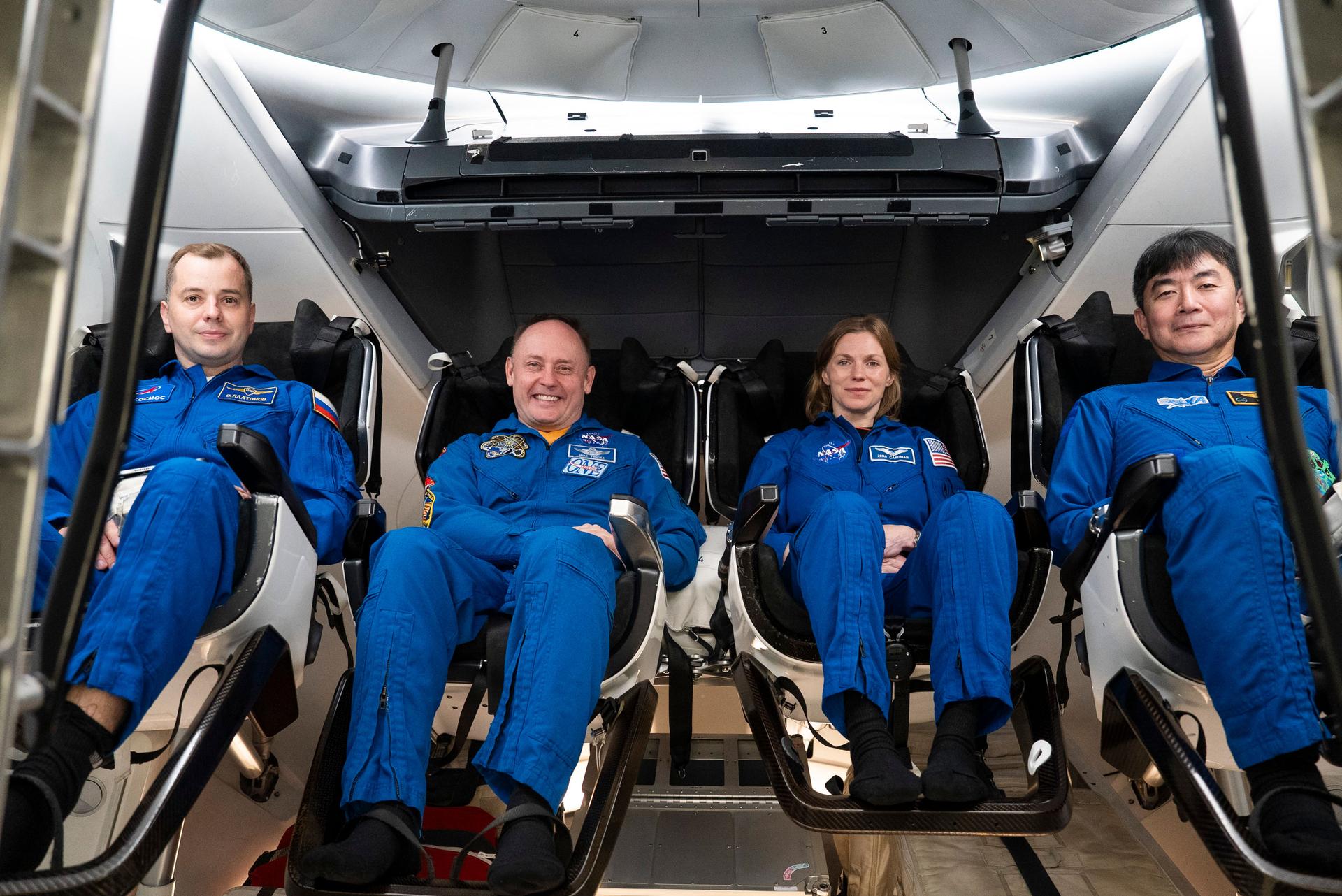
The Crew-11 mission represents a diverse international quartet:
- Commander Zena Cardman (38): A marine microbiologist and NASA astronaut since 2017, this marked Cardman’s inaugural spaceflight.
- Pilot Mike Fincke (58): A seasoned NASA astronaut on his fourth spaceflight, bringing invaluable experience from prior ISS expeditions and spacewalks. This is key, as Fincke has firsthand understanding of ISS operations and prior medical protocols.
- Mission Specialist Kimiya Yui (55): A highly trained Japanese Aerospace Exploration Agency (JAXA) astronaut embarking on his second spaceflight.
- Mission Specialist Oleg Platonov (39): A Russian cosmonaut representing Roscosmos on his first space mission.
Despite their varying experience levels, spacecraft constraints dictated that all four must return together. Their Soyuz “lifeboat” – the Crew Dragon capsule “Resilience” – is their sole designated emergency escape vehicle. Splitting the crew would leave others stranded without a guaranteed path home if another emergency arose. Administrator Jared Isaacson justified the decision after consulting with medical leadership, stating it was “in the best interests of our astronauts.”
Crew-11 Profile Overview:
| Astronaut | Country | Role | Age | Missions Prior to Crew-11 |
|————–|———–|——|——|——————————|
| Zena Cardman | USA | Commander | 38 | First Mission |
| Mike Fincke | USA | Pilot | 58 | Fourth Mission |
| Kimiya Yui | Japan | Mission Specialist | 55 | Second Mission |
| Oleg Platonov | Russia | Mission Specialist | 39 | First Mission |
Safety First: NASA’s Bedrock Principle
The decision, while disruptive, ties into NASA’s core mission ethos affirmed by Administrator Isaacson: “For over 60 years, NASA has set the standard for safety and security in crewed spaceflight… the health and well-being of our astronauts is always and will be our highest priority.” This isn’t just rhetoric; it’s embedded in decades of protocol development:
- Mission Control Protocols: Dedicated flight surgeons monitor astronaut health telemetry 24/7 [Reference NASA Human Research Program]. Abnormalities trigger immediate consultations.
- Onboard Medical Kits: The ISS is stocked with advanced medical equipment, pharmaceuticals, and supplies to treat a wide range of issues – from minor illnesses to trauma [Reference NASA ISS Medical Kit documentation].
- Contingency Planning: Protocols exist for everything, including emergency decompression (evidenced by Luca Parmitano’s near-drowning incident in 2013) and rapid evacuation. Crew Dragon serves as this critical “lifeboat.”
- Training Emphasis: Astronauts undergo rigorous wilderness medical training and simulations for handling emergencies in isolated environments.
History reinforces this cautious approach. Previous medical incidents aboard the ISS – though often less severe or resolved onboard – have always prompted intensive evaluation, sometimes influencing crew rotations or procedures. NASA’s approach to astronaut health prioritizes prevention but requires swift action when prevention isn’t enough.
Operational Logistical Challenges
Bringing a crew home months early is operationally complex:
- Revised Timeline: Undocking and splashdown plans must be rapidly calculated and coordinated with SpaceX, factoring in orbital mechanics, weather at the landing zone, and recovery forces.
- Space Station Manpower: Reducing the crew from seven to three significantly impacts ongoing ISS scientific experiments and routine maintenance. Remaining crew members must prioritize critical tasks. This reduces the crew complement to a skeleton crew.
- Vehicle Readiness: Detailed checks on the dormant Crew Dragon capsule (“Resilience”), docked since August, must be expedited to ensure its readiness for the return journey – systems include propulsion, life support, communications, and parachutes.
- Recovery Ops: NASA’s commercial partner SpaceX has dedicated recovery teams standing by for splashdowns off Florida, but an expedited West Coast Pacific landing near California requires coordinating specialized naval assets and medical personnel.
Despite these hurdles, NASA consistently demonstrates the capability to execute such contingency plans effectively, underscoring the robustness of their partnerships with entities like SpaceX and JAXA.
Privacy, Ethics, and the Unknown
Dr. Polk’s firm stance on confidentiality sparks discussion on the balance between public curiosity and astronaut privacy. Astronauts willingly accept immense physical risks, but their health data remains intensely personal. This astronaut medical incident reveals inherent tensions:
- Patient Rights: Medical privacy is a fundamental right, even for public figures on government missions.
- Public Interest vs. Privacy: While the public funds NASA, detailed disclosure risks violating trust and potentially discouraging future astronauts.
- Operational Security: Excessive detail could theoretically expose vulnerabilities or procedures adversaries might exploit.
- Debriefing & Research: Full details will likely inform internal NASA medical research into long-duration spaceflight health risks without ever being made public. Understanding astronaut health monitoring confidentiality is crucial for maintaining trust.
Potential medical issues in space range widely – infections (aggravated by altered immune response in microgravity), cardiac events, decompression sickness, kidney stones, psychological stressors, or accidental injuries. Many conditions respond differently in microgravity. The ISS transition creates a unique challenge even with established space medicine principles.
A Legacy of Vigilance and the Path Forward
The unexpected shortening of Crew-11’s mission serves as a stark reminder: space remains an extraordinarily hazardous environment for humans. While technological marvels like the ISS stand as pinnacles of engineering, human physiology remains vulnerable. NASA’s decisive action reflects a mature space agency where astronaut safety protocols are not just manuals but actionable imperatives. Their swift implementation demonstrates decades of lessons learned, from the Mercury era to today’s complex ISS operations. This international crew’s premature but safe return speaks volumes about the agency’s priorities.
This event underscores the


