
The Laser Bridge: How Taara’s Light Beams Could Solve America’s Rural Internet Crisis
Introduction
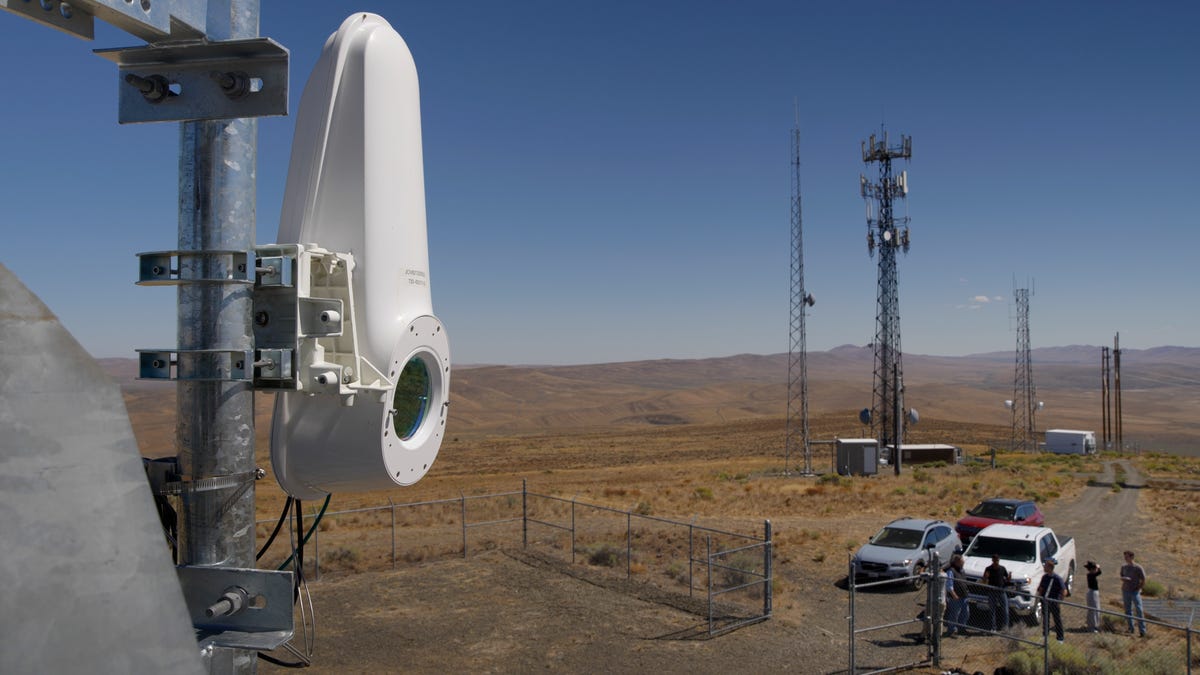
What if we could deliver blistering fiber-optic internet speeds without digging a single trench or stringing a single cable? While satellite constellations like Starlink grab headlines, a quieter revolution is emerging from the shadows of a Washington State cell tower. Fiber-speed wireless technology is no longer science fiction; it’s real, working, and deployed. Taara, a spinout from Alphabet X (Google’s Moonshot Factory), is using invisible lasers to beam data at 20 gigabits per second across miles of rugged terrain, bypassing the monumental cost and complexity of traditional infrastructure. As millions in rural America remain trapped on the wrong side of the digital divide, technologies like Taara offer a pragmatic, high-speed solution to bridge the persistent connectivity gap that hampers education, healthcare, and economic opportunity. This article dives deep into how laser light could revolutionize broadband access.
Demystifying Taara: Light, Speed, and the Fiber Alternative
-
The Core Technology: Free-Space Optical Communication (FSO) (H2)
- How It Works: Taara utilizes free-space optics (FSO), transmitting data wirelessly via precisely focused beams of light, specifically in the 190 terahertz range (between visible light and infrared). This is fundamentally the same light frequency used inside fiber optic cables.
- The Shift: As CEO Mahesh Krishnaswamy explains, “What we have done is essentially removed the sheeting of the cable and transmitted that same data wirelessly.” FSO isn’t entirely new; rudimentary concepts date back centuries, and modern iterations emerged with lasers in the 70s/80s. Companies like Transcelestial also operate in this space.
- Why Light? Spectrum Advantage: The electromagnetic spectrum used by radio frequencies (RF) – the backbone of Wi-Fi, cellular (4G/5G), and satellites – is crowded and limited. Light spectrum offers orders of magnitude more bandwidth, enabling vastly higher speeds and eliminating spectrum congestion issues. Krishnaswamy emphasizes this potential: “You could fit the entire radio frequency spectrum inside the light domain, and you wouldn’t even scratch the surface.”
- Latency: Traveling at the speed of light, laser beams offer latency comparable to fiber, significantly lower than traditional satellite options (like legacy GEO satellites, though LEO constellations like Starlink are improving).
-
Performance Punch: Shattering Legacy Limits (H3)
- Staggering Speed: On the Selah cell tower Taara visited, the most capable traditional microwave antenna maxed out at 1.4 Gbps total capacity – enough for roughly 56 simultaneous 4K streams. Taara’s small terminal pumps out 20 Gbps bidirectionally simultaneously – enough for approximately 800 4K streams downstream alone. This represents a dramatic leap in capability.
- Capacity Scaling: Each laser emitter is tiny (chopstick-sized). Taara achieves mind-boggling potential speeds (up to 160 Gbps in tests via stacking) by using multiple lasers. This aligns with Nielsen’s Law, predicting high-end bandwidth demands doubling roughly every 21 months. The virtually unlimited light spectrum positions FSO as a scalable solution.
- Range: Current operational range extends up to ~12.4 miles (20km) with clear line-of-sight – ideal for bridging challenging gaps.
-
Solving Connectivity’s Final Frontier: The “Middle Mile” Problem (H2)
- The Cost of Cable: Permanent fiber deployment is expensive and slow. The 2024 industry survey cited reported costs of $52,800 to $142,560 per mile for underground burial – figures that skyrocket in rocky, mountainous, or densely urban terrain. Permitting, right-of-way access, and lengthy construction timelines add years and complexity. “Fiber hasn’t made it out here yet. And it may not, because it doesn’t make financial sense,” states Scott Bernhard, Director of Engineering at StarTouch (deploying Taara).
- The Middle Mile Choke Point: The ITU reports that while 94% of the US population lives within 31 miles of fiber optic infrastructure, the final connections – especially in rural areas – are often prohibitively expensive. The gap between the main fiber “artery” and communities like Selah (only 6% fiber access vs. 31% in nearby Yakima) is known as the “middle mile.” Globally, the data is stark: 58% live within ~15.5 miles of fiber, yet 32% remain offline.
- Taara’s Middle Mile Fix: Taara acts as a high-capacity wireless bridge. “All you need is one terminal to be able to see the other terminal…” Krishnaswamy notes. Installation on existing towers (like StarTouch’s) takes hours, bypassing years of digging and permits. It directly connects a fiber Point of Presence (POP) like Yakima to a cellular tower or community hub like the one in Selah, unlocking high-speed access.
Fiber vs. Taara: Key Deployment Factors
| Feature | Traditional Fiber Optic | Taara Laser Link |
| :—————— | :————————————- | :————————— |
| Installation Time | Months to Years | Hours to Days |
| Installation Cost| $52k – $142k+ per mile (buried) | Significantly Lower |
| Terrain Limitation| Extreme Difficulty (e.g., mountains, rivers) | Requires Line-of-Sight |
| Permitting | Highly Complex | Relatively Streamlined |
| Speed | High Capacity (Potential 100Gbps+) | High Capacity (20Gbps+, up to 160Gbps tested) |
| Best Use Case | Core infrastructure, dense urban areas | Bridging middle mile gaps, challenging terrain, rapid deployment |
Navigating Real-World Challenges: Birds, Fog, and Lessons Learned (H2)
-
Line-of-Sight & Obstructions (H3)
- The Bird Problem: A bird flying through the laser beam for even a fraction of a second causes data loss. Taara mitigates this with sophisticated software error correction protocols. As Krishnaswamy explains, packet retransmission (“repeat request”) masks these brief interruptions to the user – potentially causing a brief video glitch rather than a dropped connection. This mitigation is crucial for things like video calls and streaming stability.
- Environmental Factors:
- Fog: The most significant natural adversary. Water droplets scatter light at Taara’s operating wavelength, severely disrupting the signal. Solution: Integration of lower-frequency radio frequency (RF) links as a backup “underlay.” During heavy fog or precipitation, the system switches (or partially switches) to RF to maintain connectivity.
- Rain/Snow: Heavy rain can cause attenuation, but typically not as severely as dense fog.
- Structural Stability: Early deployments faced issues with tower vibrations (wind, even monkeys shaking towers in India!). Taara developed active stabilization within the terminal to compensate for sway and movement, ensuring the laser beams remain locked onto their target. “Even if the tower sways, we know exactly how much it’s swaying and compensate…”
-
Market Context and Competition (H3)
- Not the First FSO: Analyst Dan Grossman notes FSO companies have existed since the early 2000s (e.g., Attochron, X-Lumin), facing challenges with reliability and scaling. Many floundered. However, Taara benefits from Alphabet X’s deep pockets and engineering rigor. Real-world deployments in India and Africa provide crucial validation and learning points (like the monkey-induced stabilization breakthrough). Bernhard at StarTouch tried others, choosing Taara due to its proven track record: “We did talk to other folks… Taara’s deployments… are proofs of concept.”
- Complementary, Not Replacement: Taara isn’t positioned as a direct replacement for everything. It solves the middle mile connection efficiently. Fiber remains the foundation, satellites (especially LEO) solve ultra-remote access, and 5G/wireless ISPs (WISPs) handle last-mile distribution. Taara is a powerful new tool connecting these elements.
Commitment and the Road Ahead: BEAD Funding and Tech Evolution (H2)
-
The BEAD Opportunity:
The $42.5 Billion NTIA Broadband Equity, Access, and Deployment (BEAD) Program is a game-changer for US rural broadband. Taara actively positions itself as a cost-effective and rapid solution for project bidders aiming to bridge middle-mile gaps identified in state broadband plans. Krishnaswamy highlights the historical precedent: “Every country has advanced by actually finding some way to subsidize or augment the connectivity infrastructure project.” Taara aims to partner with ISPs and fiber operators to provide “resiliency to the network” faster and cheaper. -
Sustainability and Enormous Potential:
- Energy Efficiency: By leveraging light spectrum (free and vastly abundant) instead of scarce licensed RF spectrum, FSO offers a potentially more sustainable path for massive data transfer. Power consumption is focused on laser generation and pointing systems, which can be significant but often compares favorably per gigabit delivered over long distances vs alternatives like multiple microwave hops.
- Bandwidth Horizon: Krishnaswamy’s vision of “endless bandwidth” is grounded in the physics of the light spectrum. Scaling by adding more laser channels offers a clear technical path to multi-terabit speeds eventually, future-proofing for decades.
- Deployment Momentum: Bernhard confirms StarTouch’s satisfaction and plans for more Taara terminals in Washington. Validation from operators is critical for wide adoption.
-
Balancing Promise with Pragmatism: (H3)
While exciting, seasoned observers caution against overhype. Grossman starkly notes: “There is a difference between marketing claims and what actually works in the field.” Taara, emerging from the closure of Alphabet’s balloon-based Loon project, operates in a space littered with failed FSO ventures. Its deployments in Selah and elsewhere are promising but need widespread, long-term validation. Reliability under diverse weather conditions and scalability of deployment logistics remain key areas to watch.
Conclusion
Taara’s laser-based internet is demonstrating compelling potential to overcome one of the most expensive and logistically challenging barriers in connectivity: the broadband middle mile. By delivering true fiber-like speeds without the prohibitive costs and delays of trenching cables over mountains, through cities, or across bodies of water, Taara offers a viable solution for communities locked out of high-speed access. While challenges like fog and real-world reliability require mitigation (like RF underlays and advanced software), the sheer speed (20Gbps+), rapid deployment speed (hours vs. years), cost savings, and scalability inherent in light spectrum make FSO technology incredibly promising. Paired with massive federal initiatives like BEAD, solutions like Taara could finally bring universal, affordable, and high-capacity broadband to millions of Americans and beyond. The Seattle trip revealed not just innovative tech, but a potential cornerstone for bridging the digital divide. Is this the dawn of light-speed internet for everyone? What barriers do you see to widespread adoption of wireless laser links? Share your thoughts below!
Sources & Further Reading:
Original article at www.cnet.com


