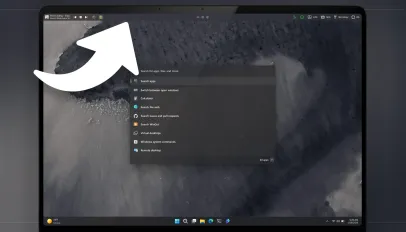

Forget Single-Taskbar Tyranny: Is Windows Finally Embracing Linux’s Customization Gospel?
For decades, Windows users gazing enviously at Linux desktops knew one irrefutable truth: customization wasn’t merely a feature – it was a philosophy. While Linux offered docks, widgets, and pixel-perfect control over workflow, Windows remained shackled to its rigid, single taskbar. Now, that entrenched orthodoxy is cracking. A radical proposal within Microsoft’s own PowerToys project aims to inject Linux-style flexibility directly into Windows. Niels Laute, a Microsoft designer, has unveiled plans for a Command Palette Dock – a second, fully customizable panel designed for widgets, rapid app launching, and adaptable theming. This isn’t just a new utility; it’s a tacit acknowledgment by Microsoft that Linux’s modularity, perfected over 30+ years, holds answers for the modern Windows user trapped in a one-taskbar world.
The Philosophy Gap: Why Linux Desktop Environments Rule Flexibility and Customization
Linux desktop environments (DEs) treat the user interface as a malleable canvas. Core to this philosophy is the concept of panels or docks:
- Diversity of Placement: Top, bottom, left, right – even floating autonomously. Users dictate location.
- Purpose-Driven Design: Separate bars for applications, system info, widgets, workspaces, or notifications.
- Endless Tailoring: Themes, icons, sizes, transparency, autohide behavior adjustability.
Projects like GNOME’s Dash-to-Dock, KDE Plasma’s versatile panels, or Cinnamon’s configurable deskbars demonstrate environments built around user agency. This ethos stems from Linux’s open-source roots – a decentralized ecosystem where competing ideas flourish整套生态系统繁荣. Research highlights its impact: A 2022 Linux Foundation survey revealed 79% of professionals prioritize customization and workflow control as key reasons for choosing Linux desktop deployments over Windows in developer and creative fields afternoon tea. The rigidity of Windows’ taskbar, locked until PowerToys arrived, represents the antithesis of this liberation.
Deconstructing PowerToys Command Palette Dock: Windows Meets Widgets
Microsoft PowerToys Command Palette Dock, as proposed on GitHub, directly targets Windows’ UI limitations. It builds upon PowerToys’ existing Command Palette – a keyboard-centric app/action launcher inspired by coding editors like VS Code. This new dock expands that philosophy into the visual realm:
- Linux-Spanning Positioning: Position freely as a top bar, bottom dock, floatingonium side panel, or vertical dock. No longer confined to the screen’s bottom edge.
- Widget Playground: Host new PowerToys testing widgets alongside custom extensions – real-time data, quick tools, media controls become accessible instantly


