
The Cloud Security Revolution: How Marvell and Microsoft Are Modernizing Hardware Security for the Cloud Era
Introduction (140 words)
Imagine trusting your most critical cryptographic keys to a service so secure it’s certified to military-grade standards, yet so convenient it’s managed entirely in the cloud. Is that level of security even possible in today’s threat landscape? Absolutely. Marvell Technology, a semiconductor leader, recently announced that Microsoft has expanded its adoption of the Hardware Security Module (HSM) solutions by deploying the Marvell LiquidSecurity HSM family across its Azure Cloud HSM service. This isn’t just incremental news—it’s a step toward fundamentally transforming how enterprises safeguard sensitive data. With cyber threats escalating and regulations tightening, secure key management solutions like Azure’s Cloud HSM are now non-negotiable, especially for industries handling financial transactions or healthcare records. The partnership underscores a seismic shift: traditional on-premise security boxes are giving way to agile, cloud-native hardware modules designed for modern scalability.
The Expanding Alliance: Marvell Deepens Roots in Microsoft Azure
Microsoft’s deepened commitment to Marvell’s LiquidSecurity HSMs signals confidence in the technology’s cloud readiness. Previously powering Azure Key Vault and Key Vault Managed HSM, LiquidSecurity now underpins Azure Cloud HSM, a premium service for organizations needing dedicated physical control over cryptographic operations. Azure Cloud HSM addresses a critical gap—it offers the technical isolation of an on-premise hardware module without the management overhead. This expanded collaboration allows Marvell to solidify its pole position in cloud-optimized HSMs while enabling Azure to serve industries like banking, healthcare, and government, where dedicated asset control is a strict compliance requirement. As Will Chu of Marvell noted, the partnership aims to “modernize the HSM market” and meet the demands of “cloud-scale applications” through purpose-built semiconductor innovation.
What Is Azure Cloud HSM and Who Demands It?
Azure Cloud HSM—a single-tenant, FIPS 140-3 Level 3 certified service—provides customers a dedicated HSM cluster within Microsoft’s cloud infrastructure. It eliminates shared resources, ensuring total customer control over cryptographic keys and operations via a private, encrypted network link. Compliance-driven sectors (e.g., governments or financial institutions) favor this model because:
- National/Cyber Sovereignty: Ensures data residency and operational control, critical for EU GDPR or China’s PIPL.
- Regulatory Mandates: FIPS 140-3 Level 3 certification is mandated for U.S. federal agencies and contractors handling sensitive data (NIST guidelines).
- Performance & Isolation: High-throughput applications like blockchain or payment processing require dedicated cryptographic resources.
Soumya Subramanian of Microsoft explains this solves a core dilemma: customers want administrative ownership without the labor and cost of managing on-premise HSM clusters.
Market Momentum: Why HSM-as-a-Service Is Exploding
HSM-as-a-service revenue is projected to grow at 8.5% annually through 2029, driven by cloud migration and evolving threats. According to Michela Menting of ABI Research, this surge is fueled by two trends:
- Confidential Computing: Protecting data mid-process (e.g., health analytics) requires dedicated, high-trust hardware like HSMs.
- Cloud Sovereignty: Nations insist on domestic data control, pushing demand for sovereign clouds with audit-ready security.
Architecturally, traditional 1U/2U hardware security modules (physical boxes in enterprise data centers) struggle to scale efficiently in the cloud. They monopolize power and space while lacking the agility to support multi-tenant services. Marvell’s LiquidSecurity, by contrast, was born for the cloud—cementing its leadership, as noted by ABI.
| Feature | Traditional HSMs | Marvell LiquidSecurity HSMs |
|---|---|---|
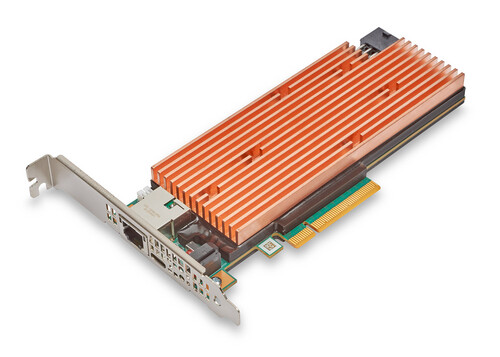
| Form Factor | 1U/2U Appliance | PCIe Card (Integrates into servers) |
| Key Capacity | ~50,000 keys | 100,000+ key pairs (per card) |
| Operations Throughput | ~100K ops/sec | >1 Million ops/sec |
| Power/Rack Efficiency | High (Dedicated hardware) | Ultra-low (Shares resources) |
| Cloud Suitability | Low (On-premise legacy focus) | High (Built for cloud scale) |
LiquidSecurity: The Semiconductor Breakthrough Powering Modern HSM
Marvell’s innovation hinges on two pillars: semiconductor efficiency and cloud-first design. Unlike traditional HSMs running general-purpose CPUs, LiquidSecurity uses cloud-optimized OCTEON DPUs (Data Processing Units) to accelerate cryptographic tasks natively within servers. This PCIe-based architecture offers staggering advantages:
- Space/Power Efficiency: A single card replaces racks of legacy appliances, cutting energy use by up to 70%.
- Performance: Handles >1M ops/second—10x faster than legacy models—for latency-critical tasks like SSL termination.
- Multi-Tenancy: Tailored for dense cloud data centers, allowing Azure to serve more customers securely and cost-effectively.
The DPU’s architecture also enhances security. By offloading encryption to hardware isolated from host CPUs, it reduces attack surfaces—a major concern in SaaS environments.
The Universal Role of HSMs: Beyond Encryption
HSMs are more than vaults—they actively protect global commerce. Their role spans:
- Data-at-Rest/In-Transit Encryption: Securing databases, backups, and network traffic via AES-256 or RSA keys.
- PKI & Digital Signatures: Authenticating users for VPNs, SSL/TLS certificates, and e-signatures in platforms like DocuSign.
- Transaction Security: Validating payments in fintech apps and blockchain settlements.
- Healthcare Compliance: Safeguarding EHR (Electronic Health Records) under HIPAA/HITECH via unique cryptographic keys.
For example, Azure Cloud HSM could help hospitals encrypt patient records during research without exposing raw data—reducing legal risk while enabling innovation.
The Future Belongs to Cloud-Native Security
As cloud infrastructure evolves, HSM deployment models must accelerate. LiquidSecurity’s server-card footprint enables CSPs like Azure to integrate strong security mechanisms into distributed systems (edge sites, microservices) far more flexibly than monolithic appliances. The shift isn’t optional—microservices and containerized apps demand hardware security that scales horizontally.
“Marvell pioneered cloud-optimized HSMs and remains the category leader,” affirms ABI’s Menting. With confidential computing and sovereignty needs escalating, a partnership like Marvell-Microsoft showcases a blueprint for the industry: agility without compromising trust.
Conclusion (130 words)
The expansion of Microsoft’s reliance on Marvell LiquidSecurity hardware security modules marks a tipping point. It proves that HSMs—once bound to corporate data centers—can now thrive as managed cloud services without eroding security. This revolution enhances accessibility: organizations of any size can deploy FIPS 140-3 Level 3-grade key management with minimal overhead, accelerating innovation in finance, healthcare, and AI. By replacing clunky appliances with DPU-powered efficiency solutions like Marvell’s, the industry is prioritizing sustainability and scalability alongside encryption resilience. As HSM-as-a-service growth surges, Microsoft and Marvell aren’t just collaborating—they’re redefining cloud trust.
What do you think? Are HSM-as-a-service offerings essential for the cloud’s evolution—or do on-premise solutions still reign supreme? Share your thoughts below!
Sources & Further Reading:
Original article at www.techpowerup.com


