
Unlocking Global Audiences: Meta’s AI Breaks Language Barriers for Video Creators
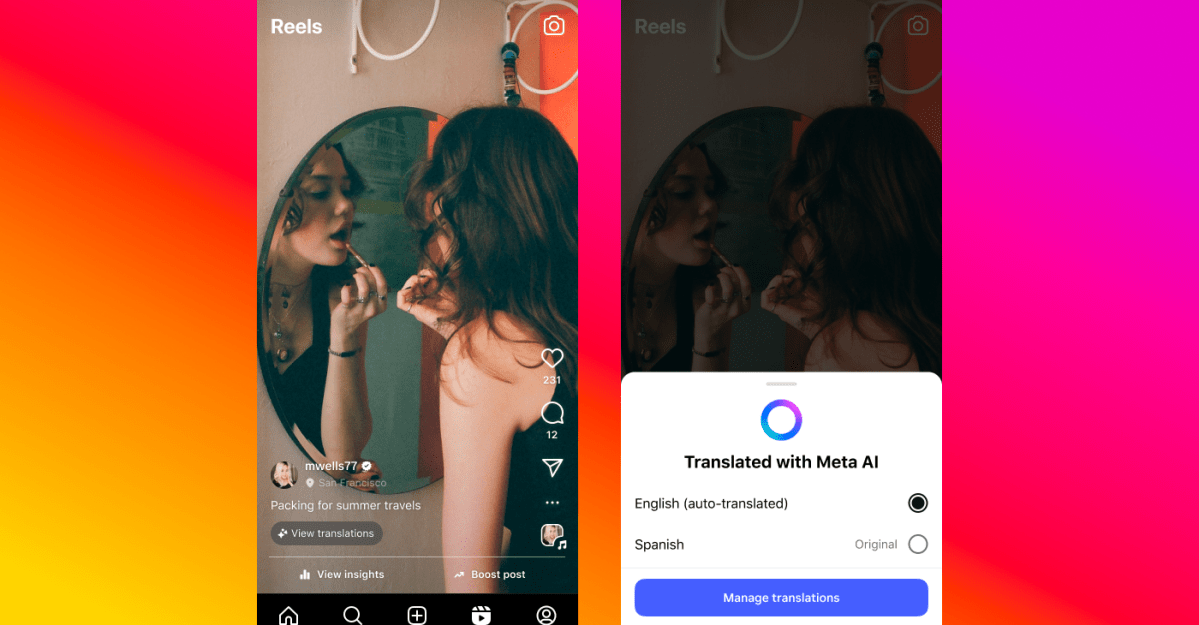
How much engagement are creators losing because language walls trap their content? Consider this: over 60% of global consumers rarely buy from websites not in their native language (CSA Research), while videos are shared 1,200% more times when dubbed (Social Media Today). Meta is launching a counterstrike with its groundbreaking AI video translation tool, significantly expanding access across Facebook and Instagram. This technology goes beyond traditional subtitles by using artificial intelligence to automatically dub Reels into other languages—syncing the translated speech to the creator’s original voice characteristics and lip movements. Initially rolling out for English-Spanish (and Spanish-English) translation, this feature empowers creators to effortlessly reach vast new audiences while offering viewers seamless, natural-looking dubbed content. By demolishing language obstacles, Meta is reshaping social media into a truly borderless ecosystem where content—and connection—flow freely.
Decoding Meta’s AI Video Translation Tech: Beyond Simple Dubbing
The Core Mechanism: AI-Powered Voice and Lip Synchronization
Meta leverages its sophisticated “Massively Multilingual Speech” AI model, which was trained on over 4 million hours of speech data across 100+ languages. Unlike basic dubbing that merely overlays new audio, Meta’s system performs three critical tasks simultaneously:
- Speech Translation: Converting spoken dialogue into another language while preserving meaning and context.
- Voice Style Transfer: Cloning the creator’s unique vocal timbre, pitch, and rhythm for the translated audio (a technique derived from generative adversarial networks or GANs, as documented in research published on arXiv.org).
- Lip Synchronization (Lip-Sync): Using computer vision algorithms to adjust the speaker’s lip movements in the video to match the translated words—creating an eerily realistic illusion they’re actually speaking the new language.
Lip-Sync Option & Creator Control
Creators aren’t handed a black box. Before publishing:
- Enable the “Translate voices with Meta AI” toggle.
- Review the dubbed version, ensuring AI accuracy and sync quality.
- Choose to add lip-syncing – Meta uses its AI to subtly warp the speaker’s mouth movements frame-by-frame to match the phonetics of the translated words. This avoids the jarring “bad movie dub” effect.
Table: User Control Features in Meta’s AI Translation Tool
| Feature | Purpose | Impact for Creator |
|————-|————-|————————|
| Preview Function | Allows viewing the AI-dubbed clip pre-publish | Ensures quality control, avoids errors |
| Lip-Sync Toggle | Opt-in for AI-modified mouth movements | Enhances authenticity, viewer immersion |
| Translation Disclosure Tag | Automatic label (“Translated with Meta AI”) | Meets ethical transparency standards |
Access and Distribution: Who Gets It and How It Reaches Viewers
Eligibility Criteria
Meta is taking a tiered rollout approach:
- Facebook Reels Creators: Must have 1,000+ followers. This prioritizes established communities.
- Instagram Creators: Available to all public accounts, democratizing access instantly.
This strategy balances quality control (FB) with broad experimentation (IG), a common Meta playbook.
Automated Audience Matching
The AI doesn’t just dub; it intelligently distributes:
- When a user’s app language is set to Spanish, Facebook/Instagram will automatically prioritize showing them English Reels dubbed into Spanish.
- Translated Reels appear directly in feeds and Reels streams—no special searching needed.
- The mandatory “Translated with Meta AI” tag maintains transparency but has been designed thoughtfully to avoid disrupting engagement.
Impact Analysis: Opportunities and Challenges for Creators
The Global Opportunity Explosion
Spanish, enabled at launch, unlocks access to over 500 million native speakers globally. The implications are immense:
- Exponential Reach: A fitness influencer in Miami can attract viewers in Madrid, Mexico City, and Buenos Aires without language skills.
- Algorithm Boost: Reels embraced by broader audiences will likely receive increased algorithmic promotion due to higher watch time and engagement—similar to how cross-border interaction boosted TikTok creators.
- Monetization Growth: Brands target highly engaged audiences. As 47% of global marketers prioritize multichannel strategies (HubSpot 2024), multilingual creators become premium partners.
Technical and Ethical Challenges
While revolutionary, hurdles remain:
- Accuracy Rollercoaster: Current AI translations can stumble with idioms, accents, or niche slang. Meta needs continuous training data updates.
- Lip-Sync Limits: Complex mouth movements in fast-talking sequences might distort unnaturally. Human oversight via the preview option is vital.
- Cultural Nuancing: Machine translation often misses local humor or context. Creators must still know their new audience’s preferences.
- Deepfake Concerns: The voice cloning technology, while transformative, fuels worries about misuse. Meta’s disclosure tag is critical but requires vigilance (compare governance frameworks from Deepfake Research at Stanford University).
Competitive Landscape: Meta vs The World
Meta isn’t alone in AI dubbing, but its implementation boasts unique advantages:
- YouTube: Offers multi-language audio tracks but lacks automated lip-sync. Dubbing remains costly and manual for creators.
- Traditional Providers: Human dubbing studios deliver high quality but charge $100+ per minute and take weeks to process (GMR Transcription).
- Tools like HeyGen: Generate AI avatars with synced lip movements but lack Meta’s seamless social platform integration and organic discovery funnel.
Table: AI Translation Tool Comparison
| Feature | Meta AI Video Translation | Traditional Dubbing | YouTube Multilingual Audio |
|—————-|——————————|————————–|——————————-|
| Cost to Creator | Free | $100+/minute | Free creation, but manual upload |
| Processing Time | Seconds/minutes | Days/Weeks | Manual syncing required |
| Lip-Syncing | AI-Generated | Human-adjusted | No |
| In-Platform Distribution Boost | Yes | No | Limited |
The Horizon: What’s Next?
This English-Spanish launch is merely Phase One. Expect tonal language expansions (Mandarin, Arabic, Hindi) within 12-18 months, validated by Meta’s research into “SeamlessM4T” – a model supporting nearly 100 languages (Meta Research Blog). Potential breakthrough integrations could include:
- Real-Time Translation: For Facebook Live streams or Instagram broadcasts.
- Ad Integration: Automatically dubbed ads matching a creator’s native-language content.
- More Subtle Lip Manipulation: Using diffusion models for imperceptible edits.
Creators are advised to audit content for global appeal now—jokes, local references, or hyper-regional slang may need adaptation even after translation. This tech won’t replace cultural intelligence but magnifies its necessity.
Conclusion: The Borderless Video Era Begins Now
Meta’s expanded AI video translation rollout marks a pivotal shift in global content accessibility. By merging multilingual dubbing, voice cloning, and AI lip-syncing into an automated creator tool, social media becomes exponentially more inclusive. Creators gain frictionless access to non-English markets, viewers discover culturally resonant content without language discomfort, and Meta strengthens engagement by connecting fragmented audiences. While fidelity in complex translations and ethical safeguards demand ongoing refinement, the potential to transform fragmented internet fiefdoms into truly interconnected communities is undeniable. As language borders dissolve, creators who embrace this tool early will pioneer engagement—and monetization—at unprecedented scale. Ready to see your Reels conquer the globe?
What do you think? Will you enable AI dubbing for your next Reel? Share your thoughts on Meta’s potential—and pitfalls—below!
Sources & Further Reading:
Original article at www.theverge.com


