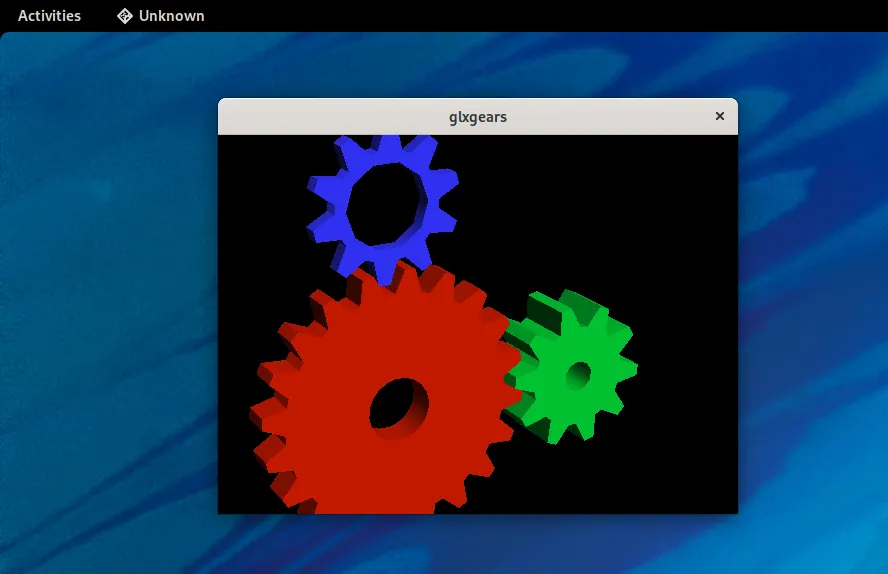

The Evolution of Linux Graphics: Mesa 25.2 Cleans House and Supercharges Open-Source Drivers
When did your Linux GPU drivers last see a major spring cleaning? The release of Mesa 25.2, a cornerstone of open-source graphics support for Linux, answers this by ruthlessly purging deprecated legacy code while aggressively expanding modern GPU capabilities. This quarterly update to the framework powering OpenGL, Vulkan, and video acceleration on the Linux desktop represents a pivotal moment in streamlining the graphics stack. By eliminating insecure and outdated protocols—including the ancient DRI2 interface—and accelerating the shift to Rust-based components, Mesa 25.2 delivers tangible performance gains and paves the way for future innovation. For developers and Linux enthusiasts, this release marks a critical evolution in rendering robustness and feature completeness across AMD, Intel, NVIDIA, Arm, and Apple Silicon hardware.
Major Deprecations and Security Enhancements: Modernizing the Stack
Mesa 25.2 prioritizes security and modernity with surgical removals of obsolete technologies. The elimination of X11 DRI2 support solidifies the transition to DRI3, a protocol standard since 2013 that enhances performance and security through direct rendering improvements. For everyday users, this change is seamless due to long-standing deprecation, but it crucially reduces attack surfaces. Similarly, the removal of legacy GEM (Graphics Execution Manager) names mitigates security flaws by requiring dma-buf file descriptors for buffer sharing—a secure, portable standard dominant for over a decade.
These changes reinforce Linux’s graphics security posture, removing vectors prone to exploits in older shared-memory models. The update also mandates libX11 ≥ 1.8 (April 2022), ensuring implicit thread safety via XInitThreads(). Distributions must now avoid the --disable-thread-safety-constructor compile flag, preventing subtle concurrency bugs in multi-threaded applications like compositors and games. Additionally, EGL_WL_bind_wayland_display is deprecated and hidden behind a build flag, requiring XWayland 24.1+ for compatibility. This pushes Wayland compositors toward modern protocols like dmabuf– further aligning with secure resource sharing standards.
OpenCL Revolution: Clover Out, RustiCL Takes the Crown
A landmark shift in Mesa is the complete removal of the Clover OpenCL frontend, completing a transition years in the making. RustiCL now stands as Mesa’s sole OpenCL implementation. This Rust-based stack—more secure, portable, and actively developed—already surpasses Clover in OpenCL version support and hardware compatibility. Clover’s limitations, especially with OpenCL 2.x+ features, held back Linux compute capabilities. RustiCL offers:
- Broader hardware support (Intel, AMD, NVIDIA via Zink).
- Safer memory management via Rust.
- Ongoing enhancements for modern OpenCL standards.
Table: OpenCL Ecosystem Shift in Mesa 25.2
| Component | Mesa 25.1 Status | Mesa 25.2 Status | Impact |
|———————-|———————-|————————-|—————————————–|
| Clover Frontend | Available (Deprecated)| Removed | Eliminates legacy code overhead |
| RustiCL Frontend | Optional Alternative | Sole Implementation | Drives OpenCL 3.0+ adoption |
| AMD Radeon/Intel Iris| Clover or RustiCL | RustiCL Only | Enhanced SVM, FP16 for Radeon & Intel |
| Zink Compute | Limited Clover | RustiCL Integration | Enables OpenCL on NVIDIA (Turing+) |
Despite RustiCL’s maturity, the developers acknowledge room for improvement and encourage user bug reports. This transition signals Mesa’s commitment to leveraging modern languages for critical driver infrastructure.
NVIDIA’s NVK Vulkan Driver: Expanding Reach and Performance
The open-source NVIDIA Vulkan driver (NVK) achieves significant milestones in Mesa 25.2. Support extends to NVIDIA’s Blackwell architecture and older Kepler GPUs. Crucially, Blackwell won’t see OpenGL support via Nouveau; instead, users must leverage Zink (Mesa’s OpenGL-over-Vulkan layer) atop NVK. This positions NVK/Zink as NVIDIA’s future open-source OpenGL path post-Ada—Kepler remains supported via Nouveau’s traditional OpenGL driver.
Optimizations further bolster NVK’s appeal: Inclusion of the rustc-hash crate reduces shader compile times by ~12%. Given NVK’s Rust foundations, this crate leverages optimized hashing algorithms purpose-built for compiler workloads. For Pascal and newer NVIDIA GPUs, the NVK/Zink combination increasingly rivals NVIDIA’s proprietary stack in compatibility while offering full open-source transparency. Key extensions like VK_KHR_cooperative_matrix (optimized AI/matrix operations) and VK_KHR_timeline_semaphores (enhanced synchronization) elevate NVK’s Vulkan 1.3 support.
Arm Mali and PanVK: Vulkan Compliance Soars
Mesa’s PanVK driver (for Arm Mali GPUs) delivers extraordinary progress by achieving full Vulkan 1.4 conformance in Mesa 25.2 for Valhall (v10+) GPUs. This leap from version 1.1 significantly broadens compatibility with demanding applications and game engines requiring advanced features. Standout additions in PanVK include:
- Vulkan Video acceleration via
VK_EXT_video_decode/encode. - Dynamic state management with
VK_EXT_vertex_input_dynamic_state. - Advanced sync features using
VK_KHR_synchronization2. - Subgroup operations (
ballot,vote) critical for compute shaders.
Panfrost (OpenGL) also advances with 8x/16x MSAA support and GLES 3.2 features like GL_ARB_shader_clock. These updates transform low-power devices—Raspberry Pi 5 (Mali-G610) or Chromebooks—into capable platforms for AAA gaming via FEX or Box86/64.
AMD RADV & Intel ANV: Performance Polish and Feature Expansion
For mainstream AMD Radeon and Intel Arc GPUs, Mesa 25.2 delivers under-the-hood optimizations and cutting-edge extensions:
RADV (Radeon Vulkan):
- RDNA4 Support Prep: Via
VK_KHR_shader_float8and Vulkan Video updates. - Efficiency Gains:
VK_KHR_maintenance9improves pipeline handling. - Robustness:
VK_KHR_robustness2prevents shader out-of-bounds accesses. - Modern APIs:
VK_EXT_host_image_copyfor performant CPU-GPU transfers.
ANV (Intel Vulkan):
- Xe-HPG/Arc Enhancements:
VK_KHR_shader_bfloat16for AI acceleration on discrete cards. - Compute Refinement: Full OpenCL 2.0 SVM (Shared Virtual Memory) support via RustiCL.
Both drivers adopted VK_EXT_zero_initialize_device_memory, eliminating sensitive data leaks on allocated GPU memory—a key security win.
Beneath the Surface: HoneyKrisp, Zink, and Ecosystem Tweaks
- HoneyKrisp (Apple Vulkan on Asahi Linux): Reports “significant performance improvements,” enhancing macOS hardware viability under Linux thanks to tighter shader compilation and memory handling.
- Zink (OpenGL over Vulkan): Gains
NV_timeline_semaphoresupport, improving efficiency for NVIDIA hardware emulation. Critical for Nouveau users as Zink becomes the sole OpenGL path post-Ada. - Legacy Driver Updates: Even older (r600) AMD GPUs benefit via
GL_EXT_shader_image_load_store, extending functional lifecycles through Gallium3D innovations. - Optimized Composition: Thread-safety requirements for X11/Wayland integrations improve stability for compositors like KWin or Mutter. The
XInitThreads()mandate alone prevents entire classes of visual glitches.
Performance data across drivers highlights Mesa 25.2’s impact: NVK shaders compile 12% faster, PanVK achieves 80%+ Vulkan 1.4 coverage, and RADV’s RDNA3 Raster Order Groups (ROG) boost performance in deferred rendering by reducing overdraw.
Conclusion: A Leaner, Meaner Graphics Stack
Mesa 25.2 masterfully balances legacy removal with feature innovation. By excising deprecated APIs like DRI2 and Clover, the project strengthens its security foundation and execution efficiency. Meanwhile, Vulkan 1.4 conformance on Arm Mali, groundbreaking NVK architecture support, and RADV/ANV refinements ensure Linux users experience bleeding-edge graphics without compromise. Whether you’re gaming on Radeon, developing AI workloads on NVIDIA, hacking on a Raspberry Pi 5, or experimenting with Apple Silicon, this release delivers tangible upgrades. Mesa’s quarterly cadence shows no signs of slowing—proving the open-source model can out-innovate proprietary alternatives. Ready to put your GPU through its paces? Update your drivers and dive in! What feature in Mesa 25.2 excites you the most? Share your experiences below!
Sources & Further Reading:
Original article at www.phoronix.com


