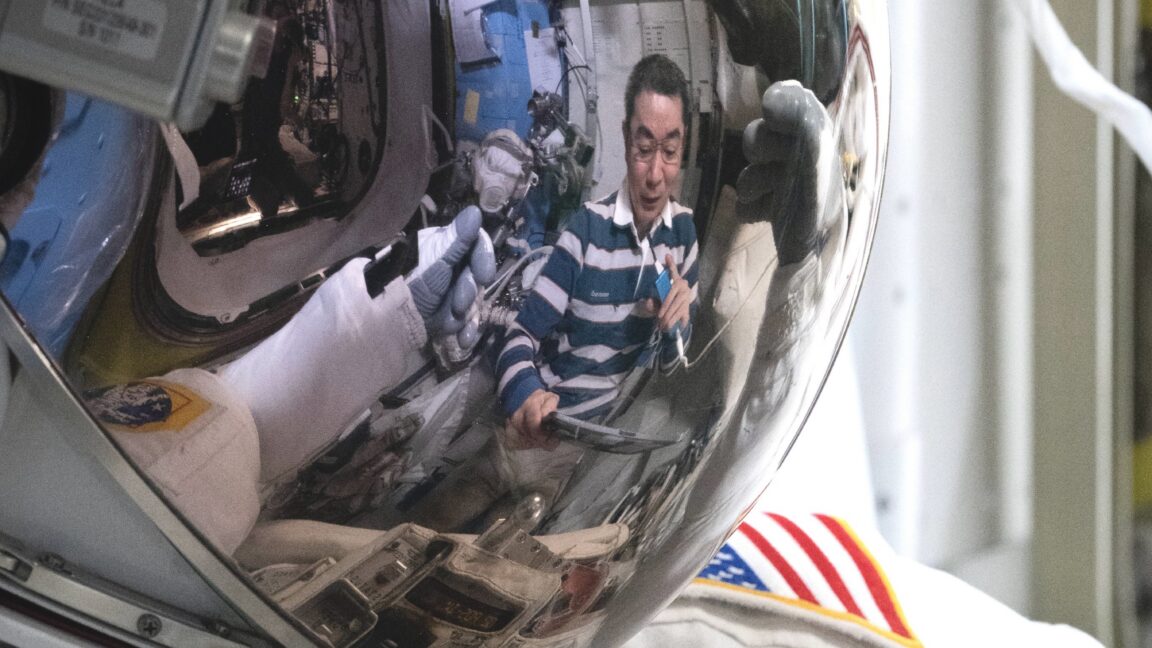

The Final Frontier’s Unpredictable Variables: Spacewalk Paused Amid Medical Concerns
Imagine hurtling around Earth at 17,500 mph, confined to a complex of metal tubes with a thin hull separating you from the deadly vacuum of space. Now, what happens if someone gets sick? This isn’t theoretical. NASA recently faced this stark reality, announcing the postponement of a critical spacewalk due to an unspecified “medical concern” involving an astronaut aboard the International Space Station (ISS). Scheduled for Thursday morning, astronauts Mike Fincke and Zena Cardman were set to venture outside for a 6.5-hour excursion to prepare for a pivotal electrical upgrade: the installation of advanced roll-out solar arrays. This upgrade represents the final major enhancement to the station’s aging power system before its planned decommissioning in 2030. The sudden postponement underscores the profound vulnerability of humans in the cosmos and the intricate balance between mission objectives and crew well-being.
Navigating Health Risks Above the Atmosphere
NASA confirmed the medical concern arose unexpectedly on Wednesday afternoon. Emphasizing astronaut medical privacy, the agency declined to share specifics about the condition or the affected individual, stating only that “the situation is stable.” Medical incidents in orbit are taken extremely seriously. Spaceflight inherently stresses the human body:
- Microgravity Effects: Bone density loss (1-2% per month), muscle atrophy, fluid shifts causing vision issues, and compromised immune function are well-documented. The NASA Human Research Program extensively studies these impacts.
- Radiation Exposure: Outside Earth’s protective magnetosphere, astronauts face heightened cosmic radiation risks, potentially increasing long-term cancer susceptibility (NASA – Space Radiation, 2023).
- Psychological Strain: Isolation, confinement, and distance from family contribute to psychological pressure. The Mars500 study simulated these stresses, revealing mood swings and sleep disruptions in prolonged isolation.
While minor illnesses (like colds) have been managed before, privacy remains paramount. NASA correctly avoids creating unnecessary speculation or alarming families partners while focusing on orbital medical support. Telemedicine protocols, utilizing onboard medical kits and real-time consultations with flight surgeons on Earth, are standard.
The Postponed Mission: Powering Down the Final Chapter of the ISS
Fincke and Cardman’s spacewalk mission wasn’t routine maintenance; it was foundational prep for the station’s sunset era. Set to install the six new ISS Roll-Out Solar Arrays (iROSAs), these compact, flexible panels unfurl like unfurling yoga mats. They’ll boost power by 20-30%, critically supplementing the original arrays now suffering degradation nearly 25 years into their lifespan (Boeing iROSA Overview, 2021). This upgrade is essential as the ISS transitions its science focus toward deep space exploration technologies before retirement.
| ISS Solar Array Comparison | Original Arrays (P4/P6) | New iROSA Arrays |
|---|---|---|
| Deployment Year | 2000-2007 | 2021-Present |
| Technology | Rigid, hinged panels | Flexible, roll-out blankets |
| Size (approx.) | 34m x 12m each | Compact footprint overlaying existing arrays |
| Efficiency | Degraded over time | Higher initial efficiency, designed to endure |
| Role | Primary station power | Supplemental power boosting |
This wasn’t a solo outing either. A second extravehicular activity, focusing on exterior maintenance tasks unrelated to the solar arrays, was planned for this month. The postponement inevitably causes ripple effects, delaying hardware staging tasks crucial for future resupply missions and complicating a tightly coordinated ISS schedule teeming with research tasks from over 20 international partners.
Astronauts in Focus: Experience Meets Novelty
Beyond the hardware, understanding the people involved deepens the context. The pairing chosen highlights NASA’s approach to astronaut assignments. Fincke, a decorated veteran logged many Earth orbits and spent over a year cumulative time in space, brings deep practical EVA wisdom honed across missions dating back to STS-134. Contrastingly, Cardman – selected in 2017 – was preparing for her inaugural spacewalk, exemplifying NASA’s strategic blending of seasoned experts with developing talent for continuity beyond ISS. Her microbial ecology research background complements her role analyzing potential biological contamination risks during EVAs. Their collaboration embodies NASA’s disciplined approach ensuring risky operations combine robust protocols developing future capabilities through mentorship programs isolating pressures inherent within complex crew rotations managed jointly by partnering space agencies effectively mitigating risks collaboratively among dozens supporting nations involved aboard the station operating continuously since habitation began aptly demonstrating persistent human achievement navigating extremes together despite unexpected hurdles periodically emerging unexpectedly.
Why Privacy Isn’t Just Policy – It’s Protection
NASA’s decisive clampdown on releasing medical details reflects more than mere regulatory compliance. Announcing that “it is not appropriate… to share more details” serves multiple vital goals:
- Crew Autonomy: Astronauts maintain control over highly personal health information, ensuring dignity.
- Mission Focus: Preventing public speculation avoids distracting ground teams managing complex operational responses while maintaining morale internally critical during extended deployments spanning arduous schedules involving hundreds operations coordinated day-night cycles differing globally simultaneously balancing dozens experiments requiring precise timing unaffected by external noise complicating workflows unnecessarily.
- Operational Security: Disclosing vulnerabilities could compromise astronaut positions during sensitive geopolitical climates surrounding space activities amid intensifying competition globally. Ethical standards must prevail over temporary curiosity ensuring transparent disclosure aligns thoughtfully balancing openness responsibly prioritizing astronaut welfare securely managing dynamically shifting situations actively resolving medical contingencies securely according operational guidelines evolving constantly rigorously tested protocols validated iteratively refining responses continuously.
Historically, NASA handled notable health events discreetly while publicly sharing aggregated research (like studies showing distinctly altered astronaut microbiomes). This delicate balance protects individuals without


