
The Hidden Guardian: How Invisible Cameras Are Reinventing Driver Safety
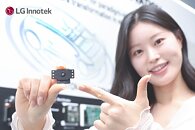
Imagine your car’s dashboard silently tracking your fatigue without a visible lens. What sounds like sci-fi is now reality, poised to save thousands of lives annually as distracted driving claims 3,500 lives in the U.S. alone each year. LG Innotek’s breakthrough next-generation under-display camera module (UDC) promises to transform automotive safety by embedding driver monitoring technology behind the instrument panel—invisible yet hyper-vigilant. With Europe mandating driver monitoring systems (DMS) by July 2026 and global regulators following suit, this tiny module addresses a critical collision-prevention need while reshaping cabin aesthetics forever.
Why Driver Monitoring Has Become Non-Negotiable
Driver Monitoring Systems (DMS) have evolved from luxury add-ons to mandatory lifesavers. As vehicles gain semi-autonomous capabilities (Level 2+/Level 3), ensuring driver alertness during handoff scenarios is critical. Regulatory momentum is accelerating:
- 🇪🇺 Europe’s General Safety Regulation requires DMS in all new vehicles from 2026.
- 🇺🇸 U.S. NHTSA is drafting similar rules emphasizing camera-based monitoring.
- 🌏 China and Japan are advancing parallel frameworks targeting 2026-2028 rollouts.
Studies by the IIHS confirm DMS can reduce fatigue-related crashes by 50%, forcing automakers to retrofit systems rapidly. But traditional DMS cameras—bulky modules protruding from dashboards—stumble on two fronts: they disrupt minimalist interior designs coveted by luxury brands, and trigger privacy unease with visible lenses facing occupants. Enter under-display cameras—where LG Innotek cracked the industry’s toughest riddle.
The Great Invisibility Challenge: Light vs. Design
Mounting cameras behind display panels isn’t new—smartphone brands like Samsung/ZTE attempted the tech with mixed results. Automotive UDCs face steeper hurdles:
- Optical Obstruction: Dashboard displays block 30% of light, causing blurring, color distortion, and noise.
- Performance Demands: DMS must detect micro-expressions (like pupil dilation or drooping eyelids) requiring >99% precision.
Traditional UDCs vs LG Innotek’s Solution
| Parameter | Standard UDC | LG Innotek UDC |
|————————|——————|——————–|
| Visibility | Protrudes openly | Fully hidden behind display|
| Image Degradation | ~30% | ≤1% (99% fidelity) |
| Detection Capabilities | Basic drowsiness | Micro-expressions, gaze tracking |
| Software-Driven Enhancement | Limited | AI image restoration |
Prior attempts failed to resolve this “lumen loss,” causing automakers like BMW and Tesla to prioritize function over form. LG Innotek’s breakthrough flips this tradeoff.
The Wizardry Behind Clear Vision
Partnering with LG Display, LG Innotek leveraged display R&D to solve light transmission physics at kernel level. Their UDC deploys proprietary AI image restoration software that mimics the human optic nerve:
- Deblur Algorithms: Corrects hazy visuals from suboptimal light angles.
- Denoise Technology: Filters pixelated artifacts from dim environments.
- Multi-layered calibration synchronized with display refresh rates.
Deep-learning models trained on thousands of obstruction scenarios enable near-flawless facial mapping. Result? Image clarity indistinguishable from an unblocked lens. For consumers, this means detection of:
plaintext
- Micron-level eye movements → drowsiness alerts
- Head tilt/position → distraction warnings
- Pupil tracking → focus analysis during highway driving
Beyond Safety: The Customized Cockpit Era
LG Innotek’s UDC transcends monitoring—it’s a gateway to intuitive interiors. Future firmware updates will enable:
- 👨👩👧 Multi-Occupant Recognition: Identifying passengers’ positions for hyper-personalized climate/seat settings.
- 🎨 Ambient Adaptation: Monitoring cabin lighting to alert drivers when glare affects visibility.
- 🤖 Behavioral Analytics**: Predicting driver preferences (like favorite radio stations) via habitual patterns.
This positions UDCs as central nervous systems for autonomous cabins—similar to how Tesla leverages interior sensors for contextual awareness.
Strategic Chessboard: LG Innotek’s Market Domination Play
Having mastered smartphone camera modules (supplying Apple/Google), LG Innotek is transferring optical prowess to autos. Their roadmap reveals ambitions for holistic autonomous ecosystems:
- 2023 Innovations: Heated lens tech (halving snow-obscuration time) and RGB-IR cameras monitoring entire cabins.
- Strategic Partnerships: Teaming with LiDAR leader Aeva (U.S.) and radar innovator Smart Radar (Korea).
- Integrated Sensing Solutions: Combining cameras, LiDAR, and 4D imaging radar into a unified platform.
CEO Moon Hyuksoo targets $1.4B in auto-sensor sales by 2030—a feasible goal as S&P Global forecasts in-cabin cameras exploding into a $5.1B market by 2035 (CAGR: 11%)⁽¹⁾.
Regulations vs. Aesthetics: Why Carmakers Are All In
Premium brands face conflicting pressures: satisfy regulators without compromising design ethos. LG’s invisible UDC resolves this tension. Bentley designers, for example, prioritize “seamless” interiors—impossible with bulky cameras. Meanwhile, privacy-focused brands like Mercedes can highlight discreet monitoring. As Volvo safety engineers noted in MIT’s autonomous journal: “Visual stealth isn’t deception—it’s harmonizing ethics and ergonomics.”
The Road Ahead: From Monitoring to Predictability
With CES 2026 marking its commercial unveiling, LG Innotek’s UDC sets a new benchmark. Beyond imaging, the tech feeds into holistic AI—systems predicting drowsiness before symptoms strike via biomarkers like blink-rate deviation. Global automakers must now choose: retrofit awkward visible cameras or embrace transparency-integrated UDCs. As autonomous partners like Mobileye scale DMS globally, invisible cameras will anchor premium fleets like BMW iNext and Sony-Honda Afeela⁽²⁾.
Final Byte
Driver monitoring stopped being optional. With LG Innotek’s optical breakthrough, it becomes imperceptible—an elegant sentry safeguarding journeys. Dual imperatives of design and safety no longer collide; they fuse instrument panels and intelligence. The question isn’t whether we’ll embrace hidden cameras, but how rapidly regulators mandate tech that prevents thousands of deaths annually. What tradeoffs should the auto-industry prioritize—stealth or transparency? Join the conversation below!
⁽¹⁾ S&P Global Mobility: In-Cabin Sensing Market Outlook 2035.
⁽²⁾ NHTSA Statement: DMS Integration Paths for Vehicle Safety Evolution (2025 Policy Draft).


