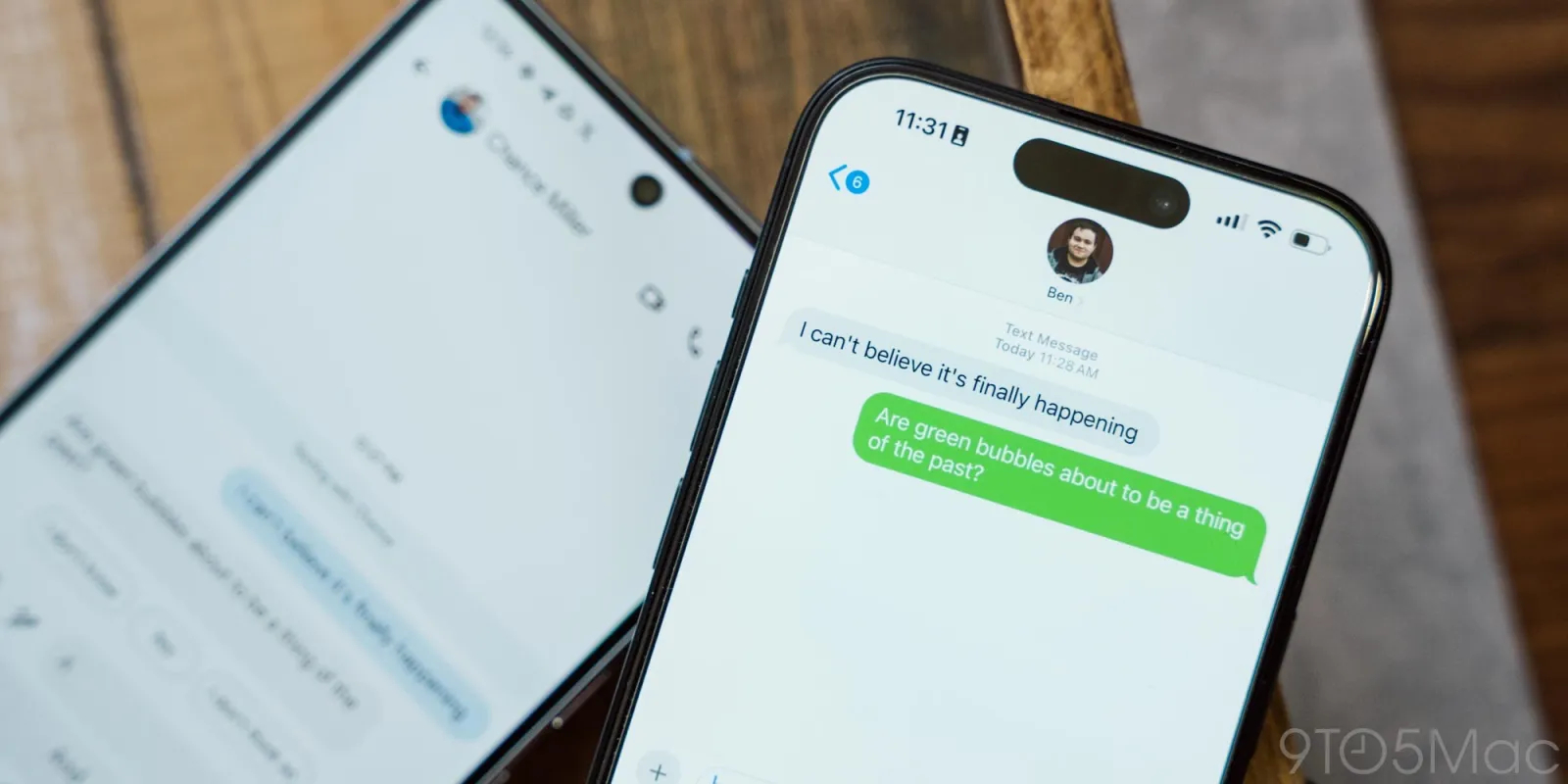

The Encryption Countdown: Apple’s RCS Moves Signal Privacy Shift
Is your messaging truly private across the entire digital landscape? While Apple’s iMessage boasts strong end-to-end encryption, the broader SMS and RCS ecosystem has lagged, creating a fragmented privacy experience. Discoveries within the latest iOS beta suggest a major shift is coming: Apple appears poised to finally roll out end-to-end encryption (E2EE) for RCS messages, fundamentally altering privacy guarantees for millions. This move, long anticipated since Apple announced plans last March following the GSMA’s standardization, signifies a crucial step towards ubiquitous secure messaging, but with significant complexities involving carriers and regulations.
Unmasking the Code: French Carriers Lead the Charge
The smoking gun was unearthed by developer Tiino-X83 within iOS 26.3 beta 2. Their investigation revealed references to a new carrier bundle setting specifically designed to allow mobile operators to toggle E2EE support for RCS messages on or off for their subscribers.
- The French Anomaly: The discovery held an immediate surprise. Tiino-X83 noted, “only the four main French carriers (Bouygues, Orange, SFR and Free) have this line of code… no other carrier, regardless of the country [they] checked.” This exclusive appearance in French carrier profiles is highly unusual and raises questions:
- Testing Ground: Are French carriers acting as early test partners for Apple’s implementation?
- Regulatory Focus: Does France have a unique regulatory environment prompting prioritized development?
- Carrier Coordination: Did French carriers collaborate proactively to be first in line? The reasons remain speculative, but it clearly indicates advanced preparation is underway specifically tied to carrier infrastructure.
This carrier-level control mechanism is directly linked to mandates laid out by the GSMA Universal Profile, the global standard for RCS.
The GSMA Mandate: Encryption Default, With Caveats
Apple’s implementation gleaned from the beta code aligns closely with the GSMA’s R5-43 series specifications published last year. These standards are unequivocal but introduce critical flexibility:
GSMA RCS E2EE Requirements Summary:
| Specification | Requirement | Applies To |
|---|---|---|
| R5-43-1 | E2EE must be enabled by default | All RCS Clients |
| R5-43-1-1 | Enable/Disable E2EE applies to all users in a market | Client Provider (Apple/Carrier) |
| R5-43-1-2 | Cannot enable/disable E2EE for subsets or individual users | Client Provider |
| R5-43-1-3 | If E2EE is disabled, users must be informed it isn’t available in their market | Client Provider |
| R5-43-2 | All User Initiated Content must be E2EE (excluding “Is Typing” notifications) | Messages |
The key takeaways are:
- Default On: Encryption isn’t optional for providers adhering to the standard; it starts activated.
- Market-Wide Enforcement: Providers (like Apple partnering with carriers) turn it on or off for everyone within a specific geographic market (e.g., national carriers within France). They cannot selectively offer it.
- Regulatory Override: Crucially, the requirement explicitly states: “unless expressly prohibited by local regulations.” This is the loophole dictated by national laws or government directives.
- Transparency Mandate: Users must be clearly told if E2EE is unavailable due to local restrictions (R5-43-1-3). Furthermore, when active, users must be able to verify the encryption status visually within the chat interface.
The discovered iOS carrier setting appears to be Apple’s mechanism for carriers to signal whether E2EE is permissible and should be enabled based on these GSMA rules and local legal constraints. It delegates the responsibility of adhering to geographic regulations to the partners best positioned to understand them: the carriers themselves operating within those jurisdictions.
Navigating the Legal Minefield: When Encryption Faces Prohibition
The GSMA’s deference to local regulations highlights the significant legal variance worldwide regarding strong encryption. This creates a complex landscape for Apple and carriers rolling out RCS E2EE:
- Government Access Demands: Some countries may insist on legal frameworks granting authorities access to encrypted communications (e.g., for law enforcement or national security). Encryption effectively forces disclosures. Examples include laws like the UK’s Investigatory Powers Act or ongoing debates surrounding the US “Going Dark” problem (source: Congressional Research Service Reports on Encryption).
- Authoritarian Restrictions: Nations with strict internet controls may outright prohibit E2EE for RCS or demand backdoors, viewing widespread citizen privacy as a threat. Implementing GSMA-standard E2EE globally “as is” will be impossible for Apple in these markets.
- User Notification Challenge: While R5-43-1-3 requires informing users when E2EE is disabled due to local regulations, implementing this transparently without drawing overt government ire could be difficult for carriers in restrictive regimes. How will this notification be presented? Could it be subtle or buried?
- Consistency vs. Compliance: Apple champions privacy. Its challenge lies in balancing this core value with the need to operate in markets potentially hostile to strong E2EE. How forcefully will they push carriers towards enabling it? How clearly will they expose government-mandated limitations?
This tension underscores that ubiquitous secure messaging remains an aspirational goal,


