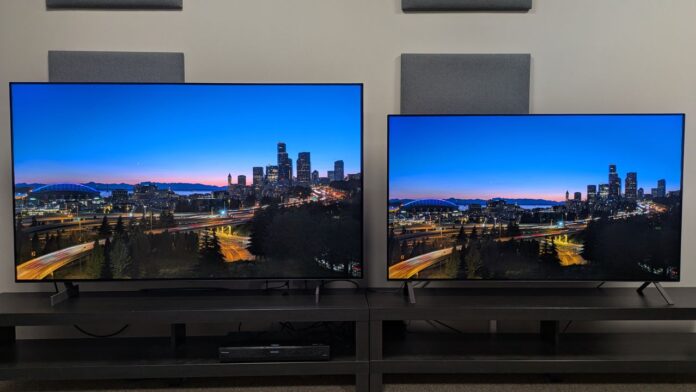

The LG B5 was one of my favorite OLED TVs in 2025. It delivered detailed, contrast-rich picture quality and came with a full suite of gaming features that made it one of the best gaming TVs on the market. Its launch price might have been too close to its more premium sibling, the LG C5, but as 2025 went on, the B5’s price dropped and it became a great value option — and arguably the star of Black Friday.
Naturally, its successor, the LG B6, has some big shoes to fill. In the lead-up to the B6’s release, it’s been shrouded in mystery. We got plenty of details about the LG G6 and LG C6 — both of which earned five stars in my respective reviews, and both of which are heading toward being two of 2026’s most exciting OLED TVs — but we heard next to nothing about the LG B6.
Now, the B6 has actually arrived in our testing lab, and I wanted to put it side-by-side with its predecessor to see how they compare… and it turned out far weirder and more complicated than I ever expected.
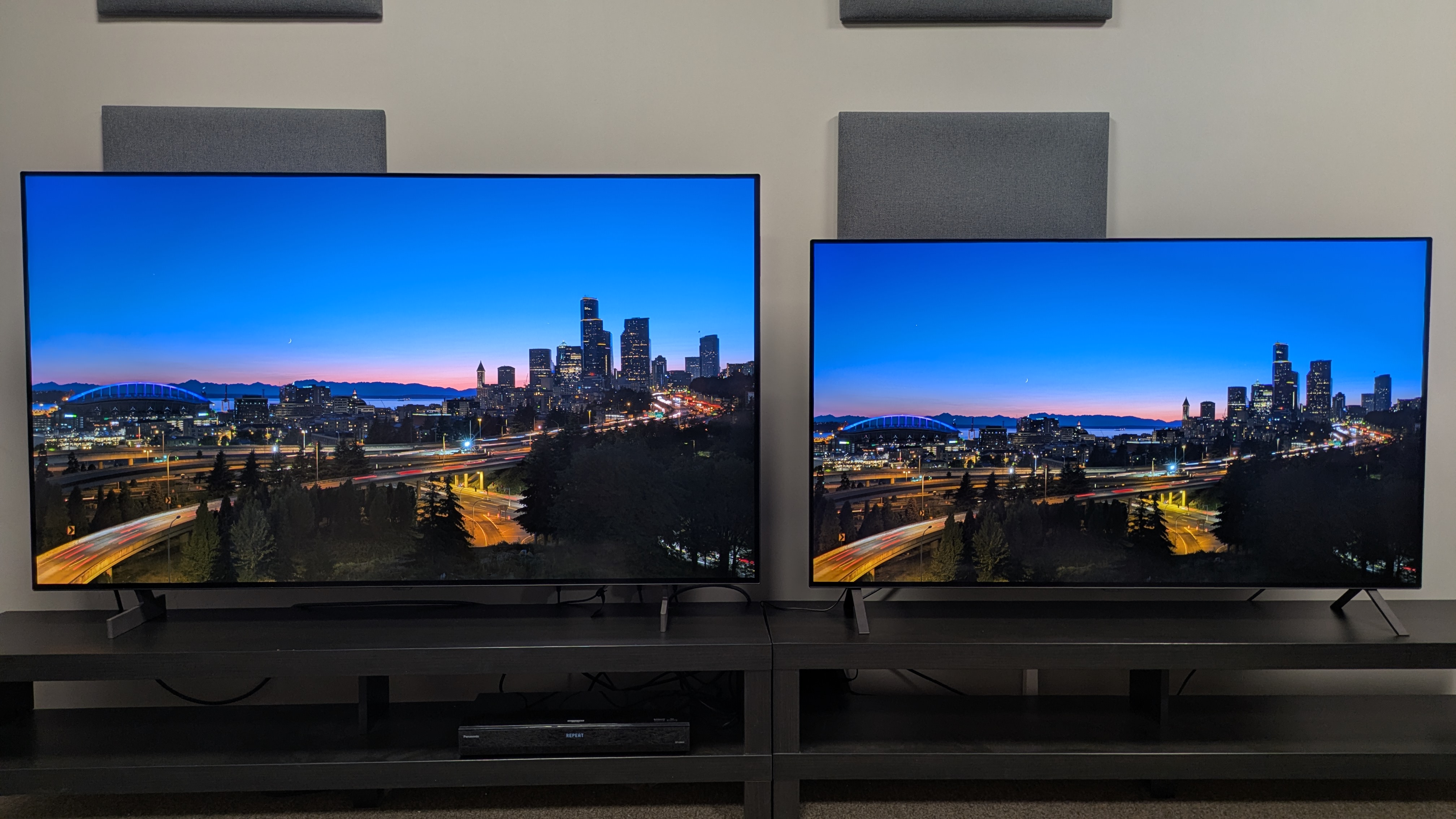
A boost in brightness… kind of
The LG B-series has been producing the same level of brightness measurements for years, despite LG’s step-up C-series and G-series counterparts hitting new heights.
That appears to have changed for the B6 — in one respect, at least. The B6 had a measured peak HDR brightness of 895 nits in Cinema Home and 835 nits in Filmmaker Mode. That’s a healthy jump over the B5’s 668 nits peak HDR brightness (measured in Cinema mode).
There were shifts in fullscreen brightness too, in both SDR and HDR. The B6 was roughly 20 nits brighter in Cinema Home compared with the B5 in both SDR and HDR — it’s not a lot, but anything is welcome.
How did this translate into real-world viewing? In some scenes, highlight areas were visibly brighter on the B6. When John speaks to the hotel desk clerk in Dark City, the desk lamp showed off the B6’s brighter highlights, as it looked more impactful and created stronger perceived contrast.
The B5 still delivered precise contrast with arguably deeper black tones, but the B6 had the brightness advantage for more impactful contrast overall.
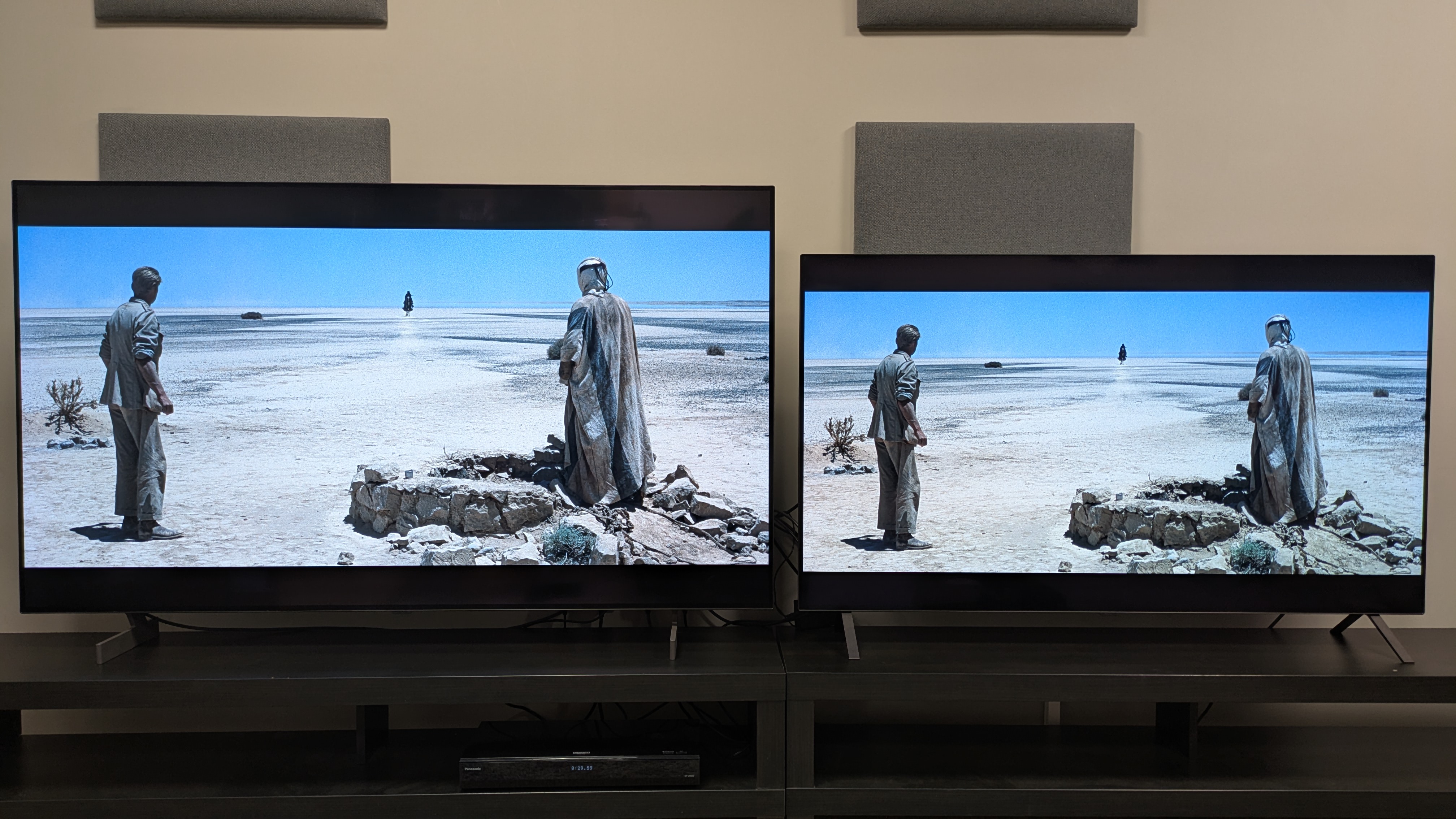
I then moved to the desert scenes from Lawrence of Arabia. As Lawrence and his guide take some water from a well, the white sands surrounding them had more impact on the B6. While they still had good brightness on the B5, the B6’s boosted peak brightness levels were on display.
However, as the scene went on, I noticed that the white sands in the scene had a greener tint to them in some shots. In other shots, the green tint would appear on the B5, but overall it was more noticeable on the B6.
Green tint is a common issue with WOLED panels, and has been discussed at length online — especially with LG’s OLEDs. I wrote about it during my LG C6 and LG C5 comparison, where I was pleased to find that the C6 had eliminated it, making the C5 look greener by comparison. I decided to check if it was noticeable on other content.
Green tint
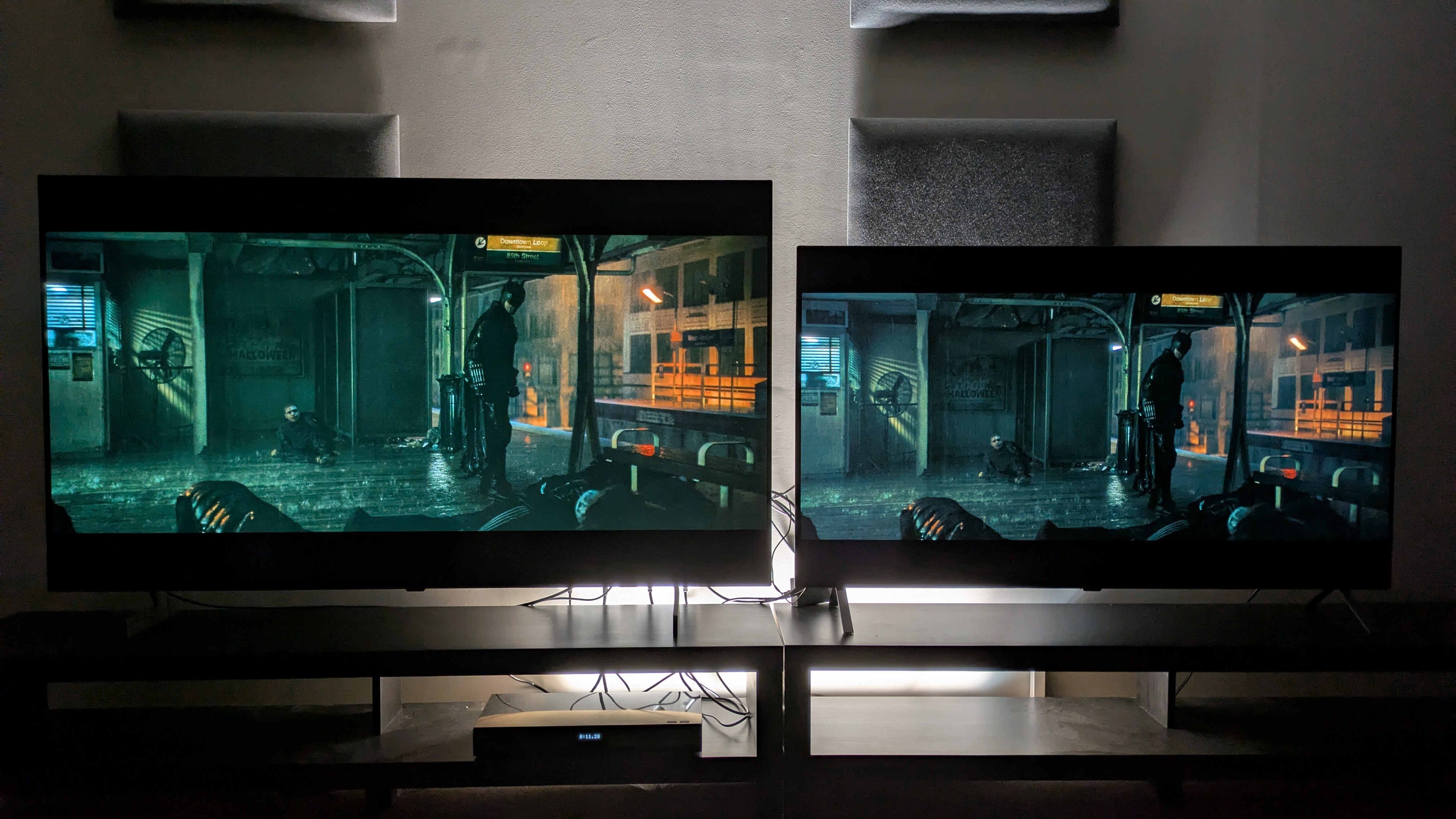
I switched the type of scene entirely and opted for The Batman, to check if the green tint was noticeable in darker scenes: boy, was it.
In the subway fight scene, as Batman stands over his defeated foes, the green tint was very noticeable on the B6. The light reflected from the left side of the screen (from the subway exit) took on a green tone, whereas on the B5 it was much closer to the accurate tones I would expect.
The same was true in later scenes, as the green tint was noticeable against the brown tones of brick walls in an aerial shot of Gotham, and as Batman walks down a dimly-lit corridor.
I decided to check some scenes with lots of pure white, particularly scenes of snow from the Spears & Munsil UHD Benchmark Blu-ray, viewed in HDR10 and mastered at 1,000 nits.
I was surprised to find that the B5’s white tones were more vibrant and punchy throughout, delivering greater perceived brightness over the newer B6, despite what the measurements above said. While I can’t explain the physics of it, I believe the green tint on the B6 was having an effect on the perceived ‘pop’ of the white tones.
Colors
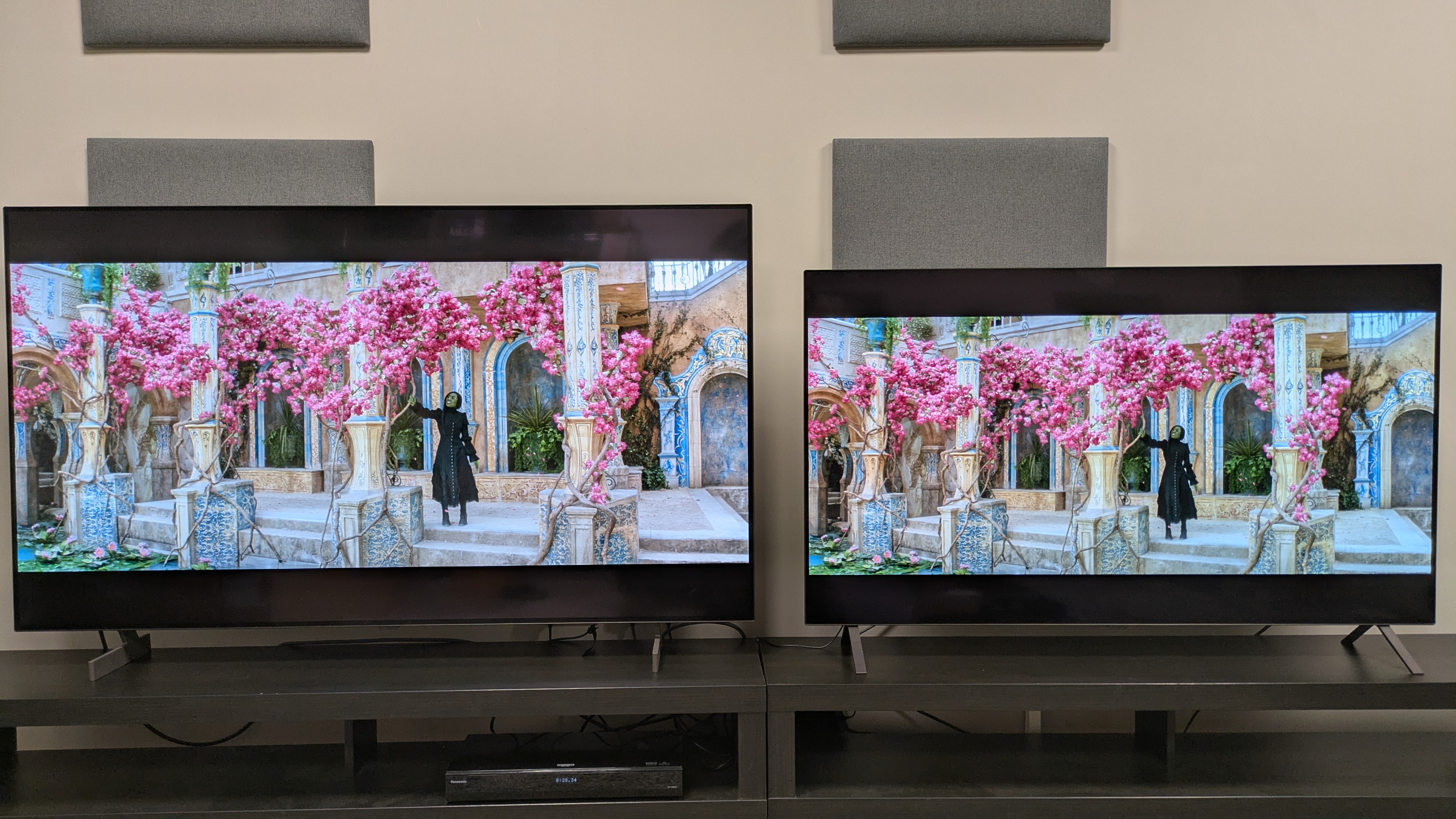
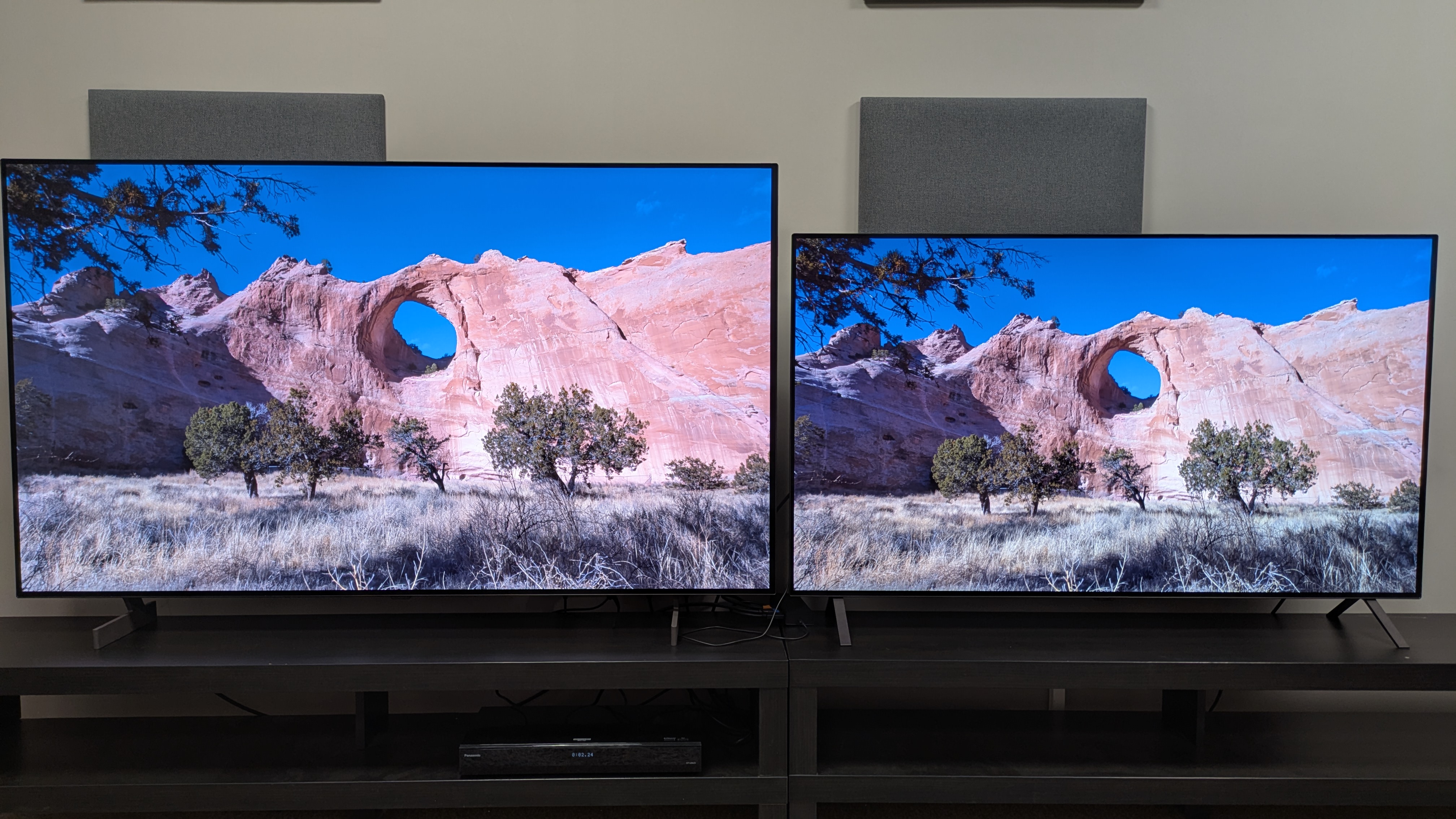
It was time to check some colorful scenes. In some shots from the Spears & Munsil images, such as an orange butterfly, the B6 demonstrated richer, deeper colors compared with the B5. Another shot of a cliffside with the sun rising over it showed the B6 had a more accurate color profile and that extra hit of brightness.
Putting on the “Wizard and I” scene from Wicked, both TVs delivered great vibrant colors that looked accurate. The pink flowers over Elphaba’s head popped nicely on both displays, while the green of Elphaba’s skin also looked right on both TVs.
The yellow stone of the walls and pillars looked brighter on the B6 and took on a darker tone on the B5. Looking closer, the B5 actually bordered on having that green tint, but it wasn’t as noticeable.
This was true of other scenes throughout Wicked, with both the B6 and B5 doing a great job with Glinda’s pink room and clothes throughout, as well as faithfully reproducing the rich emerald green and gold of the city as it arrives into Emerald City. Sometimes the B5 would show flashes of a green tint; at other times, the B6 would.
One more wrinkle I found is that the B6’s measured HDR color gamut coverage in both BT.2020 and DCI-P3 color spaces has dropped compared with the B5. It registered 72.5% of BT.2020 and 97.4% of DCI-P3, where the B5 measured 74.85% and 99.5% respectively.
While the B6’s DCI-P3 result is still above the 95% threshold we like to see, it was still unusual to see it drop, and it could be related to the colors seeming inconsistent at times.
A new appreciation
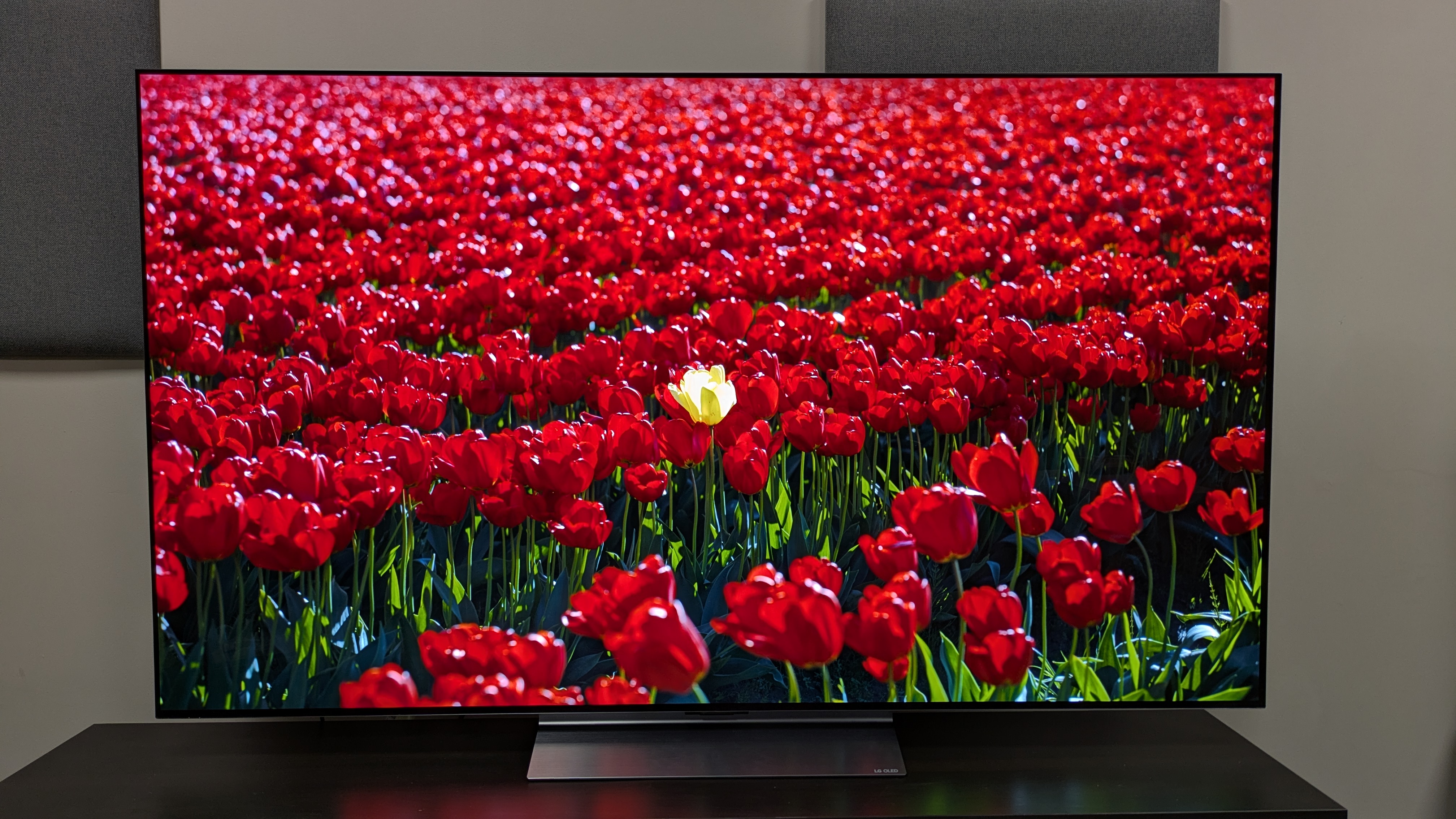
Overall, I found this comparison frustrating, but enlightening. Viewed in isolation, these are two very good TVs, but it’s hard to ignore any issues I’ve spotted when I’ve seen the two side-by-side.
The green tint on the B6 unit I received was concerning, and while it’s possible that I was unlucky and got a panel especially prone to it, that could have implications for the uniformity of quality in the panels — so that could be its own issue to talk about. I contacted LG about what I was seeing, and the company declined to comment without a representative being able to check the displays in person.
While it’s not confirmed if the B6 uses the newer OLED SE panel, the brightness increase makes me think it’s likely. Maybe it’s teething issues with a new panel, but I can’t say for sure.
If I had to recommend a TV between the two, I’d pick the B5. Not only was it the more consistent of the two overall, but it’s also a heck of a lot more affordable. A 65-inch B5 costs $999 / £1,199 / AU$2,199, whereas the newly launched 65-inch B6 costs $1,999 / £2,399 / AU$2,495.
It’s worth noting there’s a cheaper B6E model available in the UK that costs £1,799, and LG told me that the only real differences are cosmetic and a lack of HDR Precision Master Pro and Precision Sound Pro features — neither of which I’d want to use anyway, based on my testing so far.
But honestly, my main takeaway is a renewed appreciation for just how good the LG C6 is. Not only does it have a new processor, which appears to have fixed the green tint issue, but it’s a lot brighter with better detail and contrast, earning every bit of its five stars.
While it’s pricier, with a 65-inch model costing $2,699 / £2,599 / AU$3,995, it’s worth the investment in my opinion, thanks to its upgrades — especially in the UK, where the price difference is so small.
As stock of last year’s LG OLEDs appears to be dwindling fast in several stores, I believe the C6 will become the big-screen LG OLED of 2026, and right now I think I’ll be strongly recommending that OLED shoppers spend the extra to step up to it.


