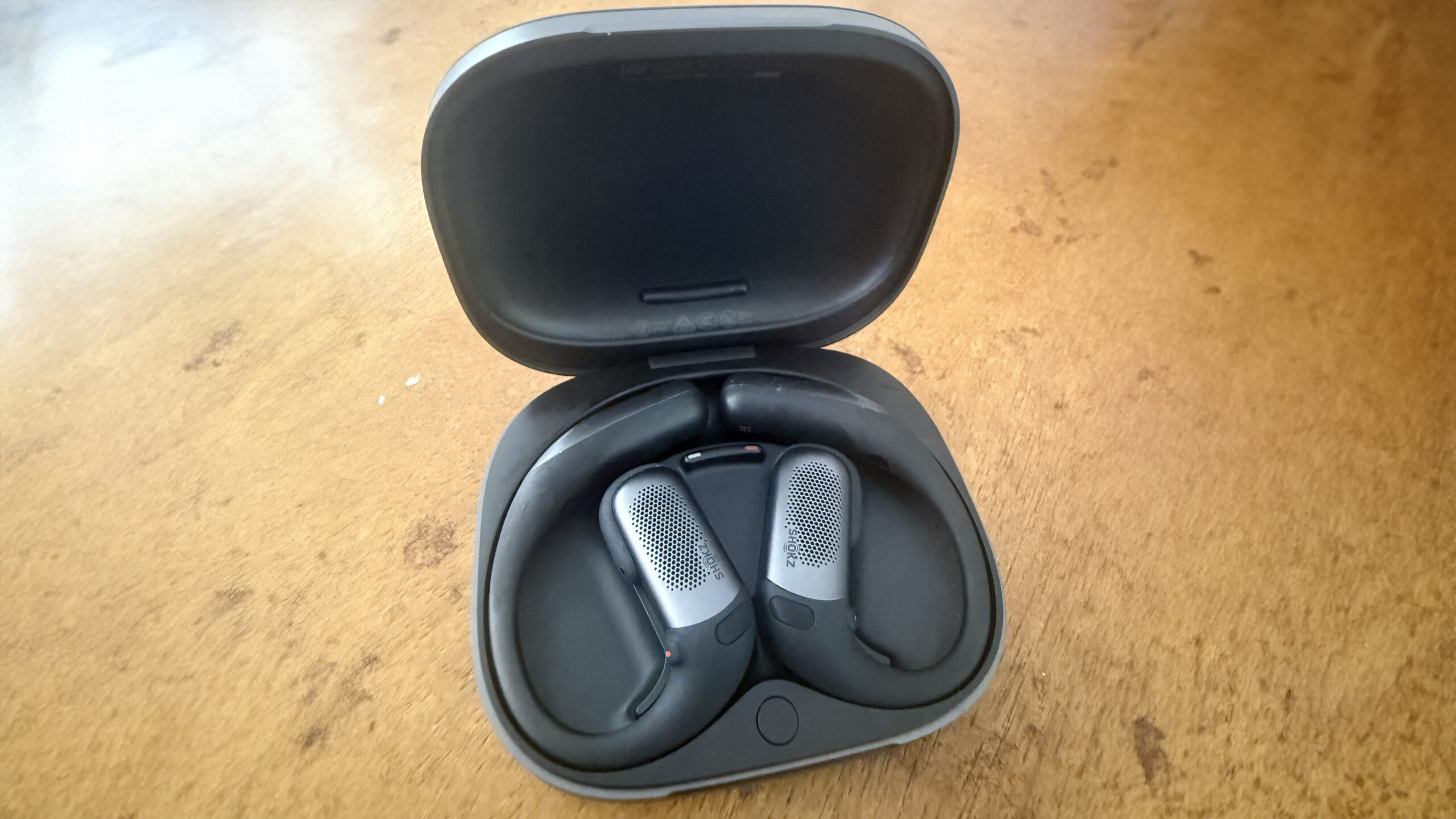

The Unplugged Dilemma: Can Shokz’s New OpenFit Pro Revolutionize Active Listening?
Imagine strapping on headphones that disappear once you put them on—no ear canal blockage, no isolation, just pure sound while staying aware of roaring traffic. That’s the promise of open-ear headphones like the Shokz OpenFit Pro, launched at CES to bridge the gap between traditional in-ears and bone conduction tech. For athletes or cyclists prioritizing environmental awareness, legacy options felt restrictive: bone conduction limited audio depth, while earbuds compromised safety放的. After testing Shokz’s $249 flagship, here’s the unfiltered verdict on whether this innovation redefines our listening habits—or merely repackages them at a premium upgrading.
Noise Reduction: A Technological Leap Within Limits
While “active noise canceling” dominates headphone marketing, Shokz strategically calls its OpenFit Pro tech “noise reduction”—a crucial differentiation for open-ear architecture. Unlike ANC giants Bose or Sony that block sound via ear canal seals, Shokz uses algorithmic dampening to suppress low-frequency ambient noises like fans or distant traffic while preserving mid to high-range voices and alerts.
During cycling testing, the feature excelled in moderately noisy environments. Running through Sydney Olympic Park with noise reduction enabled allowed solid music clarity without excessive volume spikes—unlike bone conduction alternatives. However, limits emerged in chaotic settings:
- Public Transport Failures: On loud buses, music struggled to compete, forcing volumes to unsafe levels.
- Wind Vulnerability: Cycling gusts defeated the algorithms, unlike sealed earbuds using passive isolation.
- Urban vs. Quiet Spaces: Effective indoors (blocking A/C hum) but impotent against car horns or construction.
As Audio Engineering Society research confirms, true ambient elimination remains impossible without physical occlusion. Shokz achieves partial mitigation, best suited to controlled environments.
Sound Quality: Unmatched for Open-Ear Designs
Here’s where OpenFit Pro betrays its price tag: audio fidelity thrives. Compared to Shokz or AfterShokz legacy bone conduction models, drivers positioned near the ear canal entrance deliver fuller bass and richer soundscapes, bypassing audio compromises of vibrating temples. Testing proved revelatory:
- Bass authority surpassed expectations. Tracks like Death Grips’ “Hacker” resonated physically.
- Vocal/video podcasts reproduced vividly—critical for workout entertainment.
- AirPods Pro 2-tier clarity disrupted assumptions about open-ear sonic sacrifices.
In blind tests against EarFun Air Pro 4+ ($99) or JLab JBuds Mini ($39), OpenFit Pro edged ahead nuance-wise but argues weakly for its premium. Soundquality is fantastic for open-ear headphones技术—yet rivals at half-price simply sound better overall through occlusion advantages, according to RTINGS analysis.
Design Wins Comfort, Fumbles Functionality
Shokz prioritized physical comfort brilliantly. Ear-hook silhouettes distributed weight flawlessly across dozens of cycling miles, long runs, and badminton sessions—no hot spots or looseness. Gel-free non-invasiveness resolved AirPods’ “ear fatigue” syndrome within hours. The catch? Controllers flatline as ergonomic disasters:
| Control Function | Action Required | Usability Score |
|---|---|---|
| Volume Up | Single press + long press (right ear) | ★☆☆☆☆ |
| Volume Down | Single press + long press (left ear) | ★☆☆☆☆ |
| Skip Track | Two presses (same button as volume) | ★★☆☆☆ |
This layout consistently triggered unintentional skips instead of volume adjustments mid-run—forcing reliance on phone controls. Shokz’s OpenRun series avoided this with dedicated +/- buttons; critics argue prioritizing minimalism over intuition爆竹 was a misfire.
Storage bottlenecks exist too. Charging cases—fairly bulky at almost twice AirPods Pro 2’s size—crowded jersey pockets during rides. One win: USB-C charging beats OpenRun’s magnetic exclusivity.
Price Tag Reality: Who Needs This Niche?
At $249, OpenFit Pro competes directly with Bose QuietComfort’s ANC titans—yet excels only narrowly:
- Optimized For: Gym sessions, track running, quiet cycling routes (1-2 hour bursts).
- Falls Short On: Commutes, loud environments, extended listening.
- Alternatives烟花:
- Shokz OpenRun Pro: $179 (bone conduction; reduced audio depth)
- Bose Ultra Open Earbuds: $299 (collaborative design; beamforming tech)
Essentially, unless you medically need ear canal avoidance or loathe bone conduction’s clamp/quality trade-offs, OpenFit Pro struggles to justify its premium. Best-in-class open-ear headphones? Absolutely. A versatile champion? Narrowly targeted.
Decoding Situational Superiority
Not every innovation fulfills its hype, yet OpenFit Pro achieves unprecedented workout headphones synergy for wary listeners craving fidelity + freedom. In tennis, cycling with headphones on or treadmill runs—environments demanding ambient vigilance—this is Shokz’s crowning audio evolution. Conversely, commuters or ANC faithfuls face compromise fireworks they likely won’t splash $250 for.
Early adopters funding “audio beamforming” R&D might tolerate quirks, but until noise-reduction matures handling extreme decibels, Shokz’s niche hold risks narrowing rather than


