
The Late-Night Pixel Pitch: Did Google Just Rewrite the Rulebook for Tech Keynotes?
Remember the sheer electricity of a Steve Jobs reveal? That hushed anticipation, the iconic black turtleneck, the perfectly choreographed “one more thing”? For over two decades, this has been the undisputed blueprint for major tech product launches: the charismatic leader, the dazzling stagecraft, the live demo gasp, and the inevitable social media frenzy. It wasn’t just a presentation; it was a cultural ritual designed to captivate tech enthusiasts and dominate headlines. But what happens when a giant like Google ditches the sacred script entirely? The recent Made by Google event, hosted not by a stern executive but by Jimmy Fallon in a bizarre late-night show format, felt less like a keynote and more like slipping into a parallel universe. This audacious departure signals a profound keynote format evolution, raising critical questions about who tech companies are really talking to now, and what the future of big reveals holds. Is this the end of an era, or just its necessary reinvention?
Deconstructing the Sacred Blueprint: The Jobsian Legacy
For nearly twenty years, the archetypal tech keynote was virtually unchallenged. The format cemented by Steve Jobs at Apple became the gold standard:
- The Charismatic Evangelist: A singular, visionary figure (CEO or senior leader) commands the stage, exuding authority and passion.
- Narrative-Driven Structure: A clear, often suspenseful narrative builds towards key reveals (“One more thing…”).
- Product-First Deep Dive: Intricate details, specifications, and genuine innovation are center stage. Live demos, often high-risk/high-reward, aimed to wow the technologically fluent.
- Stage as Shrine: Minimalist, carefully lit sets emphasized product focus. Dramatic lighting shifts and giant screens amplified the presentation.
- Target Audience: Passionate consumers, tech press, developers, investors – the core enthusiasts deeply invested in the product ecosystem.
The goal was unequivocal: inform the most knowledgeable audience about tangible advancements and create an aura of undeniable technical superiority. Buzz generated here would naturally cascade outwards. This keynote format proved incredibly effective, replicated endlessly by countless competitors. (Reference to Steve Jobs keynote style evolution)
Anatomy of a Paradigm Shift: Inside Google’s Tonight Show Keynote
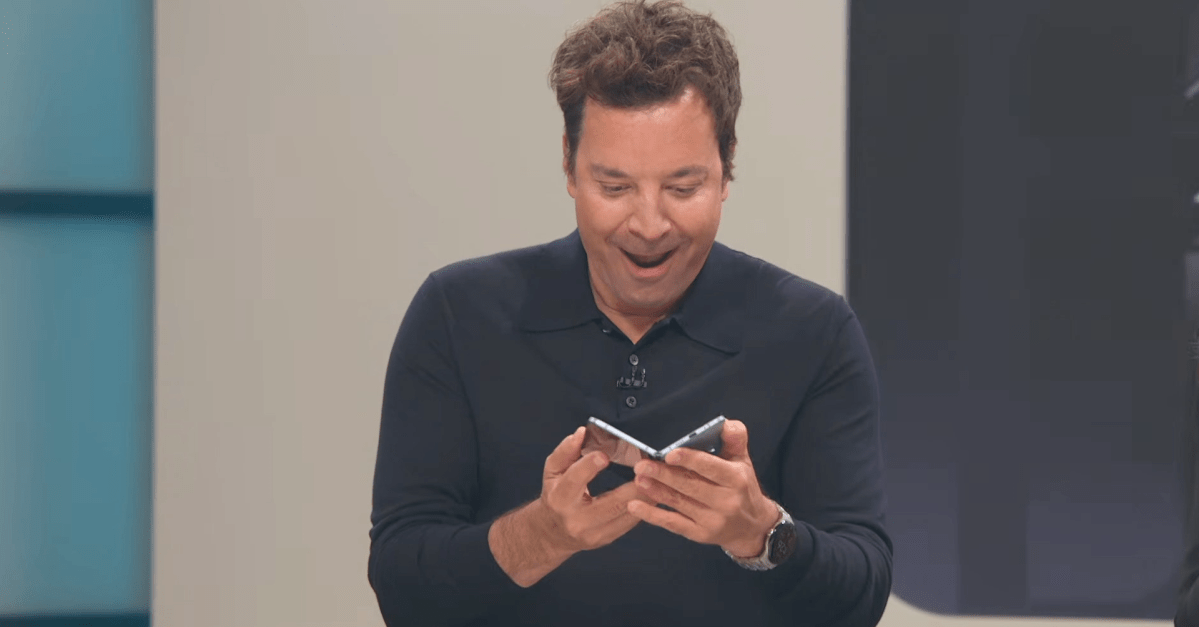
Google’s Made by Google event wasn’t just a tweak; it was a wholesale genre jump. Attending felt less like being at a product launch and more like being part of a TV studio audience for “The Tonight Show Starring Jimmy Fallon”:
- Late-Night Talk Show Gloss: Jimmy Fallon, a professional entertainer, occupied center stage as host, not Rick Osterloh (Google’s SVP of Devices). Instead of striding purposefully, Osterloh sat for a cozy, scripted “interview.” A warm-up comedian tried to energize the crowd before taping under glaring applause signs.
- Studio Set Hopping: Multiple distinct sets were employed. Cameramen weaved between them, teleprompters guided the dialogue, and replays were queued – hallmarks of live television production, not a tech briefing.
- Entertainment Over Enlightenment: Pre-taped segments flowed like comedy skits. Features were demonstrated not through focused demos but through stunts and gags. Fallon wandered sets showcasing gadgets almost like a QVC host pitching to a home shopping audience.
- The Influencer Parade: Celebrities and online personalities dominated. Alex Cooper (Call Her Daddy), Keith Lee (the “Subway Takes” food critic), and a Jonas Brother appeared, showcasing AI features like Gemini-based image generation and premiering a “Shot on Pixel 10 Pro” music video. The emphasis shifted from product specs to relatable celebrity “moments.”
The Target Audience Mystery: Who Was This For, Really?
This fundamental shift in format screamed a shift in audience targeting:
- Beyond the Tech Diehards: The traditional keynote served the core. This felt explicitly explicitly aimed at broader, mainstream appeal.
- The “Entertainment Consumer”: Was Google chasing viewers more accustomed to Fallon’s show than tech blogs? The format prioritized accessibility and entertainment value over granular technical detail.
- The Influencer Follower: Featuring Keith Lee and Alex Cooper was a direct play for their massive, often younger, follower bases – demographics potentially less swayed traditional media but highly engaged with creators.
- The Green Bubble Frustrated: Messaging explicitly targeted iPhone discontent, jabbing at Apple’s resistance to RCS (Rich Communication Services) and the infamous “green bubble” stigma. Fallon was used as a comedic proxy for the confused mainstream viewer learning about these “techy” issues.
- An Admission of Selective Influencer Impact: Perceptions were highlighted deliberately – e.g., Keith Lee promoting Pixel Buds despite using a wired mic for his segment underscored the curated nature of the pitch.
As the experience unfolded, it became unsettlingly clear: For attendees deeply immersed in tech, like reporters or gadget enthusiasts, we were not the primary audience. The event prioritized generating broad, positive vibes reachable through entertainment channels over impressing us with technological prowess.
| Traditional vs. New Age Tech Keynote Approaches |
| ————————————————- | ————————————————— |
| Aspect | Traditional (Jobsian) | Google’s New Approach |
| Host/Lead | Charismatic Executive (e.g., Jobs) | Celebrity Entertainer (e.g., Fallon) |
| Format | Stage Monologue/Presentation | Variety/Talk Show Hybrid |
| Focus | Product Deep Dives, Specs, Demos | Entertainment, Relatable Moments |
| Sets/Production | Minimal Stagecraft, Large Screens | Multiple TV-Style Sets, Audience |
| Key Demos | Live, Often High-Stakes | Pre-Recorded Segments, Gag-Focused |
| Key Messengers | Executives, Engineers, Designers | Celebrities, Influencers, Execs |
| Primary Target Audience | Tech Enthusiasts, Press, Investors | Mainstream Consumers, Influencer Followers |
| Buzz Generation Focus | Tech Media, Social Deep Dive | Broad Social Media Views, Entertainment Headlines |
Influencers and Platforms: The New Tech Evangelists?
This move isn’t an anomaly; it’s a calculated adaptation to a radically changed media landscape, as crystallized by Mia Sato’s observation on The Vergecast:
- TV’s Decline: Broadcast TV audience erosion forces celebrities and companies alike to diversify promotion channels. Why rely solely on CNN covering your keynote when you can stream directly to millions and leverage influencer amplification?
- Direct-to-Consumer Channels: Google, owning YouTube – a primary viewing destination – can bypass traditional gatekeepers. Livestreaming enables massive, direct outreach, fundamentally changing the “buzz funnel.”
- The Influencer Ecosystem: Influencers represent direct access to highly engaged, niche audiences. Including them as participants in the event, not just observers, leverages their credibility and reach far beyond tech media. It wasn’t journalists writing about Alex Cooper seeing Gemini; it was Alex Cooper showing her followers Gemini. (Reference to influencer marketing growth)
This isn’t necessarily the exclusion of journalists, but an acknowledgment that the traditional keynote broadcast isn’t the sole, or even primary, engine of consumer attention anymore. Recruitment shifts towards those who command eyeballs on platforms where consumers actually spend their time.
Redefining the “Wow” Factor: The Demise of the Demo-as-Worship?
Another seismic shift was the de-emphasis on the risky, powerful live demo:
- Traditional High-Wire Act: Jobsian keynotes relied on flawless live demos as moments of apotheosis (e.g., iPhone multitouch reveal). Failure on stage (rare, but impactful when it happened) was disastrous.
- Google’s Controlled Narrative: Google opted heavily for safer, pre-recorded segments (“watch what we planned to do”). Live elements felt choreographed within talk-show segments for laughs or spectacle, not raw technical proof. The inherent risk, and thus the potential peak awe, was meticulously minimized.
- The “Cringe” Factor: The writer’s description of feeling trapped in WandaVision is telling. The uncanny valley of heightened, slightly unnatural TV energy is jarring to those steeped in tech event norms. But crucially, this discomfort might largely dissipate when filtered through YouTube clips consumed outside the studio – exactly where Google expects most views to happen. Format exhaustion is real amongst the cognoscenti; even a flawed experiment provides novelty.
Conclusion: Evolution, Not Extinction, of the Keynote?
Google’s Tonight Show gambit was undeniably disorienting for the tech-savvy. It questioned the core goal: Is a keynote fundamentally about informing the most knowledgeable, or entertaining the vastest audience? The event felt like a definitive end to the unspoken rule that big tech reveals must rigidly follow the Jobs playbook. This pivot reflects deeper truths: traditional TV-scale viewership is fragmented, influencers drive immense consumer trust, manufactured entertainment grabs social attention, and direct-to-consumer platforms offer unprecedented control. While tech purists may lament the sidelining of deep dives and high-stakes demos, Google is betting that mainstream resonance outweighs niche impressiveness. The future likely holds more experimentation – hybrids, platform-specific streams, varied formats—moving beyond a single template. One thing is certain: the familiar formula is dead. Whether Google’s Pixel-pitched late-night special is the definitive replacement remains to be seen, but it undeniably shattered the mold. What’s your take? Was this a refreshing change or a sign of dumbing down? Let the debate begin in the comments!
Sources & Further Reading:
Original article at www.theverge.com


