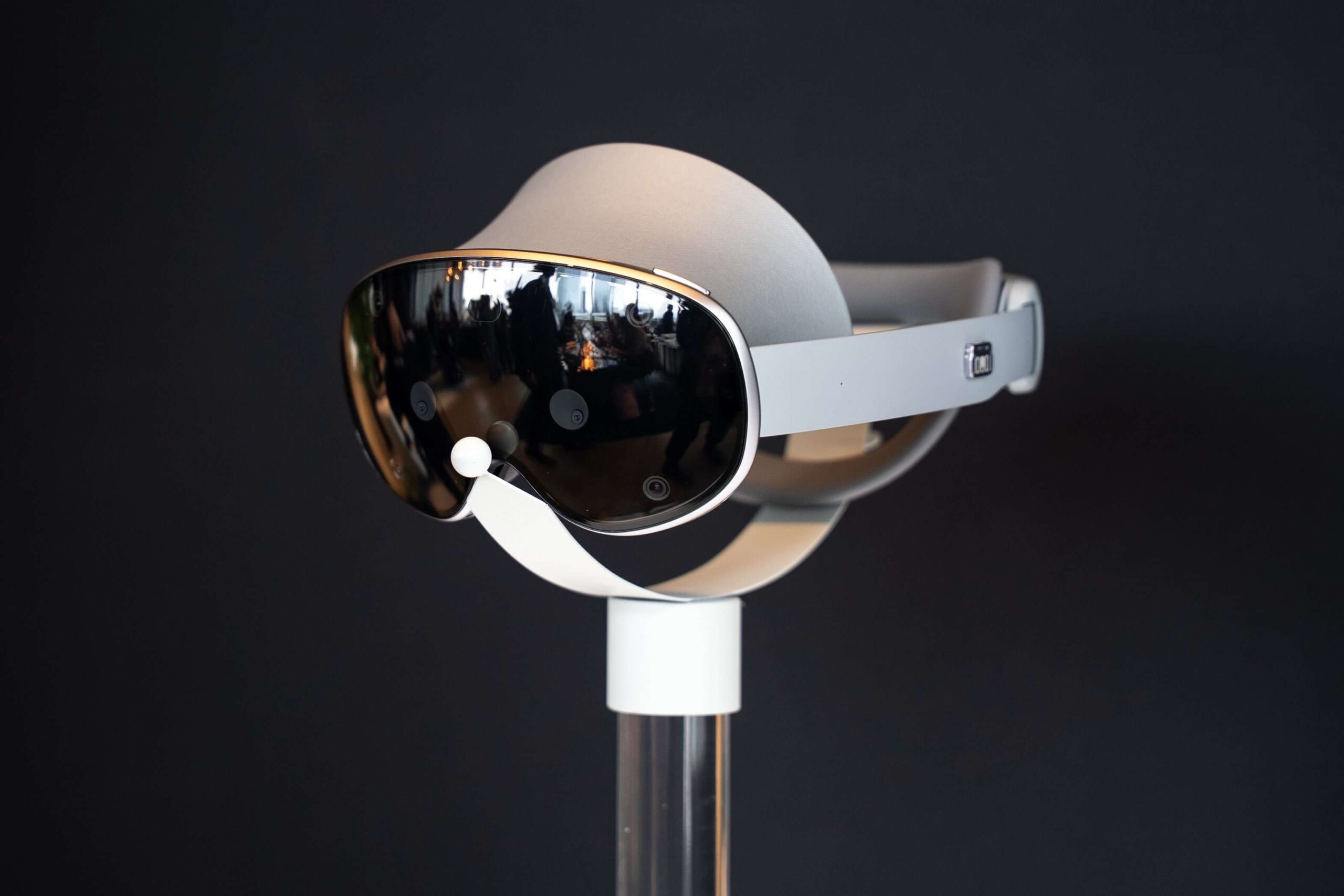

Stepping Into a New Dimension: Samsung Throws Down the XR Gauntlet
Picture this: What if your digital assistant didn’t just respond to voice commands but saw the world through your eyes? That vision is now a $1,799 reality with Samsung’s Galaxy XR headset. Launching exclusively in the U.S. and Korea, Samsung’s first AI-native wearable embeds Google’s Gemini directly into its operating system, promising seamless interaction between users and their surroundings. As the VR/AR market surges toward $397 billion by 2026, Samsung’s trifecta partnership with Google and Qualcomm isn’t just selling hardware—it’s crafting an entirely new ecosystem. And with Apple’s Vision Pro setting premium benchmarks, the Galaxy XR’s fusion of generative AI, spatial computing, and Samsung’s hardware pedigree could redefine our relationship with technology.
The Core Trio: Android XR, Gemini, and Snapdragon
Samsung’s headset runs on Android XR—a specialized OS co-developed with Google to natively handle extended reality environments. Unlike VR headsets relying on repurposed Android code, Android XR treats gestures, gaze tracking, and spatial anchors as first-class inputs. This technical artchitecture slashes latency, which CEO TM Roh credits for the headset’s “fluid, almost telepathic” responsiveness.
Critical to this is Gemini’s integration at the OS level. Unlike chatbot add-ons (looking at you, Meta), Gemini acts as the Galaxy XR’s nervous system:
- Voice & Vision Fusion: Ask “Show me how to fix this leaky faucet” while viewing pipes, and Gemini overlays YouTube tutorials from your actual perspective.
- Circle to Search in 3D: Circle a landmark during a walk, and historical data generates contextual pop-ups without exiting XR mode.
- Multimodal Awareness: Processor-sensor networks interpret overlapping commands. Say “Zoom in on that sign” while gesturing toward text, and Gemini cooperatively refines focus.
Fueling these features is Qualcomm’s Snapdragon XR2+ Gen 2 chip. The 4nm processor dedicates parallel cores to AI tasks, spatial mapping, and rendering 4K video per eye via dual micro-OLED displays. Complex algorithms handle real-time passthrough—stitching camera feeds at under 12ms latency for natural motion.
Design Choices: Comfort Over Compromise
Despite packing flagship-tier specs, Samsung prioritized wearability:
- Modular Build: A detachable magnetic light shield accommodates glasses users; a belt-clip external battery (1,500mAh) shifts weight distribution.
- Lidar-Powered Precision: 12 embedded sensors track iris position, hand joints (even with objects held), and millimeter-level environmental shifts.
- Heat Mitigation: Copper vapor chambers frontload heat dissipation—critical given the XR2+ Gen 2’s infamous throttling history.
Yet battery life remains XR’s Achilles heel. At 2.5 hours, the Galaxy XR falls short compared to the Meta Quest 3’s 2.9 hours. But Samsung’s backup approach—swappable batteries via Pogo pins—could ease marathons like industrial workflows.
| Specs vs. Competition | Samsung Galaxy XR | Apple Vision Pro | Meta Quest Pro |
|---|---|---|---|
| Display | 4K per eye (micro-OLED) | 4K per eye (OLEDoS) | 2.5K per eye (LCD) |
| Chip | Snapdragon XR2+ Gen 2 | M2/R1 silicon | Snapdragon XR2+ |
| AI Engine | Gemini system-level | Siri + ML models | Meta AI app layer |
| Battery | 2.5 hours (external) | 2 hours (external) | 2.9 hours (built-in) |
| Price | $1,799 | $3,499 | $999 |
Ecosystem Expansion: More Than a Headset
Galaxy XR signals Phase One in Samsung’s “ambient reality” roadmap. Insiders confirm synchronized XR Glasses—weighing under 80g—enter pilot production in H2 2024. These auxiliary wearables inherit Gemini integration but offload heavy tasks to paired Galaxy devices. The strategy echoes Qualcomm’s XR Platform Blueprint: enabling a spectrum of devices sharing latency-sensitive contexts, from smart glasses to headsets.
Equally vital is 3rd-party app adaptation. Samsung showcased Android apps transformed for XR: Google Photos galleries become navigable memory caves, and Maps projects directional arrows onto sidewalks during walking navigation. Developers gain APIs translating smartphone UIs to spatial equivalents dynamically—addressing XR’s chronic app scarcity.
Challenges in the Mirror
Despite impressive tech, hurdles loom. AI hallucinations plague all foundational models, raising safety concerns in GPS navigation or instructional scenarios. Samsung’s assured “95% accuracy in real-world tests” warrants scrutiny. Meanwhile, the eye-watering $1,799 price—40% pricier than Meta’s enterprise Quest Pro—demands justification via productivity gains.
Battery constraints also curtail professional use. Architects using complex CAD overlays or medics streaming surgical guides would need 4+ hour sessions. Samsung’s accessory ecosystem must deliver hot-swap solutions.
Ultimately, the Galaxy XR’s success hinges less on specs and more on dev buy-in. Meta boasts 500+ Quest 3 titles. Samsung? Confirmed apps hover near 150.
The Invisible Revolution
Samsung’s gamble positions Galaxy XR as something frontier: a canvas for ambient AI. Unlike rivals boxing Gemini or Siri into apps, system-level fusion allows understanding contextual narratives. Visiting Paris? Gemini seeds trivia as you scan landmarks. Reparing a bike? It augments tools with torque specs.
This collaboration also pressures Apple. Google brings search supremacy; Qualcomm supplies silicon scale; Samsung marshals displays and manufacturers. If Apple’s walled garden stays closed, Android XR’s open ethos could attract fragmented markets.
Will This Stick? A Glimpse Past the Hype
XR’s graveyard is littered with doomed hardware, from Microsoft’s HoloLens to Magic Leap. Samsung circumvents past pitfalls via generative AI’s utility anchor: circumventing gimmicks by integrating with daily tools. Yet adoption requires proving economic value. Early enterprise targets—telehealth, warehouse logistics—must showcase ROI beyond speculative demos.
For consumers, a “spatial computing” future feels uncertain. But as AI saturates mundane tasks, headsets could become the non-intrusive anchor for ambient assistance. Samsung’s Galaxy XR just turned that possibility tangible.
Your move, Apple and Meta—and readers: Are headsets like Galaxy XR evolutionary gadgets, or humanity’s next dominant interface? We’re eager for your insights below.


