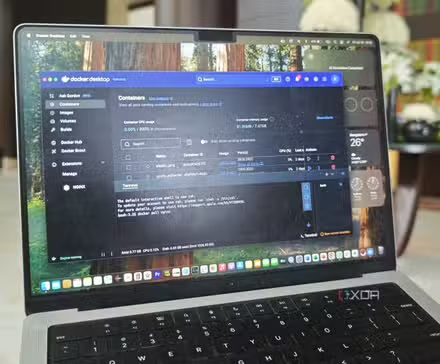

Navigating Docker’s Pitfalls: A Self-Hosting Survival Guide
Did you know 60% of self-hosting newcomers abandon containerization within weeks due to preventable configuration errors? Docker remains the undisputed gateway to running personal servers—thanks to its robust documentation, Docker Compose simplicity, and vast image library—but rookie missteps like reckless sudo privileges and forgotten volumes turn exciting homelab dreams into frustrating形成了一个个的数据荒原。 Understanding these pitfalls isn’t just about avoidance; it’s about unlocking Docker’s true potential without compromising security or stability.
Root Access: The Sudo Trap and Root/hourglass”>less Liberation
New users often instinctively prefix Docker commands with sudo when encountering “permission denied” errors. This circumvention grants containers unrestricted root privileges on the host system—a critical vulnerability. Malicious actors could exploit this for container escape attacks, accessing sensitive host files or installing malware.
Docker’s native solution is rootless mode. Enabled via dockerd-rootless-setuptool.sh, it runs the Docker daemon under your user account, adopting Linux namespaces for不動ov隔离. Trade-offs exist:
- Privileged ports (below 1024) require forwarding (e.g.,
sudo setcap CAP_NET_BIND_SERVICE=+ep /usr/bin/dockerd) - Certain storage drivers and network modes are unsupported
Example secure deployment:
ocker run -d –name nginx -p 8080:80 nginx:alpine
This non-root container uses >1024 host port. Documentation confirms compatibility Docker Security Best Practices.
Port


