
The Agentic AI Revolution: How Salesforce is Transforming Business with AI Partnerships
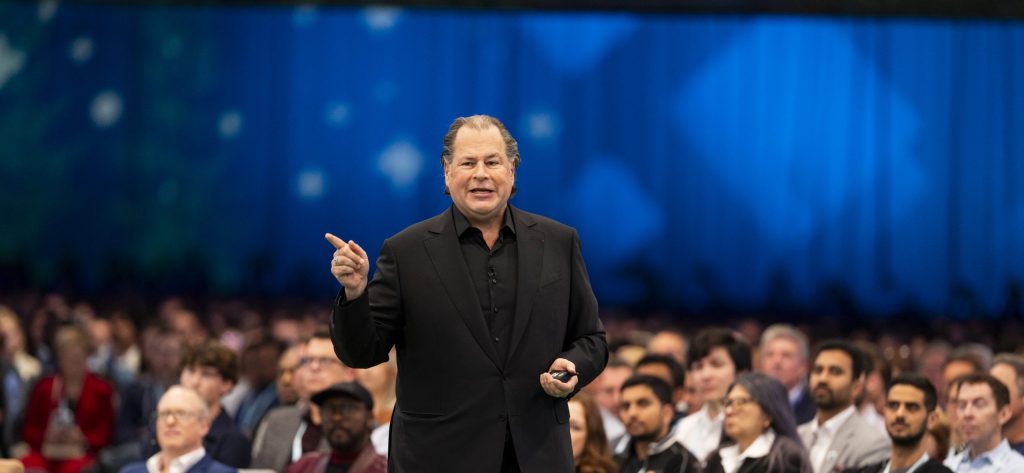
Are autonomous AI agents the key to unlocking unprecedented business growth? Salesforce certainly thinks so. At Dreamforce 2025, Salesforce CEO Marc Benioff declared the dawn of the “agentic AI revolution,” highlighting the company’s strategic partnerships with AI powerhouses like OpenAI, Anthropic, and Stripe. These collaborations are poised to redefine how businesses operate, from enhancing customer experiences to streamlining complex workflows. This article delves into Salesforce’s vision for agentic AI, its Agentforce platform, and the implications of these partnerships for the future of enterprise technology.
Embracing the Agentic AI Era: Salesforce’s Vision
Salesforce has been a major player in the CRM and cloud computing space for years. Now, it is taking a huge step into the world of agentic AI. What exactly is agentic AI? Unlike previous generations of AI that primarily focused on prediction and automation of simple tasks, agentic AI refers to autonomous AI systems that can perceive their environment, make decisions, and take actions to achieve specific goals without constant human intervention. Think of it as AI that can not only answer questions but also proactively solve problems and optimize processes.
The Evolution of AI at Salesforce: From Predictive to Agentic
Benioff emphasized that Salesforce has been through several technological shifts – cloud computing, mobile, social, and predictive AI. Now, agentic AI represents the next evolutionary leap. This transition signifies a move from reactive AI to proactive AI, where systems are designed to anticipate needs and orchestrate complex tasks autonomously.
| AI Era | Characteristics | Examples |
|---|---|---|
| Predictive AI | Focuses on forecasting and identifying patterns. | Sales forecasting, lead scoring. |
| Generative AI | Creates new content (text, images, code, etc.). | Content creation, chatbot responses. |
| Agentic AI | Autonomous systems that act to achieve goals. | Automated customer service, supply chain optimization, proactive problem solving. |
Agentforce: Salesforce’s Agentic AI Platform
At Dreamforce 2024, Salesforce introduced Agentforce, its initial offering in the agentic AI space. By Dreamforce 2025, the company reported significant advancements and highlighted early adopters like Pandora, FedEx, Williams-Sonoma, PepsiCo, and Dell. These companies are already leveraging Agentforce to:
- Enhance Customer Experiences: Williams-Sonoma uses agentic AI to provide shoppers with personalized recipe recommendations and video tutorials based on past purchases. This goes beyond simple product recommendations, offering a comprehensive and tailored user experience.
- Identify Growth Opportunities: PepsiCo utilizes autonomous models to analyze vast datasets and pinpoint new avenues for growth. This data-driven approach enables Pepsi to make more informed strategic decisions.
- Streamline Operations: FedEx, Dell and other companies are implementing agentic AI to automate various parts of their workflows.
While Salesforce reported 12,500 Agentforce deals closed since its launch, only about 6,000 are paid, indicating that monetization is still in its early stages. This suggests that businesses are exploring the potential of agentic AI, but are still evaluating the ROI and integrating it into their core operations.
Strategic Partnerships: Fueling the Agentic AI Revolution
Salesforce’s push into agentic AI is heavily reliant on strategic partnerships with leading AI companies.
Anthropic: Trusted AI for Sensitive Industries
The expanded partnership with Anthropic is particularly noteworthy. Anthropic’s Claude model will become a preferred model for Agentforce, especially for customers in highly regulated industries like financial services, healthcare, cybersecurity, and life sciences. This partnership addresses a critical concern: the need for trusted and secure AI when dealing with sensitive data.
Claude’s integration into Salesforce will allow developers within the company to build and ship software faster using Claude Code. The partnership also extends to Slack, a Salesforce-owned platform, further integrating Anthropic’s intelligence across the Salesforce ecosystem.
This collaboration underscores Salesforce’s commitment to building a “trusted AI ecosystem” where businesses can leverage AI’s power without compromising data security and privacy.
OpenAI: Seamless Integration for Enhanced Productivity
The deeper integrations between Salesforce and OpenAI will enable ChatGPT users to access Salesforce customer records and create visualizations directly from text prompts. This integration promises to streamline workflows and enhance productivity by making customer data more accessible and actionable within the familiar ChatGPT interface.
Sam Altman, CEO of OpenAI, emphasized that the partnership aims to make everyday tools work better together, resulting in a more natural and connected workflow. This integration has the potential to significantly improve how sales, marketing, and customer service teams access and utilize customer information.
Stripe: Revolutionizing Agentic Commerce
Salesforce is also collaborating with Stripe and OpenAI to introduce an “Instant Checkout” integration powered by the Agentic Commerce Protocol (ACP). This integration aims to create a seamless and conversational shopping experience for customers. By combining Salesforce’s commerce tools with Stripe’s financial infrastructure, merchants can offer a faster and more intuitive path to purchase.
This collaboration addresses a key challenge in e-commerce: friction in the checkout process. By leveraging conversational AI and streamlined payment processing, the Instant Checkout integration has the potential to boost conversion rates and improve customer satisfaction.
Challenges and Considerations
While the potential benefits of agentic AI are significant, there are also challenges and considerations that businesses need to address.
- Data Privacy and Security: Ensuring the responsible and ethical use of AI, particularly in handling sensitive data, is paramount. Salesforce’s partnership with Anthropic, focusing on trusted AI, reflects this concern.
- Bias and Fairness: AI models can perpetuate existing biases if not trained on diverse and representative datasets. Businesses need to be vigilant in identifying and mitigating bias in AI systems.
- Job Displacement: The automation potential of agentic AI raises concerns about potential job displacement. Companies need to invest in reskilling and upskilling initiatives to prepare their workforce for the changing landscape.
- Monetization Challenges As evidenced by Salesforce’s own admission, the monetization of Agentforce is still in early stages. Companies need to find effective ways to demonstrate the ROI of agentic AI and justify the investment.
Conclusion: The Future is Agentic
Salesforce’s embrace of agentic AI and its strategic partnerships with OpenAI, Anthropic, and Stripe signal a significant shift in the enterprise technology landscape. These collaborations promise to unlock new levels of productivity, innovation, and customer engagement. While challenges remain, the potential of agentic AI to transform business operations is undeniable. As businesses begin to explore and implement these technologies, they will need to prioritize ethical considerations, data security, and workforce adaptation. The agentic AI revolution is just beginning, and its impact on the future of work and business will be profound.
What do you think about the impact of Agentic AI in the workplace? Comment below!
Sources & Further Reading:
Original article at techinformed.com


